Longest Marches in History
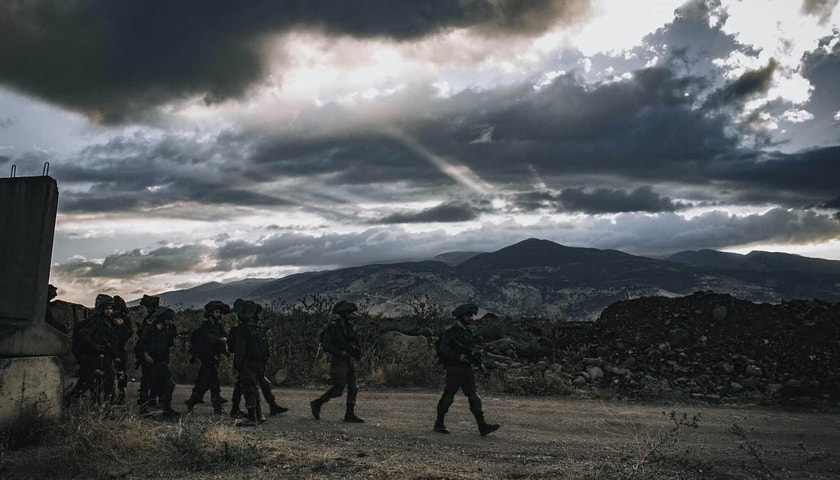
Marching refers to the organised, steady walking pace of a unit on foot, but it can also mean any coordinated movement of a body of troops. The two stories below are some of the longest military marches in history.
The Longest Retreat: Chinese Long March (1934-1935)
The Chinese Long March, or ‘Long Expedition’ as it translates literally from the Chinese 长征, was a famous military retreat of the Communist army from Republican forces during the Chinese Civil War. Although it did not take place all at once, the journey took a year, and covered 10,000 kilometres.
Background
At Jiangxi Soviet, the Communist Red Army had been defeated by Nationalist forces led by Chiang Kai-shek, and suffered severe losses. The Nationalists began constructing blockhouse fortifications to slowly encircle the Communist troops.
In October 1934, the escape plan was put into action, and 16,000 troops provided a diversion and screening action to protect the escape of the bulk of the Communist forces.
The Communist forces were divided into three armies: the First, Second and Fourth Red Army. The First Red Army was led by Bo Gu at first and supported by a German adviser Otto Braun, but Mao Zedong emerged as an important leader during the retreat. The Second Red Army was commanded by He Long and later merging with the main forces. The Fourth Red Army was led by Zhang Guotao. Altogether, around 100,000 troops, consisting of approximately 86,000 soldiers plus other personnel, escaped past Chiang Kai-shek’s forces and began the march.
The March
The Red Army’s march seemed successful at first. A combination of clever manoeuvres and diplomacy led them through three of the four blockhouse fortifications which has been built, but at the end of November 1934, Nationalist forces caught up with the Red Army and attacked. Communist losses were severe. They escaped but lost around 50,000 soldiers thanks to casualties and desertions.
Army leaders disagreed on the best route as they believed Chiang was planning to intercept their retreat. Mao Zedong suggested they head toward Guizhou, and this plan was accepted, but disagreements continued en-route, with Mao pushing for western Guizhou and Otto Braun insisting they should head to eastern Guizhou. They pushed on, and by 1st Jan 1935 they reached the Wu River. They had already travelled thousands of kilometres.
When the armies finally reached Guizhou, the Communist Party held the Zunyi Conference on the best action to take next. Here, Mao Zedong asserted his leadership and was given control over military strategy.
The next part of the march involved heading north to Sichuan, but more enemy troops stood in the way. Mao chose to avoid confrontation, sometimes crossing the same river several times in order to escape enemy forces, but this meant the journey took several months.
In June 1935, Mao’s troops (the First Army) met up again with the Fourth Army, which was at this time around 84,000 strong. Again, they took different routes north. Mao’s forces had to fight local warlords as well as the terrain and climate before finally reaching Shaanxi with his remaining 8,000 troops in October 1935, year after the march began.
The Longest Advance: The Queen’s Royal Regiment (West Surrey) Advance on Tunisia (1943)
Background
During World War II, Britain maintained forces in the Middle East to protect oilfields (an important strategic resource) and lines of communication. The 56th Division—to which the 169th
Infantry Brigade was attached was stationed in Iraq. An invasion of Sicily was being planned, and the 56th was earmarked for amphibious training in Palestine as preparation for that operation.
Meanwhile, the North African campaign was coming to a head, and General Montgomery decided to pull back the 50th division and relieve them with the 56th. This change in orders resulted in a 5,300 kilometre advance into North Africa.
The March
The 56th received their orders in March 1943, and the 169th Infantry Brigade started their journey from Kirkuk in Iraq to the front lines near Enfidaville in Tunisia.
Traveling in two main groups by road and rail, they moved via Baghdad, across the Iraqi desert into Jordan and Palestine, then south through Egypt and west along the North African coast through Tobruk, Benghazi, and Tripoli. Despite tough road conditions, heavy rains, desert heat, and wartime damage, they managed to maintain discipline, stopping only briefly for refits and to re-equip. Along the way, many men seized the opportunity for short leaves in Cairo or visits to places such as Tobruk and Benghazi, both scarred by protracted fighting.
Arriving in Tunisia in late April, the brigade immediately took over forward positions from the 50th Division near Enfidaville. Men who had expected mere training found themselves under fire almost at once. Despite exhaustion from their long overland trek, they entered the line on 23 April and incurred their first casualties shortly thereafter.
This swift redeployment—covering thousands of kilometres in just 31 days—was a remarkable logistical and tactical feat, culminating in the brigade’s prompt engagement on the Tunisian front.
Longest Marches in Britain
It is difficult to achieve marches of these magnitudes in the UK as mainland Britain is a relatively small island, but there have been impressive marches in British military history too. In September 1066, King Harold II led his forces from the south coast, where he was preparing for an invasion by the Normans, all the way to Stamford Bridge, 185 miles north, to defend against an invasion by the Norwegian king Harald Hardrada. King Harold’s army covered this distance in only 4 days, taking the Norwegian invaders by surprise, and ultimately defeating them. You can read more about this in our related article Three Famous Battles in British History.
Go further with The Army Cadets
You won’t need to march thousands of kilometres with the Army Cadets, but we offer the opportunity for exciting expeditions and fieldcraft training as part of the Army Cadet Syllabus. If you want to push yourself further, make new friends, and overcome new challenges, find your nearest detachment today and show us what you can do.
Image credit: Tomer Dahari