Great British Explorers – Sir Richard Burton
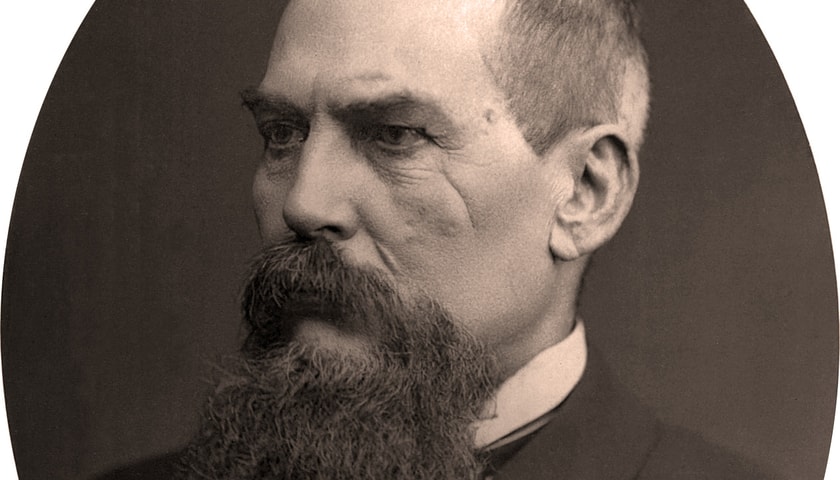
Sir Richard Francis Burton (1821-1890) was a renowned British explorer, writer, linguist, and diplomat. His life was marked by extraordinary adventures, intellectual curiosity, and a willingness to immerse himself in diverse cultures.
Sir Richard Burton was born on 19 March, 1821, in Torquay, Devon. His family moved to France before he was three and his cultural horizons began to grow significantly. While learning English at home, and being surrounded by the French culture, he attended an academy which also grounded him in Greek and Latin. His family also spent some time in Tuscany over the next few years where it is likely he learned some Italian.
While some children would have longed for the familiarity of home, Richard Burton seems to have fallen in love with travel, language, and exploration, and these would come to define the rest of his life, and his impact on the world.
Education
His formal education was inconsistent. He attended a preparatory school in Richmond during a period when his family returned from France, and he eventually made his way to Oxford. He entered the university in 1840 but was expelled in 1842 for entering a forbidden steeplechase. Burton was not the only student involved in the incident, but he was the only one permanently expelled, the consequence of his constant rule-breaking and pranks. Academically, his time at Oxford did not diminish his love of language, and he longed to learn Arabic and Asian languages.
Richard Francis Burton in Bombay
Thanks to the advice of his former classmates, his career began in the British Indian Army in Bombay. He took advantage of this new opportunity to learn and mastered six Indian languages as well as Arabic and Persian. Burton’s fascination with Indian culture set him apart from his peers. While most British colonials were content to live in and rule the country, Burton wanted to experience and understand the people and their culture. Much like another great British explorer, Lawrence of Arabia, this deep interest and appreciation for the local culture would eventually become a key skill.
While serving as an intelligence officer in the Sind (now part of Pakistan), he often went undercover in local bazaars, blending in so perfectly that he could pass for a native merchant. This skill in disguise and his mastery of fieldcraft would later allow him to achieve some of the most dangerous feats in the history of exploration.
The Expedition of Richard Francis Burton to Mecca
Burton left the army in 1849. Following this, Burton took part in an expedition to Mecca in 1853, supported by the Royal Geographical Society (RGS). This was a time when non-Muslims were strictly forbidden from entering the holy cities of Mecca and Medina, punishable by death. Burton therefore decided to attempt the journey in disguise.
He spent months preparing, perfecting his persona as an Afghan Pathan merchant named Mirza Abdullah. Burton’s journey to Mecca was not the first by a European non-Muslim (Ludovico di Varthema first accomplished this in 1503), but his was the most famous.
“Of the gladdest moments in human life, methinks, is the departure upon a distant journey into unknown lands.” - Sir Richard Francis Burton
Search for the Nile
Following his success in Arabia, Burton’s next great ambition was to solve the greatest geographical mystery of the age: the location of the source of the River Nile.
This was a popular goal in the 19th century – another great British explorer, David Livingstone, also attempted this in 1866.
Burton’s expedition began in 1857 alongside another officer, John Hanning Speke. He led a RGS expedition deep into the uncharted heart of East Africa.
The expedition was plagued by disaster from the start; the men were abandoned by porters, their supplies were stolen, and they endured a variety of severe tropical diseases. Burton was frequently so ill with malaria and an infection of the legs that he had to be carried on a stretcher. Speke, meanwhile, suffered from an ear infection so severe it left him temporarily deaf, and a form of ophthalmia that rendered him nearly blind.
They pushed forward despite these hardships and in 1858 became the first Europeans to reach Lake Tanganyika. While Burton remained at the camp to recover his health, a partially recovered Speke pushed north and discovered a second great body of water, which he named Lake Victoria. Speke immediately claimed this was the true source of the Nile. Burton, ever the meticulous scientist, was sceptical, arguing that Speke lacked the data to prove it. This sparked a lifelong and bitter public feud between the two men.
While history eventually proved Speke largely correct about Lake Victoria, Burton’s claim was also correct that Speke lacked the data to prove his conclusion. Burton’s detailed records of the geography, languages, and tribes of the lake regions remain invaluable to science today.
Fun Fact: Burton was a master fencer and wrote The Book of the Sword, a technical history of the weapon. His face bore a permanent scar from a javelin that was hurled through both cheeks during a skirmish in Somalia in 1855.
Adventures in the Americas
Burton’s thirst for discovery was not limited to the East. In 1860, he travelled to the United States, crossing the continent by stagecoach to visit Salt Lake City. There, he studied the Mormon community and met with Brigham Young. He wrote about this on his return to England in his book The City of the Saints. Burton was fascinated by the American West, applying the same academic rigour to the frontiersmen and indigenous tribes that he had to the Bedouins of Arabia.
Later, while serving as the British Consul in Brazil, he explored the highlands of Minas Gerais, paddled down the São Francisco River in a canoe, and visited the battlefields of the Paraguayan War. Whether he was in the rainforests of South America or the deserts of the Levant, Burton’s output was staggering. He wrote dozens of books and hundreds of articles, covering everything from gold mining to local folklore.
The Literary and Diplomatic Legacy of Richard Francis Burton
In his later years, Burton served as a British Consul in Damascus and finally in Trieste. However, and perhaps unsurprisingly given his story so far, he was never a typical diplomat. He delighted in shocking polite society by translating and publishing Eastern texts that were considered scandalous at the time. He founded the Kama Shastra Society to bypass Victorian censorship, allowing him to publish uncensored translations of the Kama Sutra and a massive, 16-volume edition of The Arabian Nights.
He was eventually knighted in 1886, a belated recognition of his immense, if controversial, contributions to British knowledge and exploration. He had explored three continents, mastered 29 languages (plus dialects) and pushed the boundaries of knowledge by writing and publishing much of what he had learned.
Sir Richard Francis Burton died of a heart attack on 20 October, 1890 in Trieste. His ornate tomb, designed by his wife Isabel to resemble a Bedouin tent, is located in Mortlake, Southwest London.
Go further with Army Cadets
Sir Richard Francis Burton explored the world to tell us what is out there. Army Cadets Adventurous Training gives you the chance to discover the world for yourself with our National Expeditions. If you want to see what’s out there, push yourself further, make new friends, and overcome new challenges, find your nearest detachment today!