Great British Explorers Robert Swan
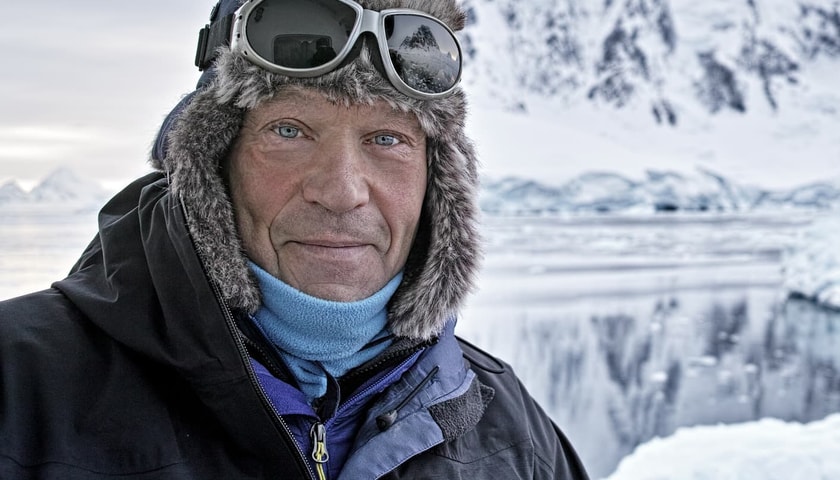
Robert Swan – Polar Explorer
Robert Swan is a British polar explorer and environmentalist best known for his achievement of being the first person to walk to both the North and South Poles.
Robert Swan’s biography
Robert Swan was born in Durham on 28th July 1956 and, as a child, attended an independent preparatory school and then a private boarding school from the age of 13. He attended Durham University in 1976, and it was around this time he fell in love with the stories of his namesake, Robert Scott, who led the British Antarctic Expedition (sometimes called the Terra Nova Expedition) in 1910.
After graduating from university with a BA in Ancient History, Robert Swan spent time with the British Antarctic Survey before setting out to follow in the footsteps of his hero and lead his own expedition to the South Pole.
South Pole Expedition (1984)
Robert Swan’s first expedition would take almost four years to complete. It began on 3rd November 1984 when the expedition ship Southern Quest, a former fishing trawler built in 1958, departed England for New Zealand; their first stop. In New Zealand, Robert Swan met the last surviving member of the original Scott’s expedition, Bill Burton, who was by this time 96 years old.
The next stop on their mission to walk to the South Pole was Antarctica, but the intense cold and perpetual darkness of the Antarctic winter made it unwise to begin. They waited until November 1985, the Antarctic summer, to begin their trek, and after 70 days and almost 900 miles, they reached the South Pole in 1986. This journey was already record-breaking, having become the longest unassisted (which in this context means they pulled their own sleds, or ‘man-hauled’ them) march in history, but it was not a complete success.
Read more about the longest military marches in history here.
Swan’s goal was to recreate Scott’s original conditions as far as possible, so he insisted on completing the trek without radios. This meant that his team did not learn that the Southern Quest had been sunk by ice until they reached their goal. The ship’s crew were all evacuated safely, and with the help of local US military forces, they relocated to New Zealand.
But, as far as Robert Swan was concerned, the expedition was not complete. He returned in 1987 to recover the rest of his team, still waiting at Jack Hayward Base, and he removed all rubbish and remaining stores that his trek had brought with him. This would not be his last act of environmental care.
North Pole Expedition (1987)
In 1987, Robert Swan undertook his second expedition, this time a walk to the North Pole. His expedition team was assembled from seven countries, with a further eight countries represented at their base camp. This expedition, named Icewalk, would also prove eventful. The team nearly drowned due to unseasonably early ice melt, something Swan cited later as a turning point in his environmental activism.
Robert Swan also set a new record upon completion of this expedition. He was now the first man to walk unassisted to both poles, carrying all his supplies with him and relying on no resupply drops.
Environmental Activism
Robert Swan’s environmental activism accelerated during the 1990s.
In 1991, the Madrid Protocol on Environmental Protection to the Antarctic Treaty was signed by 26 countries and has since been signed by an additional 16. The following year, he was invited to the first World Summit for Sustainable Development in Rio de Janeiro. The summit unveiled a 10-year mission to engage youth and industry in environmental action, something that became very close to Robert Swan’s heart.
Robert was appointed Special Envoy to the Director-General of UNESCO in 1994, and later also became a UN Goodwill Ambassador for Youth.
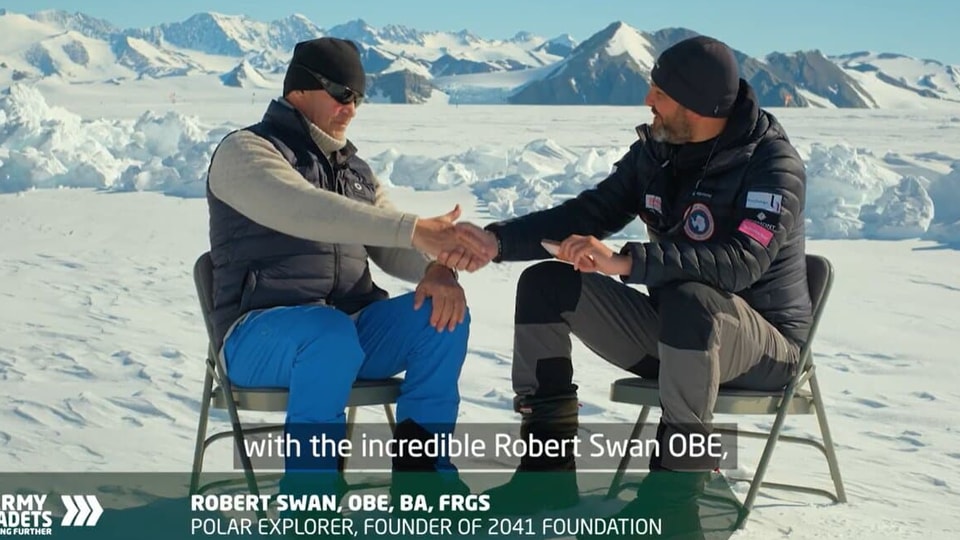

Adventurous Activism
In 1996, Robert Swan led a new international Antarctic expedition as part of a team for One Step Beyond. This mission was not one of discovery and endurance, but of restoration. Their goal was to clean and recycle 1,500 tons of waste which had been abandoned in the Antarctic by scientific researchers. The local penguin population agreed the mission was a success, as they were able to reclaim their beach for the first time in nearly 50 years!
On this trip, Robert Swan witnessed first-hand the partial collapse of the Larsen B ice-shelf into the ocean, a powerful reminder that the effects of climate change were already visible.
In the 2000s, Robert Swan began leading corporate expeditions to the Antarctic to show business leaders first-hand the effects of climate change on the environment and its creatures. His goal was to educate leaders in the development and sustainability of the natural environment and ensure that the 1991 Madrid Protocol, part of the Antarctic Treaty, which cannot be changed until 2041, can be preserved. The risk is that a new debate in 2041 could weaken protections for the continent.
Another part of his efforts to raise awareness of these issues, now only 15 years away, saw his yacht named 2041. With this, he began a ten-year mission in 2002, which included overland voyages, to educate and raise awareness of the need for a sustainable world. He reached over 750,000 people during this voyage, and his Ice Station exhibition at the Johannesburg World Summit in 2012 attracted 128 world leaders, in addition to tens of thousands of visitors.
By 2017, Robert Swan’s son, Barney, was fully involved in his father’s adventures. Together, they took part in the South Pole Energy Challenge (SPEC). This involved them undertaking a 600-mile journey to the South Pole while being sustained entirely by renewable energy.
Finally, in 2023, after 37 years of hard work, education, and activism, Robert Swan completed his goal of crossing Antarctica on foot.
In 2026, Robert Swan and his son show no signs of stopping. They were both aboard the Scenic Eclipse II as it set sail for the East Antarctic on 29th January 2026.
2041 Foundation
Perhaps one of Robert Swan’s greatest legacies is the 2041 Foundation. Named after the year in which the Madrid Protocol is up for debate, the 2041 Foundation’s mission is to promote the protection of Antarctica and safeguard the continent against the effects of climate change. Safeguarding the Antarctic Treaty, which was part of the 1991 Madrid Protocol, is a key part of this. Practical actions include:
- Working with others to develop policies to ensure the Antarctic Treaty.
- Promoting sustainable initiatives, such as those he demonstrated during the South Pole Energy Challenge.
- Providing educational resources to schools via the website 2041school.com.
- Leading teams to Antarctica so people can see the effects of climate change first hand. One thing that sets Robert Swan apart from others in our series on Great British Explorers is that you have the opportunity to explore with him today. Together with his son, Robert is leading a new expedition to Antarctica in November 2026.
Go further with Army Cadets
Robert Swan is a powerful example of how adventure can provide thrill and wonder while also serving a deeper purpose. To start your own adventure, explore the Adventurous Training provided by Army Cadets, and find your nearest detachment today.