
First Aid Knowledge Proves Lifesaving in Station Emergency
Teen Jordan Kerr saved a child’s life at Drumchapel Train Station by giving 12 minutes of CPR until paramedics arrived, proving how calm action and first aid skills can save lives.

First Aid training within the Army Cadet Syllabus ensures you’re prepared for real-life scenarios. The training is structured progressively, allowing cadets to develop their skills step by step, starting with basic first aid. Here, you’ll learn how to handle life-threatening emergencies, such as bleeding and choking. You’ll also gain essential knowledge, like how to perform CPR and how to conduct primary surveys.
These skills aren’t just theoretical – cadets have put them into action in remarkable ways. For example, Cdt LCpl Owen Jones, aged 14, responded when a man collapsed in cardiac arrest. With the help of his mother, Owen called for an AED and performed CPR, ultimately helping to save the man’s life. His quick thinking earned him the Royal Humane Society Resuscitation Certificate.
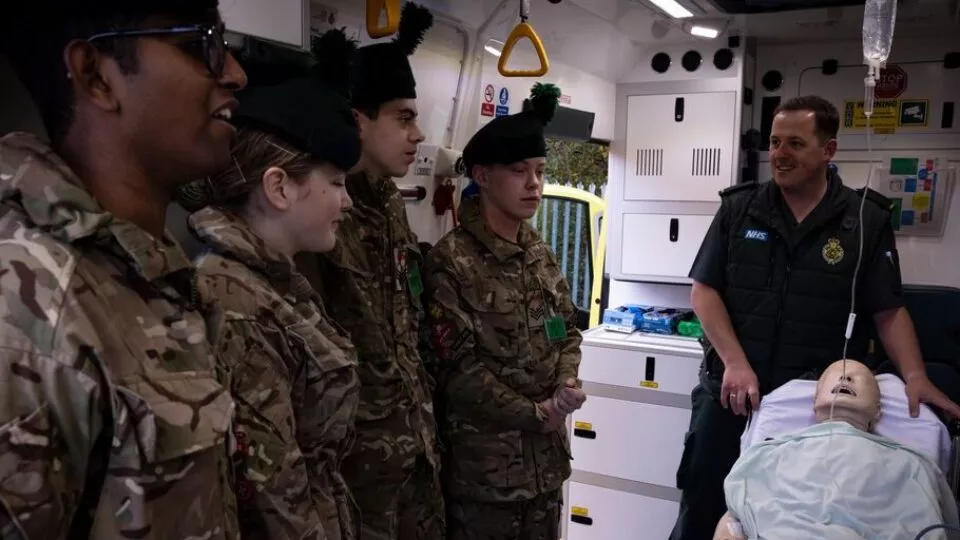
As you progress through the syllabus, your skills and knowledge will expand to encompass additional topics, such as the use of Automatic External Defibrillators (AEDs) and treating bone, muscle & joint injuries, hypothermia, and heat exhaustion.
You’ll also have the opportunity to progress onto completing a qualification which is linked with St. John Ambulance Youth First Aid package. Here, you will learn about a wider range of conditions, including electric shock, asthma, head injuries, poisoning, seizures, and severe allergic reactions.
Many cadets have found themselves in the right place at the right time, equipped with the right skills. Cdt Sgt Phoebe Clarke, aged 16, was nearby when a loud crash revealed a serious car accident. She found a woman bleeding heavily and stepped in to stop the bleeding, apply a dressing, and provide reassurance until the ambulance arrived 20 minutes later. Her actions earned her the ACCT UK National Praiseworthy Action Award.
By the time you complete your training, you’ll be equipped to respond in a crisis – whether at home, in school, or out with friends. Once you finish the youth programme, you’ll also have the opportunity to undertake an adult Emergency First Aid at Work or a First Aid in the Workplace qualification, the same qualification offered to all our CFAVs. These qualifications are accredited by OfQual and are recognised by employers, meeting legal workplace first aid requirements.
To ensure all activities have proper first aid provision, our Adult Volunteers undertake formal First Aid qualifications. A minimum of Emergency First Aid in the Workplace is delivered as a mandatory element of induction training to ensure that those in a local unit can provide immediate aid to an injured person. There is also risk-based additional training for First Aid in the Workplace qualifications. These qualifications, delivered by competent and current CFAVs, are usually run at the county, sector, battalion, or local training establishment level.
To maintain high standards, we also offer National Training Courses, including:
Annual CPD Events: Continuing professional development opportunities for CFAVs who train first aid, ensuring they remain up to date with best practices.
Each year, the Army Cadets hold a First Aid Competition where cadets from across the UK compete in realistic training scenarios to test their knowledge and skills. The weekend culminates in a Tri-Service competition, showcasing the expertise of cadets at a national level.
These competitions prepare cadets for real-life challenges, as shown by many inspiring examples. Cdt Gerard Evans, aged 14, witnessed a man being hit by a car and landing headfirst on a curb. Using his training, Gerard assessed the situation, provided reassurance, and gave first aid until paramedics arrived – actions that earned him the ACCT UK National Praiseworthy Action Award.
Here are some examples of our truly remarkable cadets and volunteers who have used their skills learnt in the Army Cadets to help others.


15-year-old Army Cadet Lewis Butler saved his 2-year-old brother Lyndon from choking using first aid skills learned in cadet training. He stayed calm and acted quickly, earning praise from all.


Make a real difference where it counts. Join the Army Cadets to build skills, meet new people, and give back through being a member of society with key skills in first aid. Your adventure starts here!
Explore our gallery to see cadets in action— taking part in first aid lessons, simulations and competitions.
CLICK ANY IMAGE BELOW TO VIEW LARGER


