D-Day Heroes
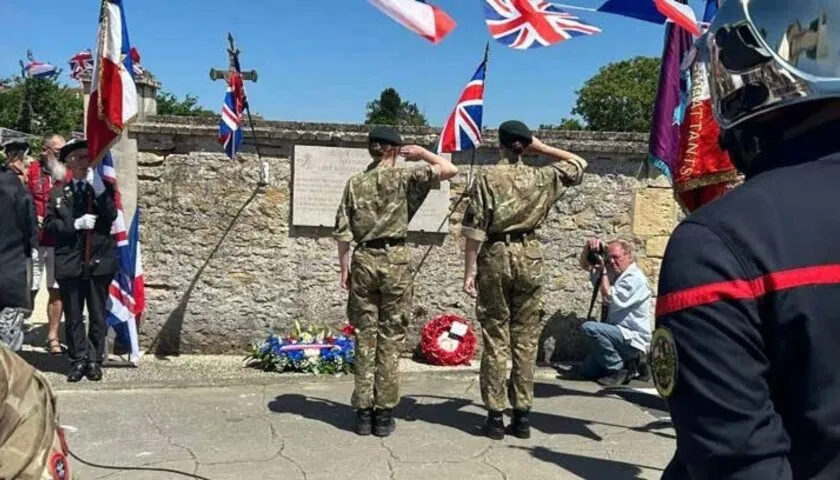
Cadets from Oxfordshire and Northern Ireland marked the 80th anniversary of D-Day by attending commemorative events in northern France. There they had the opportunity to walk in the footsteps of soldiers – including their own ancestors – who landed on the Normandy beaches in 1944, and honour the sacrifices they made.
The D-Day landings on 6 June, 1944 constituted the largest seaborne invasion in history and marked a pivotal moment in the Second World War, launching the liberation of France and Western Europe from German occupation.
Remembering the Soldiers
It was the 25th time cadets from Oxfordshire ACF travelled to Normandy for its annual eight-day Battlefield Tour. This year was particularly special as it was the 80th anniversary of D-Day, and cadets and CFAVs followed in the footsteps of their predecessor regiment, the Oxfordshire & Buckingham Light Infantry. Known as the Ox & Bucks, its Second Battalion initiated the D-Day Invasion, landing by glider to capture bridges over the Caen Canal and River Orne on 6 June, 1944.
CFAV Maj Mark Hames ACF, who has attended annual D-Day celebrations in France since 1999, said: ‘The annual tour is a way to honour the sacrifices and ensure the bravery of those who fought is never forgotten. It’s an invaluable way for cadets to connect with history.’
Each year the cadets visit more than 20 sites, museums and memorials, and participate in 11 commemoration events where they lay wreaths in remembrance He said: ‘It is my hope that these experiences inspire commitment in our cadets to the act of Remembrance for years to come.’ The experience was especially poignant for Cdt LCpl Daniel Marchant. Three of his great-grandfathers served in the war, one flying Lancaster Bombers over Germany from 1942 to 1944. He said: ‘Their courage and dedication during the war inspire me every day.’
Memorial Pegasus
The Oxfordshire cadets spent a day at the Memorial Pegasus, which commemorates the actions of the British 6th Airborne Division and the capture of Pegasus Bridge by the Ox & Bucks. Cadets and CFAVs took their annual position as the guardians of the Gliders Stones – six memorials listing the names of every soldier who landed that night.
They also attended two 80th anniversary events: a ceremony led by Her Royal Highness The Princess Royal at Bayeux War Cemetery, and the official Remembrance Service at Notre Dame Cathedral of Bayeux in the company of the Chief of the General Staff, General Sir Patrick Sanders.
Pegasus Bridge
Cadets and CFAVs also marched over Pegasus Bridge in a parade to the glider landing site, where they laid a wreath and sounded the Last Post. Further tour highlights included unveiling a plaque to LCpl Fred Greenhalgh, who was killed during the landing of his glider, and commemorations in towns where the Ox & Bucks suffered heavy casualties. These events gave the cadets an insight into the impact of the war on local communities.
Paying tribute to Ulstermen who Served
At the invitation of the Royal Irish Regiment, 22 cadets and six CFAVs from 1st & 2nd (NI) Bn ACF travelled to France. Their aim was to achieve a greater understanding of the role played by the Royal Ulster Rifles (RUR) in the liberation of Normandy on D-Day and during Operation Overlord.
In preparation, they visited the RUR Museum in Belfast to familiarise themselves with the equipment, tactics and men who volunteered to serve. They also met Northern Ireland’s last living D-Day veteran, Sgt George Horner, who was 19 when he took part and was awarded the Légion d’honneur, the highest French military order. In a moving gesture, cadets promised to remember his comrades on Sword Beach, and to collect sand to be returned to him.
Personal reflections
The trip had a personal element for Cdt Ella Williams, aged 16, from County Down, who was keen to find the graves of her great-grandfather’s two best friends and pay her respects on his behalf. Ella, of 2nd Battalion, Killyleagh, said in a BBC News NI interview: ‘We need to carry on
the tradition of remembering these people who fought for our freedom.’
1st Battalion Commandant Col Sam Donnell told the cadets who attended: ‘The Normandy ceremonies are a significant way to honour the bravery and sacrifice of those who fought for freedom. Your commitment to remembering and honouring these heroes ensures their legacy continues to inspire future generations.’
Cambes-en-Plaine
The cadets were based in the community centre in Cambesen- Plaine, near Caen. The village was liberated on 9 June 1944 by the RUR’s 2nd Battalion at a tragic cost: three officers and 41 other ranks were killed, with 142 men wounded and 11 missing. Deputy Mayor Eric Gobert paid tribute to the sacrifice paid by many Ulstermen that day.
Cadets and CFAVs also attended and conducted nine engagements and services. These included acts of remembrance at Sword Beach, the 1st Battalion RUR memorial in Longueval, and the 2nd Battalion RUR memorial in Cambes-en-Plaine.
Banners
Both NI ACF battalion banners were present at the commemorations. These are green and red in reference to the RUR cadet battalions and the Antrim Artillery (Engineers) Cadets, formed in late 1943/44. Many members volunteered as runners for the home guard and Antrim Artillery and later joined the RUR and other units to take part in the Normandy landings.
On their final day in Normandy, cadets were joined by both the Church of Ireland and Catholic Archbishops of Armagh, who spoke to cadets and CFAVs individually about their experiences of the Normandy commemorations.
Keeping the Flame Alive
Cdt CSM Aaron Wijendra from Wilson’s School CCF had the honour of taking part in a torch event that launched D-Day commemorations, alongside the then Prime Minister Rishi Sunak, former Defence Secretary Grant Shapps and second world war veteran Peter Kent.
To symbolise the sacrifices of those who stormed the beaches of Normandy, the Prime Minister handed the Torch of Liberation to Peter Kent during the ceremony at The Tilt Yard at Horse Guards on Whitehall.
The former soldier then handed it to Mr Shapps, representing the government’s dedication to preserving the memory of those who served. Finally, it was passed to Cdt CSM Wijendra, a symbol of the torch’s future path in carrying on the lessons and legacy of D-Day.
‘Representing the Army Cadets at this event was an honour and a privilege,’ said Aaron. ‘The Cadets’ involvement highlighted the young generation’s crucial role in keeping the flame of history alive, and ensuring the courage and sacrifice of D-Day veterans are never forgotten.’
The ceremony was set against a backdrop of British Army personnel on horseback, a military musician, cadets, and volunteers from the Commonwealth War Graves Commission (CWGC).
Preparing for Remembrance Day
What is Remembrance?
Remembrance refers to the act of commemorating and honouring those who have died, particularly in military service. Remembrance Day (11 November) marks the end of the First World War in 1918. It is important for cadets and CFAVs to participate in Remembrance ceremonies to pay respect to those who sacrificed their lives in war. As members of a youth military organisation, cadets carry the duty of upholding this tradition, reflecting the commitment and service associated with their roles.
Achieving a high standard of turnout at Remembrance
It’s extremely important to look smart, so allow plenty of time to prepare your kit. Don’t rush as it will show in your overall presentation. Do one piece of kit at a time – I start with footwear and work my way up. Remembrance is a poignant occasion that draws a lot of interest across the nation. You are not only representing your detachment or contingent but also your local community.
Top tips for parade prep?
Allow plenty of time for rehearsals. Take it nice and steady and ensure everyone understands their role and responsibilities. Rehearse the parade in small chunks so information is retained and to build confidence in those taking part. Keep the parade as simple as possible. There’s no need for complicated drill sequences. The reason for being on parade is more important and will bring enough pressure. Musicians should prepare well, stay hydrated, remember what is coming next and try to relax during the parade.
How can cadets prepare mentally?
Know that it’s absolutely fine to remember people you have lost – it’s completely natural. I always remember friends during the two-minute silence. For the remainder of the parade, I try to think about what is happening next. This helps to keep my mind on the parade and stop it wandering.
Why should young people mark Remembrance?
It’s important for younger generations to mark Remembrance and be aware of history, to learn from past mistakes and honour the sacrifices of those who fought for peace and freedom. By understanding the causes and consequences of conflicts like the world wars, young people gain a deeper appreciation for the values of peace, democracy and human rights.
Remembrance fosters empathy and a sense of responsibility, helping younger people understand that the freedoms they enjoy today were hard-won. It also connects them to their national identity and shared values. By actively engaging with history, they help preserve important knowledge that can shape a more peaceful future.
Choosing to ‘leave the past in the past’ risks losing valuable lessons and forgetting the causes of conflict and the cost of war. Remembering ensures that future generations remain vigilant, informed and committed to avoiding the mistakes of the past, while promoting unity and peace.
Remembrance need-to-knows
National Service of Remembrance at The Cenotaph
The National Service of Remembrance is held at The Cenotaph in Whitehall, London, on Remembrance Sunday. It provides the nation with a reminder of those who have served and sacrificed, with British and Commonwealth soldiers, sailors, airmen and airwomen represented, together with members of the emergency services and civilians.
Members of the Royal Family, including His Majesty The King, pay tribute alongside serving politicians and former prime ministers. The service features a march-past involving 10,000 veterans.
Poppy Appeal
Every year, cadets raise thousands of pounds for the Royal British Legion’s annual Poppy Appeal by selling poppies. It allows cadets to interact with their communities and raise funds for service personnel and their families.
Poppies are a symbol of hope and are worn as a show of support for the armed forces community. In the first world war, poppies were a common sight because they flourished in the soil churned up by fighting and shelling.