
Navigation and Expeditions
From spending a few nights camping in UK national parks to embarking on ambitious treks through the Himalayas, your journey as a cadet will be filled with adventure. Along the way, you’ll learn essential navigation and expedition skills that form the backbone of many activities, including Fieldcraft, Adventurous Training, and the Duke of Edinburgh’s Award (DofE).

Find your local detachment
Adventure Starts with Skills and Confidence
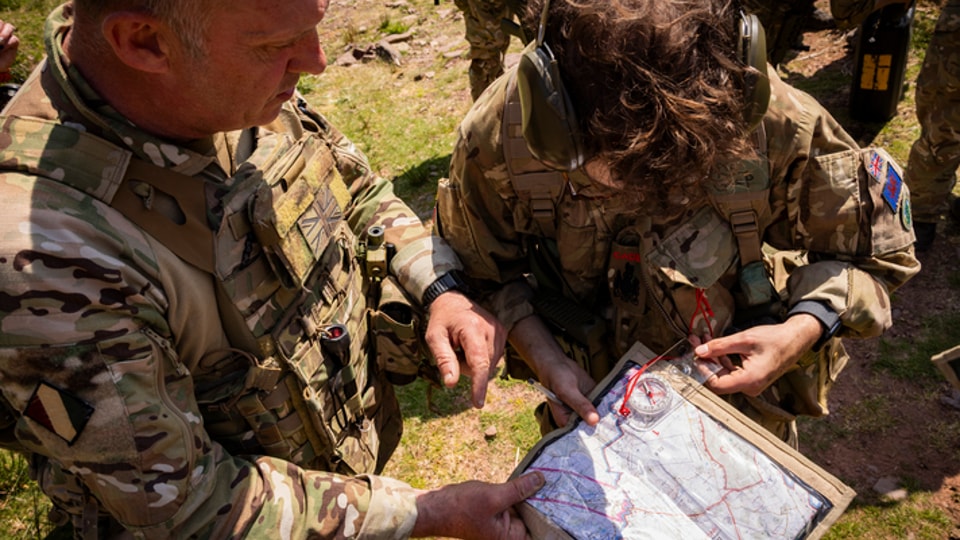
Starting with the basics, you’ll learn how simple features, such as a phone box, are represented on a map. From there, you’ll build your skills, covering map scales, navigating with handrails, using 6-figure grid references, and estimating distances by pacing and timing.
As you advance, the training will become more challenging, but you’ll be well prepared. Our navigation training advances into compass skills, understanding the Countryside Code, and route planning. You’ll also have the chance to test your skills at night and practise fine navigation techniques to locate specific targets.
Every expedition starts with preparation. You’ll be trained to pack and carry your equipment safely, identify suitable routes, and choose ideal campsites. You’ll also learn how to pitch a tent and cook meals on a camping stove. Your first expedition will likely be close to home, but as you advance through the syllabus, you’ll venture further afield, potentially even overseas. Recent cadet expeditions have included destinations such as Bavaria, Peru, and Kenya, often paired with community projects that make a positive local impact.
Your initial expeditions will be on foot, but as you progress, you may have the chance to explore by bike, horseback, or even on water. Wherever your adventures take you, rest assured that months of preparation go into ensuring everyone’s safety and enjoyment.
Can’t wait to get started? Here are some ways you can hone your navigation skills independently:
- Practise map reading: Find a map of your local area, within the Army Cadets we mainly use Ordnance Survey maps and practise identifying features and landmarks. See if you can identify your nearest footpath and railway line.
- Explore new routes in your local area: Try navigating a slightly different route in an area you know well. This will give you practice in interpreting maps and making decisions while minimising the risk of getting lost.
- Use a GPS app to track your movements: While it’s important to know how to navigate without technology, using a GPS app to track your routes can help you understand distances, pacing, and timing. Afterwards, compare your route on the app with your map to improve accuracy.
Exploring the world around you is doubly exciting when you understand the contours of the land around you. Keen navigation skills enable you to keep yourself and others safe out and about. While training with Army Cadets, you’ll develop skills in identifying safe stopping points, assessing ground conditions, and planning routes effectively. Here are some important safety considerations you’ll always need to keep in mind:
- Weather conditions: Check the forecast before setting out and be prepared for changes in weather. Sudden changes in rain, fog, or temperature can impact visibility and ground conditions, so adapt your plans if needed.
- Hydration and energy: Bring enough water and snacks to stay energised throughout your journey. Fatigue and dehydration can impair decision-making, so plan your breaks and refreshments accordingly.
- Emergency protocols: Familiarise yourself with what to do if you get lost, including staying in one place, using a whistle or other signals, and knowing how to access emergency services if necessary.
- Knowing your limits: Know when to stop or turn back if conditions become too challenging. It’s better to be cautious than to take risks that could lead to getting lost or injured.
At Army Cadets, we take your safety and wellbeing very seriously. We conduct thorough risk assessments for every activity, event, and meeting to ensure a secure environment for all cadets. Discover more about our commitment to safety within the Army Cadets.
Navigation and Expedition Inspiration with Army Cadets
Mastering navigation and expedition skills builds confidence, self-reliance, and resilience—empowering you to overcome challenges, grow personally, and succeed in the field and in life.
Navigation and Expedition Gallery
Explore how Army Cadets build confidence and resilience through navigation and expeditions. From UK treks to global adventures, discover the skills, teamwork, and unforgettable moments that shape every cadet’s journey.
CLICK ANY IMAGE BELOW TO VIEW LARGER


