Octavia Hill - Social Reformer
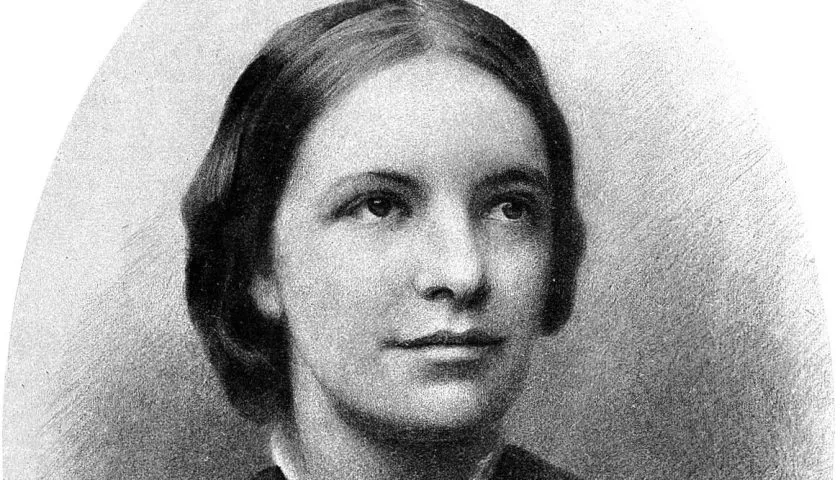
When you think of the great names that shaped modern Britain, you probably picture monarchs or politicians. But there’s one figure whose influence is truly massive, yet often goes overlooked: Octavia Hill (3 December 1838 – 13 August 1912). Although she wasn’t born into power, she was able to fundamentally change how we live. Octavia Hill was also a key figure in the history of the Army Cadets, so it is time we recognised her important work as one of the great social reformers of the 19th century, whose impacts are still being felt today.
The mid-nineteenth century was a time of extreme contrasts between social, geographical, and technological aspects of British life. The Victorian era had only just begun, but Britain was becoming incredibly wealthy thanks to growing industrial might, fuelled and fed by its global empire. At the same time, the cities were drowning in poverty, pollution, neglect, and despair.
Octavia Hill Biography
This was the world Octavia Hill was born into on 3 December 1838 in Wisbech, Cambridgeshire, as the third daughter of her father, James Hill and his third wife, Caroline Southwood Smith. Her family background was already steeped in radical thinking and social activism. Her grandfather, Dr Thomas Southwood Smith, was a well-known preacher and a pioneer in English public health reform. It was probably Dr Smith who was most responsible for instilling in his family a deep sense of social responsibility.
Her father’s business interests collapsed shortly after her birth, plunging the family into financial disaster. Periods of poverty were common in Octavia’s childhood. This meant she didn’t grow up sheltered because she experienced hardship first-hand, giving her a vital empathy for people struggling with unpredictable incomes.
There was no national public schooling in Britain until the 1870 Education Act, so Octavia Hill was educated by her mother. Under her mother’s tutelage and her grandfather’s influence, she developed an awareness of both the arts and social issues.
By age thirteen, Octavia was glass-painting for a co-operative guild, providing work for “distressed gentlewomen.” Then, at 14, she began actively working for the welfare of working people by taking charge of a workroom that provided toy-making employment for children from London’s Ragged schools. Although this was voluntary work, it also provided her with real-world training, giving her an intimate knowledge of the challenges faced by the working poor near Fitzroy Square. It was through this early work that she met the influential art critic and social commentator, John Ruskin, who would become her crucial mentor and financial backer.
Octavia soon learned that when she walked through one of London’s slums, she was walking through human problems, not housing problems. She realised that the terrible living conditions were destroying people’s health, their self-esteem, and their family life. She knew the problem wasn’t abstract; it was personal.
In other words, Octavia Hill recognised the systemic nature of the problems people faced: problems that could not be overcome simply with more hard work. Society had to change, or people would be trapped forever in a prison they did not make.

You cannot deal with the people and their houses separately.
People needed a secure, decent home, and they needed support, clean air, and somewhere green to relax. She was one of the first people to link urban planning with mental health and social, by which she meant the wellbeing of all society, not just the affected people.
But while Octavia was a reformer, she strongly believed in helping people help themselves. She was suspicious of large, bureaucratic government schemes, believing they were often cold, impersonal, and failed to address the root causes of poverty. She had good reason for these beliefs. Since the 1830s, the government had been trying to improve the housing of the working classes, and legislation had been passed. However, she found that landlords shunned their obligations, and tenants often lacked the knowledge and skills to improve their situations.
Instead, her driving motivation was to restore self-reliance and trust. She aimed to create a system where tenants were treated as responsible adults, capable of improving their own lives if given the right tools and environment. She wanted to prove that you could provide genuinely good housing, treat people with respect, and make the investment profitable, encouraging more people to fund social good. This was more than simply charity. It was a sustainable model for positive change.
Her solution was to become a landlord herself, with the provision of quality housing the starting point for her goal of bettering the lives of London’s poor. To do this, she would need to buy property, and here her relationship with John Ruskin became invaluable. With his financial backing, Octavia purchased the leases on three rundown houses in Marylebone, London.
This was her opportunity to implement social housing according to her new model, with innovative care.
- Personal Knowledge: Octavia and her team of (mostly female) volunteers collected rents every single week. This wasn’t just about money; it was about getting to know every tenant, checking in on the property, and acting as an early form of social worker, offering advice, support, and friendship. Strictness on rent payment was combined with genuine personal concern.
- Caring Management: Alongside practical steps like considering references, tenants were allocated housing carefully, with consideration given to the size of families and the location of the properties. She established rules, but only those which could be properly enforced, and she enforced them well.
- Repair and Regeneration: Instead of tearing down slums, she bought existing properties and meticulously repaired and renovated them. A portion of the rent was always set aside for repairs, and if there was a surplus, the tenants themselves had a say in how it was spent on improvements.
- The Fight for Open Space: As the city expanded, she battled constantly against developers. She successfully campaigned to save vast green areas like Hampstead Heath and Parliament Hill Fields. She was pioneering the idea of a ‘Green Belt’, a circle of protected countryside around the city, decades before it became policy. She even transformed small, forgotten spaces, like disused burial grounds, into small parks or “open-air sitting rooms” for her tenants.
Her transformative work caught the attention of the Ecclesiastical Commissioners in 1884, and they asked her to manage 48 slum properties in South London on their behalf.
Octavia Hill and the Formation of the Army Cadets
It’s one of the lesser-known facts about Octavia Hill, but she holds a direct and pivotal place in the history of the Army Cadets.
While managing her housing estates, Hill noticed that many young boys in London lacked the structure, positive male role models, and discipline needed to thrive. She saw the value in using a military framework to teach self-respect, teamwork, and responsibility.
She advocated for adapting the existing public school Cadet Corps model for working-class youth. In 1889, she established the first Independent Cadet Battalion in Southwark, London. This unit was not attached to a specific school but was instead formed directly for the benefit of the community.
Octavia was so involved that she personally helped establish this initial detachment, providing leadership and encouraging participation. She believed the uniform, the drill, and the challenge gave these young people purpose and essential life skills that prepared them for both civilian life and, potentially, military service. This Southwark unit became the blueprint for the modern, nationwide Army Cadet Force (ACF), which continues her legacy of promoting discipline, training, and opportunities to thousands of young people today.
Find out more about the continued benefits of the Army Cadets.
Octavia Hill’s Legacy
Octavia Hill worked hard to change the lives of London’s poor, but at times pushed herself too hard. Her failure to delegate, combined with overwork, led to her collapsing in 1877 and needing several months to recover.
Octavia Hill died in 1912 at the age of 73 after a battle with cancer, but her legacy was the transformation of social housing in London, and recognition that compassion, opportunity, and social improvement are intertwined. Her work wasn’t just about charity; it was about dignity, care, self-respect, and ensuring every person had access to beauty and nature. It’s why her legacy is so relevant today.
- The volunteers who helped her with those early rent collections grew in numbers and became paid professionals by the time she died. Their work led directly to the Chartered Institute of Housing we have today.
- Her work influenced housing policy and social awareness across Europe and the United States.
- Octavia’s battle to preserve and make available public green spaces for all to enjoy means we can today all benefit from Hampstead Heath, Parliament Fields, and other parks around London and cities around the world.
- This preservation of green spaces also influenced the creation of London’s ‘Green Belt’, which restricts building and development. Without this, London would be at risk of becoming an endless sprawling city.
- Her recognition of the value of public spaces also led to her becoming one of the three founding members of The National Trust, which protects and provides the nation’s wealth of countryside, buildings, and monuments.
- She saw the value in the Cadet Corps model used in public schools and realised that this would be a benefit to other parts of society. This work led directly to the creation of today’s Army Cadets.
Go further with the Army Cadets
If you want to go further, the modern Army Cadets offers a unique opportunity for your own adventure and personal growth. Develop your leadership skills and learn the power of delegation and the value of inspiring others through teamwork. Challenge yourself and step outside your comfort zone. Find your nearest detachment today!