Lawrence of Arabia
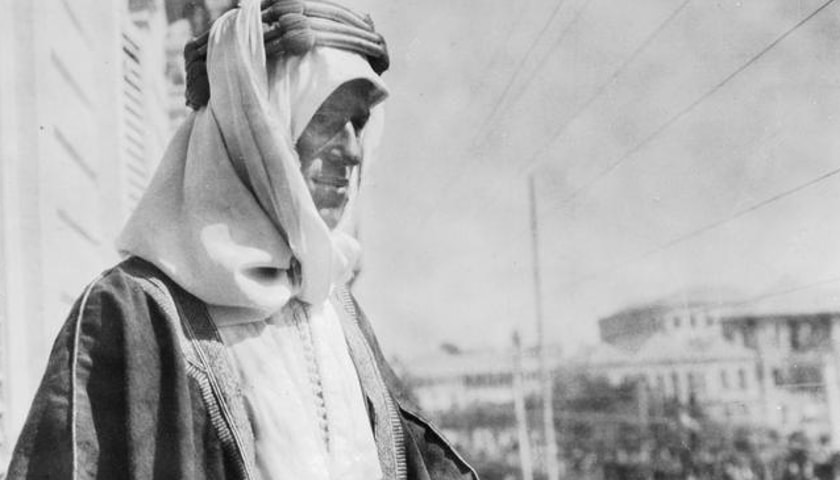
T. E. Lawrence, to give him his real name, is an almost mythical figure these days, thanks in part to the 1962 film, Lawrence of Arabia, and his legacy of unbelievable adventure. However, the true story behind the legend he forged is even more fascinating.
Early Life
Thomas Edward Lawrence was born in the village of Tremadog, Wales in 1888, when Queen Victoria was on the throne, and only a year after her Golden Jubilee. England was undergoing major social and technological reform against a backdrop of colonial expansion. The historic Battle of Rorke’s Drift taken place only nine years earlier (and is still commemorated in the annual Rorke’s Drift Anniversary Concert). London had been powered by the world’s first coal-powered public electricity for only six years, and the Married Women’s Property Act of 1882 had been another step on the long march to equal rights.
But while England looked to the future, Lawrence looked to the past, and during his early education had developed a keen interest in travel and archaeology. He attended the City of Oxford High School for boys in 1896, and attended Oxford University at Jesus College in 1907. While at Jesus College, he became a member of the University Officers’ Training Corps (UOTC).
The UOTC is a similar organisation to the Army Cadets, but with a remit for university students. Find out more about the University Officer’s Training Corps.
Travels and Archaeology
Even while he was still at school, Lawrence was no stranger to travelling in order to study his passions. At 15, he cycled around England with his friend Cyril Beeson, visiting churches and taking a keen interest in brass rubbings. During his college years, he undertook two long trips. The first was a 2,200 mile cycling tour through France (he was already fluent in French) to study French castles, and the second involved a 1,000 mile walking tour through Syria to learn about castles from the time of the Crusades. During the course of his travels, Lawrence also learned Arabic and gained a unique understanding of Arabic culture.
Upon graduating in 1910, he spent the next four years working as an archaeologist at the British Museum, supporting digs in Carchemish in Syria.
These adventures and education provided him with a breadth of skills and experience which were to prove invaluable in the years ahead, when in 1914, the First World War broke out in Europe.
World War I
The First World War presented Lawrence with a unique opportunity. His membership of the UOTC and his experience in Syria made him a valuable asset to British intelligence. Lawrence was already in the Middle East when the war began, having been commissioned by the British military to conduct a survey of the Negev. He did not enlist immediately when the war began, but by December 1914, he was assigned to the British Army in Cairo thanks to a call from David Hogarth, a British archaeologist, who had been his mentor in Carchemish, Syria.
In 1915, modern-day Turkey was still part of the Ottoman Empire, and local Arabic nationalists were a growing threat to the Ottomans, which represented a strategic opportunity to the British. Here was an ideal opportunity for Lawrence to apply his skills in language, history, and negotiation to forge stronger bonds with the Arab forces. One of their demands was British backing for an independent Arab state, which Lawrence faithfully supported.
In early 1916, Lawrence’s abilities would be put to a new test; could he inspire Arab forces to assist British forces in relieving the city of Kut, which was under siege by the Ottomans? Although this mission did not have any meaningful impact, his work as a liaison officer strengthened his relationship with the Arabs, and in particular, he began to develop a strong friendship with one of their leaders, Prince Faisal.
The Arab Revolt began in June 1916, and by the end of the year, Prince Faisal and Lawrence had developed a strategy of guerrilla warfare aimed at protecting Arab forces from Ottoman attack while also putting pressure on the railways—the Ottomans’ vital transport infrastructure.
Desert Warfare
Lawrence’s key strategic contribution during 1917 was in recognising the value of the local Bedouins in guerrilla warfare tactics. Lawrence believed that formal command structures and organised line combat would be difficult to manage, but carefully timed and targeted raids played to their strengths and would put the enemy on the defensive.
Lawrence also reasoned that damaging enemy infrastructure, especially bridges, would be more valuable than simply destroying them. Structural damage would force the enemy to be more cautious, and require them to commit resources including in time, money and manpower; into demolishing the bridges before they could be rebuilt. After all, why go to the trouble of destroying an enemy’s bridge when only damaging it caused twice the work?
Battle of Aqaba
The Battle of Aqaba was a pivotal event during the Arab Revolt of World War I. While the British initially considered an advance on Aqaba, a port on the Red Sea, undesirable due to its well-defended location, Lawrence saw an opportunity and decided to proceed without direct orders. He coordinated an attacking force that included the Howeitat tribe of Bedouin and a 600 mile journey to take the Ottomans by surprise.
Aqaba was a strategically important port. British forces were concerned that the Ottoman garrison there could threaten their Egyptian Expeditionary Force. Conversely, Lawrence believed that securing Aqaba was crucial for the Arabs to extend their front and establish a direct link with the British forces.
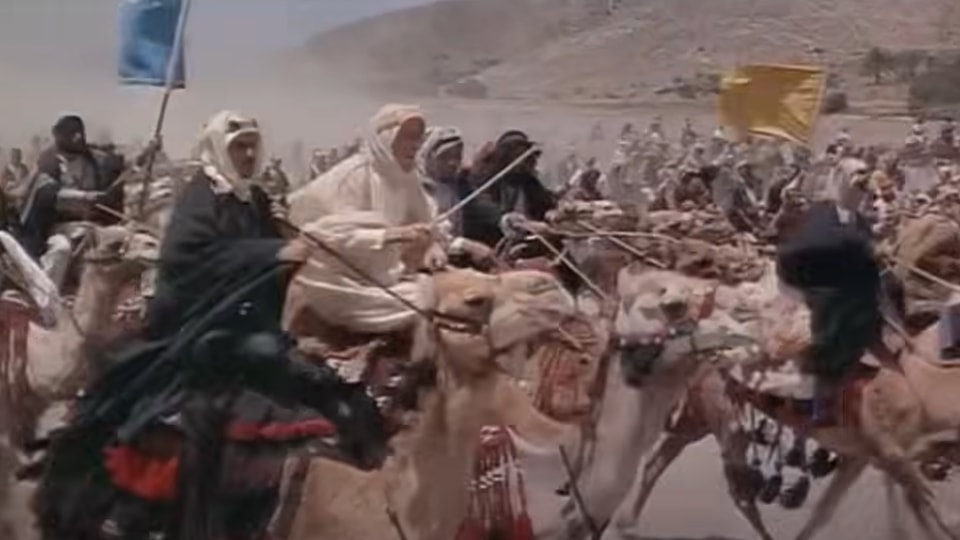
Part of Lawrence’s plan was to use deception, and he successfully misled the Ottoman Army into believing his real target was Damascus and Aleppo, not Aqaba. The most decisive moment of the battle was an audacious mounted charge led by Auda Abu Tayi and Lawrence. This unexpected charge against the Turkish troops at the pass of Aba El Lissan secured a swift and decisive victory for the Arab forces.
The battle resulted in a decisive Arab victory, with the capture of Aqaba. Following the victory, the Royal Navy took control of the port and it became a crucial logistical hub for the Allied forces.
This scene from the 1962 film Lawrence of Arabia shows the charge. Note the gun pointing at the sea in the final frames: it was a powerful defensive weapon, but utterly useless thanks to Lawrence’s tactics.

T.E Lawrence’s Death
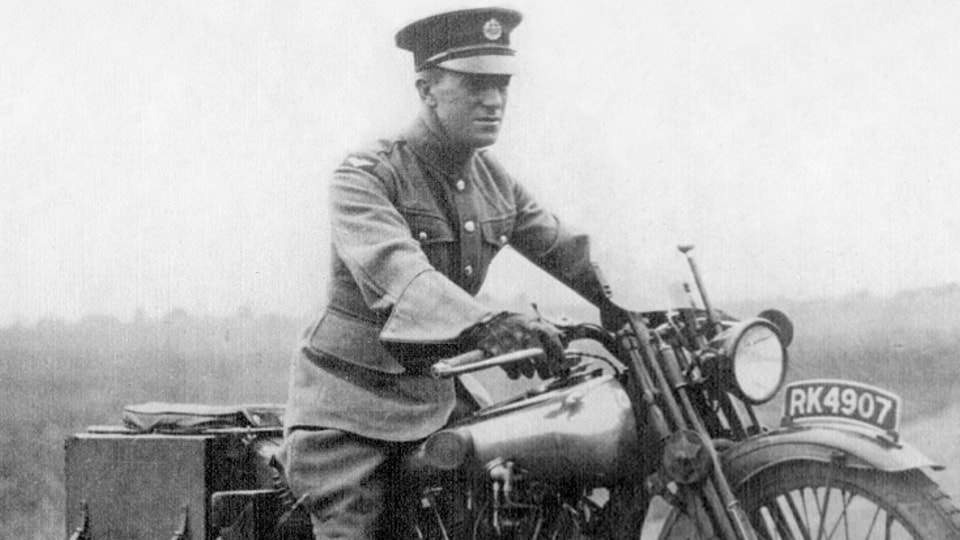
On 13 May, 1935, only two months after leaving the army, T.E. Lawrence was fatally injured in a motorcycle accident in Dorset, close to his cottage, Clouds Hill. He was riding his favourite motorbike, a Brough Superior SS100, when he swerved to avoid two boys on their bicycles. Losing control, he was thrown from the motorcycle. Lawrence died six days later from his injuries, on 19 May, 1935, at the age of 46, and the crash site is now marked by a small memorial.
One of the attending doctors, neurosurgeon Hugh Cairns, began a long-term study on head injuries in motorcyclists as a direct result of Lawrence’s death. This research was instrumental in the development and eventual adoption of crash helmets for both military and civilian use.
The Legacy of T. E. Lawrence
Lawrence’s unorthodox but effective tactics were the early steps on the path that would ultimately lead to the development of professional special forces in the UK, such as the SAS and SBS. These special units with their unique remits would go on to support larger, conventional military operations across the theatre of conflict.
But we should not overlook his other skills and the role they played. His combat record could only have been possible with the support of the Arab forces, and that relationship was founded on Lawrence’s love for exploration, history, and culture. It was these ‘soft’ skills that ultimately made him an effective leader.
The Legacy of T. E. Lawrence
Lawrence’s unorthodox but effective tactics were the early steps on the path that would ultimately lead to the development of professional special forces in the UK, such as the SAS and SBS. These special units with their unique remits would go on to support larger, conventional military operations across the theatre of conflict.
But we should not overlook his other skills and the role they played. His combat record could only have been possible with the support of the Arab forces, and that relationship was founded on Lawrence’s love for exploration, history, and culture. It was these ‘soft’ skills that ultimately made him an effective leader.
آرمی کیڈٹس کے ساتھ مزید آگے بڑھیں۔
اگر آپ مزید آگے جانا چاہتے ہیں تو آرمی کیڈٹس آپ کو اپنی مہم جوئی اور ذاتی نشوونما کے لیے ایک منفرد موقع فراہم کرتا ہے۔ اپنی قیادت کی مہارتوں کو فروغ دیں،,