Influential LGBTQ+ Figures in UK History
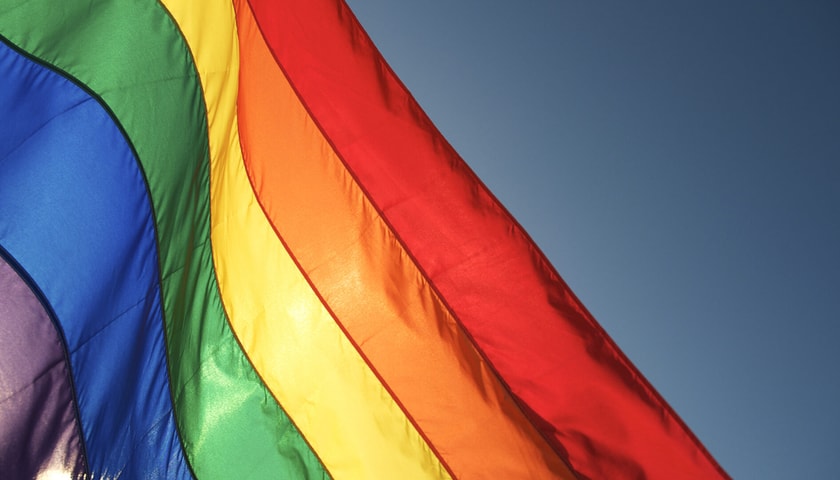
LGBTQ+ identified individuals exist in all areas of British life, from sports to science, and from acting to medicine. Some of these individuals have made incredible contributions in their fields and their legacy in British society has lasted decades. There are many more examples than we have space for here, so these are just a few of the most influential LGBTQ+ figures in UK history.
Sir Ian McKellen 1939 – (Acting)
Sir Ian McKellen was born in Lancashire in 1939 and is today known worldwide as one of Britain’s most loved and respected actors. Sir Ian discovered the theatre when he was a child and remembers receiving a Christmas present of a Victorian theatre when he was nine. While studying at Cambridge University in the late 1950s he joined the Marlow Society, a student theatre club. He appeared in 23 plays during his three years at university.
After graduating with a degree in English Literature, he began a career as a professional stage actor in the 1960s. In 1966 he was cast in a BBC adaptation of David Copperfield, which brought him national fame, although his first love remained the theatre. His movie career began to take off in the 1980s, but it was the turn of the century which saw him cast as Professor Magneto in X-Men (2000) and Gandalf the Grey in The Fellowship of the Ring (2001). His portrayal of these two characters saw astonishing box-office success and his work cemented them as the definitive performance for years to come.
Sir Ian McKellen continues to work across stage and screen today.
Why Sir Ian McKellen is an Inspirational LGBTQ+ Figure
Sir Ian had been working professionally for over 25 years before he came out publicly about his sexuality. His revelation was prompted by a discussion on a Local Government Bill in 1988 known as Section 28 which encouraged him to become more politically involved. He became a co-founder of the LGBT rights lobby group Stonewall and a patron of several LGBT organisations, including Pride London and the LGBT Foundation.
Alan Turing 1912-1954 – (Science and Computing)
Alan Turing, born in 1912, was a pioneering British mathematician and computer scientist whose work has had an enormous impact on the modern world. Educated at King’s College, Cambridge, Turing is best known for breaking the German Enigma code during World War II, a feat that is estimated to have shortened the war by several years and saved countless lives.
After the war, Turing turned his focus to the development of computer science. He conceptualised what is now known as the Turing machine, which laid the foundational principles for modern computing. He also made significant contributions to the field of artificial intelligence with his development of the Turing Test, a method for determining whether a machine is capable of thinking like a human.
Despite his monumental contributions to science and the war effort, Turing’s personal life was marred by tragedy. Homosexuality was illegal in Britain at the time, and in 1952, Turing was prosecuted for homosexual acts. As an alternative to prison, he accepted chemical castration, a decision that had a devastating impact on his physical and mental health. Tragically, Turing died in 1954 from cyanide poisoning, an act widely regarded as suicide. Turing’s legacy endures, however, and in recent years, he has been celebrated as a hero not only for his scientific genius but also as a symbol of the fight for LGBTQ+ rights.
Why Alan Turing is an Inspirational LGBTQ+ Figure
Alan Turing is an influential LGBTQ+ figure primarily because of the way his struggles highlight the challenges faced by LGBTQ+ individuals in a time when homosexuality was criminalised. His monumental contributions to mathematics and computing, juxtaposed with the harsh treatment he received due to his sexual orientation, underscore the severe social injustices LGBTQ+ people have historically faced.
Turing’s prosecution in 1952 for homosexual acts and the subsequent choice he was forced to make between imprisonment and chemical castration spotlight the cruel and inhumane policies of the era. His tragic death, believed to be a suicide resulting from the immense pressure and humiliation of his situation, further emphasises the need for change in how LGBTQ+ individuals are treated.
In recent years, Turing has been acknowledged and celebrated not only for his scientific achievements but also as a symbol of resilience and the ongoing struggle for LGBTQ+ rights. His official royal pardon in 2013 and the continued recognition of his life and work serve as powerful reminders of the progress still needed in achieving equality and justice for the LGBTQ+ community. Turing’s story inspires advocacy and change, making him a lasting figure of influence in the LGBTQ+ movement.
Dame Kelly Holmes 1970 – (Sports)
Dame Kelly Holmes is one of the UK’s most distinguished athletes. Dame Kelly set several British records during her career, and two of these—the 600 and 1,000 metres—still stand today even though she retired from competing in 2005.
Dame Kelly was born in Kent in 1970. She began competing when she was 12 and at 13, she won her first major competition, the English Schools 1,500 metres. However, when she left school, her career turned in a very different direction—the British Army.
Dame Kelly served in the Women’s Royal Army Corps from 1988 for four years, then the Adjutant General’s Corps for another 5, before leaving the army in 1997. During her service, she became a Class 1 Physical Training Instructor (PTI). She remained active in athletics, too, and while serving, she competed in an event where she won a heptathlon. In one day, she also won a relay race, the 800 metres and the 3,000 metres. She also became the British Army judo champion.
After this, she returned to professional athletics, eventually competing in the 2000 and 2004 Olympic Games, where she won gold and bronze medals and set British records. She was named Sports Personality of the Year in 2004.
Why Dame Kelly Holmes is an Inspirational LGBTQ+ Figure
Dame Kelly only recently came out publicly as gay in 2022, although she had known she was a lesbian since the late 1980s. She is an inspirational figure because, although she feared her sexuality becoming public knowledge, she was able to overcome this and show the world who she really was. Her sporting achievements are—quite literally—world-class, and, notably, she achieved this success while struggling with mental health issues, which manifested as depression and self-harm, following training injuries in 2003. In 2008, she founded the Dame Kelly Holmes Trust to support disadvantaged athletes in the UK.
Today, she is an honorary colonel with the Royal Armoured Corps Training Regiment.
Patrick Trevor-Roper 1916-2004 – (Medicine)
Patrick Trevor-Roper was an influential British ophthalmologist born in the middle of the First World War in 1916. He attended the University of Cambridge and later the Westminster Medical School. By this time, World War II was underway, and in the hospital air raid shelter, he met eye surgeon E F King. Shortly after this, he served in the British Army, taking part in the Italian campaign and reaching the rank of captain in the New Zealand Medical Corps.
Following the war and his postgraduate training, Trevor-Roper returned to medicine and became a consultant ophthalmic surgeon at Moorfields and Westminster Hospital. His work in medicine extended far beyond two London hospitals. He established eye hospitals in Lagos, Nigeria, Addis Ababa and Sierra Leone, wrote textbooks, edited leading ophthalmic journals, and even found time to write a book on the eyesight conditions of famous painters, deduced from his understanding of how they perceived and rendered perspectives and proportions in their work.
We also have Patrick Trevor-Roper to thank for the convenience of buying reading glasses over the counter after he challenged the monopoly opticians had held until his intervention in the 1970s. This is a wonderful example of how a small change in society has benefitted hundreds of thousands of people in the decades since.
Why Patrick Trevor-Roper is an Inspirational LGBTQ+ Figure
In addition to his medical career, Trevor-Roper was an important figure in the early gay rights movement in the UK. His personal experiences as a gay man in a time when homosexuality was criminalised in Britain led him to advocate for legal reform. He was instrumental in providing evidence to the Wolfenden Committee in 1957. The committee met 60 times between 1954 and 1957, and in this time Patrick Trevor-Roper was one of only three men to provide oral testimony. The final report recommended the decriminalisation of homosexual acts between consenting adults in private, which was a pivotal step towards the eventual change in law in 1967.
Caroline Cossey 1954 – (Acting and Modelling)
Caroline Cossey, who is also known by the name Tula, is a British model and transgender activist whose story brought significant attention to the rights and struggles of transgender people in the UK and around the world.
Born in 1954, Cossey grew up in Norfolk, England and was assigned male at birth. From a young age, she felt a mismatch between her gender identity and her assigned sex. She began hormone therapy in her late teens and underwent gender confirmation surgery in 1974 at age 20.
Caroline Cossey’s modelling career took off shortly after her surgery, and she found success as a glamour model. She appeared in top fashion magazines and was part of a cabaret show in Paris. Her involvement in the James Bond film “For Your Eyes Only” in 1981 marked a high point in her career, as she was featured as one of the Bond girls.
However, her career faced a significant setback when a British tabloid publicly outed her as transgender after the release of the Bond film. This exposure led to intense public scrutiny and personal challenges, including discrimination in the modelling industry.
Why Caroline Cossey is an inspirational LGBTQ+ figure
In response to the challenges she faced, Cossey became an outspoken advocate for transgender rights. She fought legal battles for the right to legally change her birth certificate gender and for the right of transgender individuals to marry. In a landmark case, Cossey took her fight to the European Court of Human Rights. Although the court initially ruled against her in 1990, it acknowledged that not recognising her gender identity violated her rights. This case was instrumental in advancing legal rights for transgender people in Europe.
Caroline Cossey has also authored two autobiographies, “I Am A Woman” and “My Story”, in which she details her experiences as a transgender woman and model. Through her public presence and advocacy, she has helped raise awareness and foster understanding of transgender issues, contributing significantly to the ongoing fight for transgender rights and acceptance.
For more articles on LGBTQ+ issues, read 10 Facts About Pride Month і What Does it Mean to Be a Transgender Ally.
Ідіть далі з армійськими курсантами
The Army Cadet Force is committed to the principles of різноманітність та інклюзія because we value the strength that comes from diverse life experience. To find out more about the Army Cadets and get involved, зверніться до місцевого осередку вже сьогодні.