5 Famous World War 1 Poems for Armistice Day
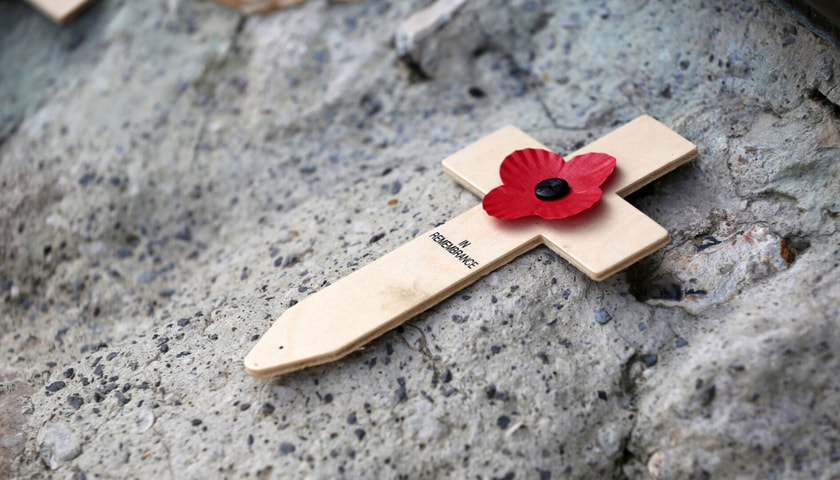
Before the First World War erupted across Europe, poems about war used to be… different. Before the trenches and the fields of Flanders, famous war poems were usually focussed on the glories of war and the great honour in battle. Take a look at this verse from Alfred Lord Tennyson’s “Charge of the Light Brigade”, for example – a poem about an ill-advised cavalry charge that went terribly wrong:
Stormed at with shot and shell,
Boldly they rode and well,
Into the jaws of Death,
Into the mouth of hell
Rode the six hundred.
It’s thunderous, pulse-raising stuff – the sort of imagery that would have had young boys and girls across the country throwing makeshift saddles over their kitchen chairs and recreating the infamous charge with their friends on Sunday afternoons. Only… well, Lord Tennyson wasn’t માં the Light Brigade. And if he had been, he’d likely not have had so many gallant stanzas floating around his head about the ordeal.
Why World War 1 Poems are Different
World War 1 poems were like nothing that had come before. For starters, many of the most beautiful and tragic works produced during those four terrible years were written by the soldiers who were experiencing the terrors of trench warfare first-hand. Gone were the days when imaginative members of the aristocracy would sit at their desks making paintings and poems about battles that happened decades or even centuries before. Poems from the First World War were written first-hand, by the soldiers themselves. They were truthful, they were pensive, and they were angry.
Below, we’ve collected excerpts from several of the better-known World War 1 poems, along with a couple you may not yet have heard. You’ll see the change from pre-WW1 poetry in their verses. After any tragedy or crisis, people turn to art and poetry to contextualise the terrible things that have happened, and to make sense of them. After the First World War, young soldiers returning home without their friends tried to put into words the true horrors of the war – both to deal with their post-traumatic stress (then referred to only as ‘shellshock’), and to try to ensure a war on such a scale would never happen again. But of course, it did.
First World War Poems
Note: due to the length of some of the following poems, we’ve selected excerpts rather than including the whole poem. You can find them all in their entirety at poetryfoundation.org.
For the Fallen (Extract) By Laurence Binyon
They shall grow not old, as we that are left grow old:
Age shall not weary them, nor the years condemn.
At the going down of the sun and in the morning
We will remember them.
They mingle not with their laughing comrades again;
They sit no more at familiar tables of home;
They have no lot in our labour of the day-time;
They sleep beyond England’s foam.
The first poem in this list was not written by a combatant of the First World War; British poet Laurence Binyon was too old to enlist in the armed forces by 1914. However, Binyon volunteered at a hospital in France in 1915, and the following year, he headed to the battlefield in Verdun to look after wounded British and French soldiers.
Binyon’s poem was written in 1914, after early reports came back to Britain of the huge number of casualties on the Western Front. At this point in the war, it was assumed things would be wrapped up neatly by Christmas, and, in many other poems produced in the same period, the tone was still one of glory and triumph. Binyon’s poem stands out for its tenderness and sense of loss – something that would become more and more prevalent as the next four years ground by.
The Soldier (Extract) By Rupert Brooke
If I should die, think only this of me:
That there’s some corner of a foreign field
That is for ever England. There shall be
In that rich earth a richer dust concealed;
A dust whom England bore, shaped, made aware,
Gave, once, her flowers to love, her ways to roam;
A body of England’s, breathing English air,
Washed by the rivers, blest by suns of home.
Rupert Brooke’s poem, “The Soldier”, was written shortly after he enlisted in August, 1914. He was already well-known as a war poet before he joined the war, but it was this poem – published in 1916, a year after his death – that brought him posthumous fame. A romantic, wistful poem, Brooke’s work is often contrasted with the grounded, brutal First World War poems of Wilfred Owen. Both men fought and died in the same war, but their poetry reflects remarkably different outlooks.
As an interesting aside, when the moon landings in 1969 were taking place, the opening lines of “The Soldier” were altered for a speech to be made by President Richard Nixon, should the mission fail: “Every human being who looks up at the moon in the nights to come will know that there is some corner of another world that is forever mankind.”
In Flanders Fields (Extract) By John McCrae
In Flanders fields the poppies blow
Between the crosses, row on row,
That mark our place; and in the sky
The larks, still bravely singing, fly
Scarce heard amid the guns below.
We are the Dead. Short days ago
We lived, felt dawn, saw sunset glow,
Loved and were loved, and now we lie,
In Flanders fields.
Lieutenant-Colonel John McCrae was a Canadian physician, and he wrote “In Flanders Fields” after the funeral of a fellow soldier and friend, killed during the Second Battle of Ypres, which took place in Belgium in 1915. The recurring theme of poppies in the poem references an observation made by McCrae on the speed with which poppies grew over the graves of the fallen. In all of his war poetry, McCrae focusses not only on the devastation of war, but on the peace that follows.
Dulce et Decorum Est (Extract) By Wilfred Owen
Bent double, like old beggars under sacks,
Knock-kneed, coughing like hags, we cursed through sludge,
Till on the haunting flares we turned our backs,
And towards our distant rest began to trudge.
Men marched asleep. Many had lost their boots,
But limped on, blood-shod. All went lame; all blind;
Drunk with fatigue; deaf even to the hoots
Of gas-shells dropping softly behind.
It’s not hard to see the contrast between the previous three poems and Wilfred Owen’s “Dulce et Decorum Est”. Whereas early First World War poetry acknowledged the sadness of trench warfare and aimed to make sense of this through glorifying it, Owen’s poems are shockingly visceral. The imagery he created throughout his poems was so potent, in fact, that many readers back home in Britain disliked it, claiming it was unpatriotic.
The poem was written in response to war propagandist Jessie Pope, a civilian poet who encouraged the masses to sign up and fight in the trenches with lines such as “Who’s for the game?” The Latin verse that gives the poem its title – ‘Dulce et decorum est pro patria mori’ – is from a work by Roman poet Horace, and translates as ‘How sweet and fitting it is to die for one’s country’.
My Boy Jack By Rudyard Kipling
“Oh, dear, what comfort can I find?”
None this tide,
Nor any tide,
Except he did not shame his kind—
Not even with that wind blowing, and that tide.
Rudyard Kipling lost his son, John Kipling, in 1915 during the Battle of Loos. A year later, the famous author and poet wrote ‘My Boy Jack’, using the name ‘Jack’ in place. Ostensibly the poem is about Jack Cornwell, the youngest recipient of the Victoria Cross at just 16 years old. However, the name ‘Jack Tar’ was used at the time to refer generally to members of the Navy, meaning the poem looks beyond Kipling’s own family, to all families affected by the First World War.
WW1 poets were the first of their kind
First World War poems occupy a unique place in modern poetry. For the first time, most of the soldiers on the front lines were literate, and were able to write poetically about their experiences. When this fact is coupled with the new style of tender, visceral writing that emerged between 1914 and 1918, it’s safe to say that war poetry was changed forever. Thanks to the poetry of people like McCrae, Owen and Brooke, we now know the full extent of what the soldiers on the front lines experienced. And, as Binyon wrote, we will remember them.
On the eleventh hour of the eleventh day of the eleventh month, silence will fall across the United Kingdom for precisely two minutes. Read our guide to everything you need to know about Armistice Day for 2021.