Cadet’s First Aid Skills Help Seriously Injured Man
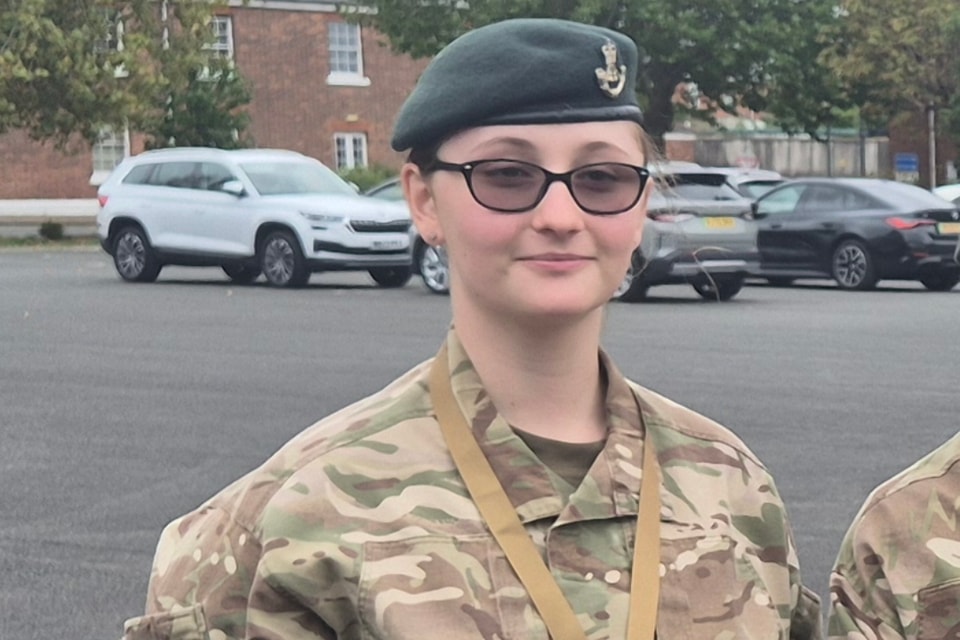
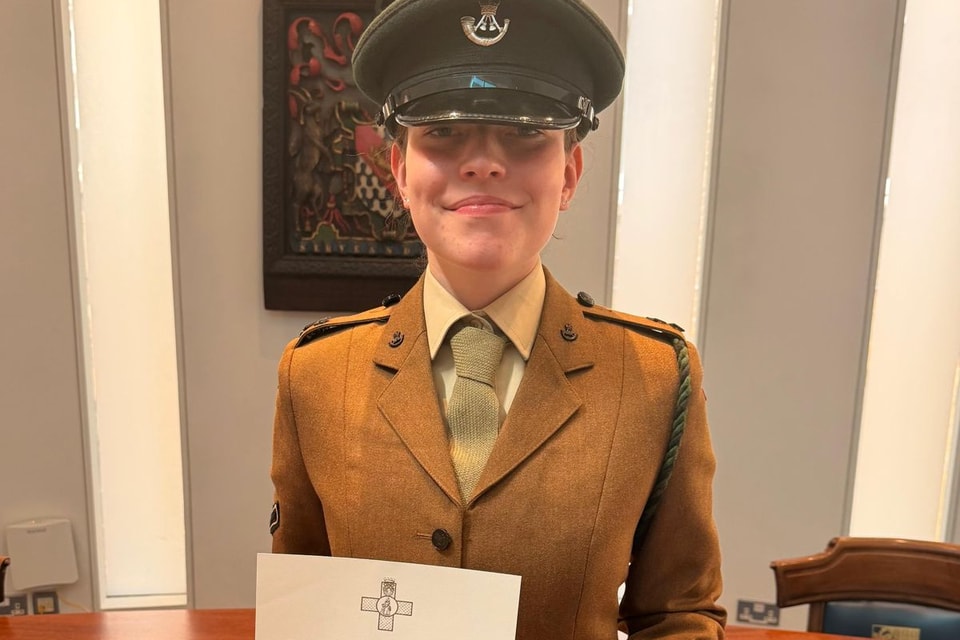
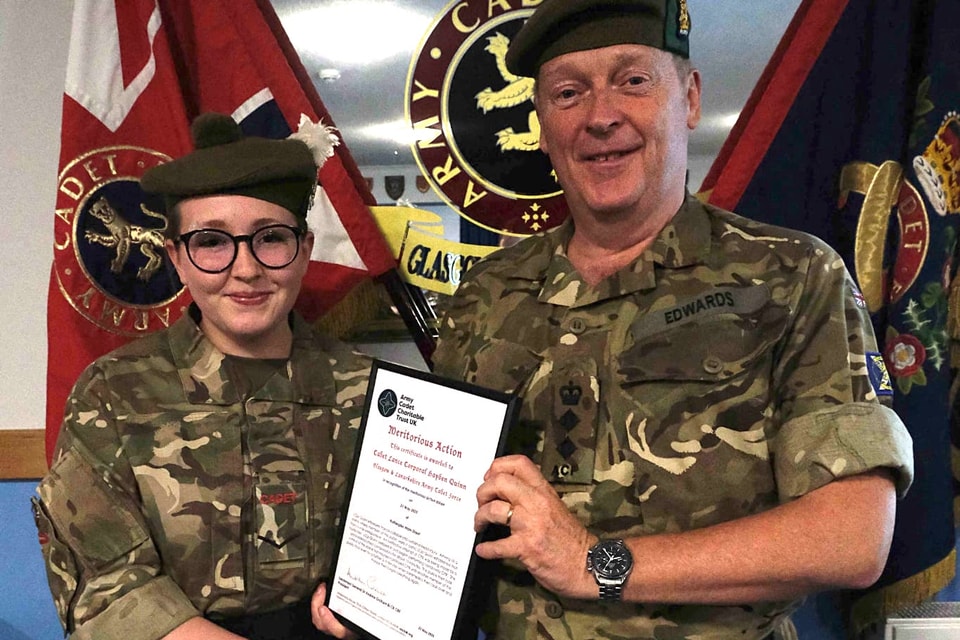
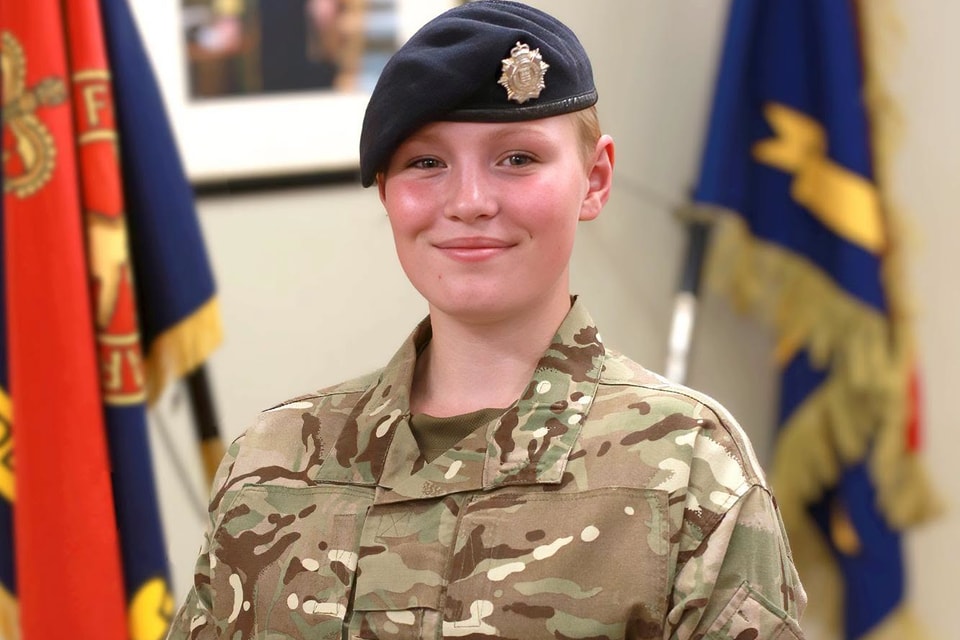
16-year-old Cadet Corporal Sophie Synakova used her Army Cadets first aid training to help a seriously injured man after a mobility scooter accident, showing courage and quick thinking.
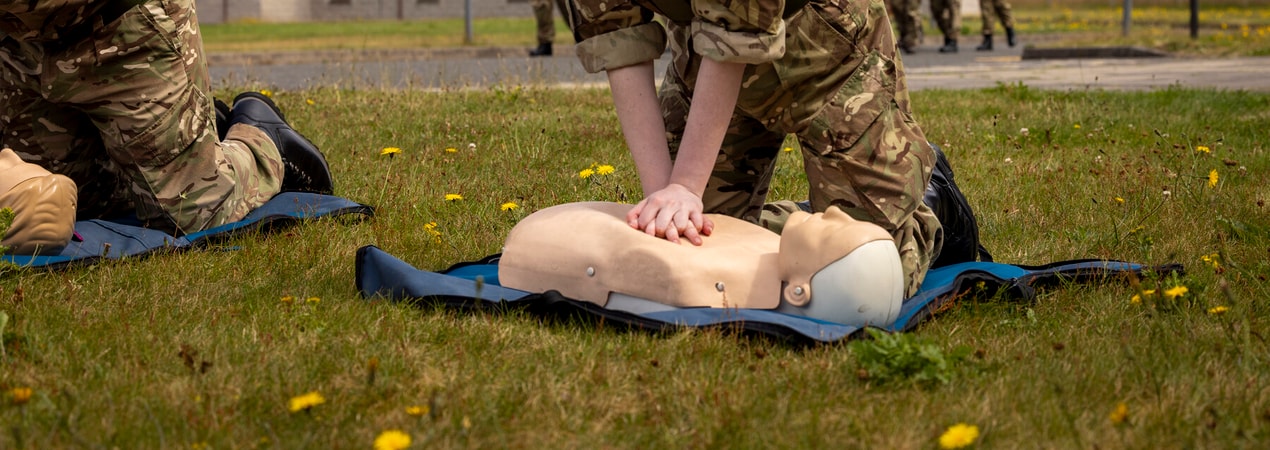
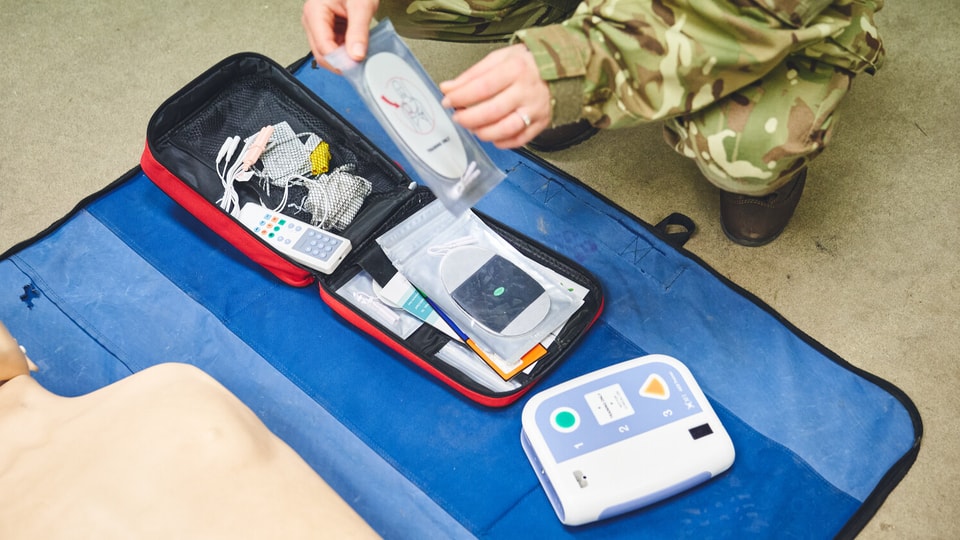
Learning first aid could help you save someone’s life. Through the Army Cadets, young people develop essential first aid skills, including CPR and using an automated external defibrillator (AED), treating injuries and responding confidently in an emergency. These skills build confidence, develop responsibility and equip cadets to help others when it matters most.
First aid is a core part of the Army Cadet Syllabus, with local detachments delivering practical training. As cadets progress, they build their knowledge, practise realistic emergency scenarios, and can work towards nationally recognised qualifications.
Whether you want to learn lifesaving skills, build your confidence or gain valuable qualifications for the future, Army Cadets first aid training is a great place to start.
First aid is one of the most valuable life skills you can learn. Knowing what to do in an emergency can make a real difference for someone at home, at school, or in your local community.
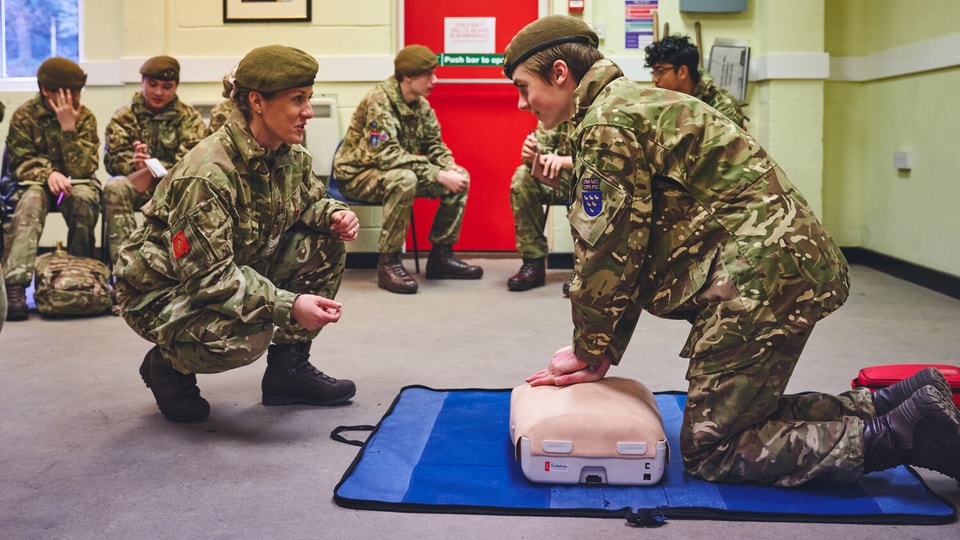
Through practical lessons and realistic scenarios, cadets learn to assess an emergency, stay calm under pressure, and provide appropriate first aid while waiting for professional medical assistance. This hands-on approach helps cadets build confidence, apply their skills in real life situations and understand how they can make the difference when someone needs help.
First aid training begins with the basics and becomes more advanced as cadets progress through the Army Cadet Syllabus. They develop their knowledge and practical skills, they also build confidence, teamwork, communication and decision-making skills that are valuable both in the Army Cadets and in everyday life. Army Cadets across the UK demonstrate the importance of these skills by using their training to help others during real-life emergencies.
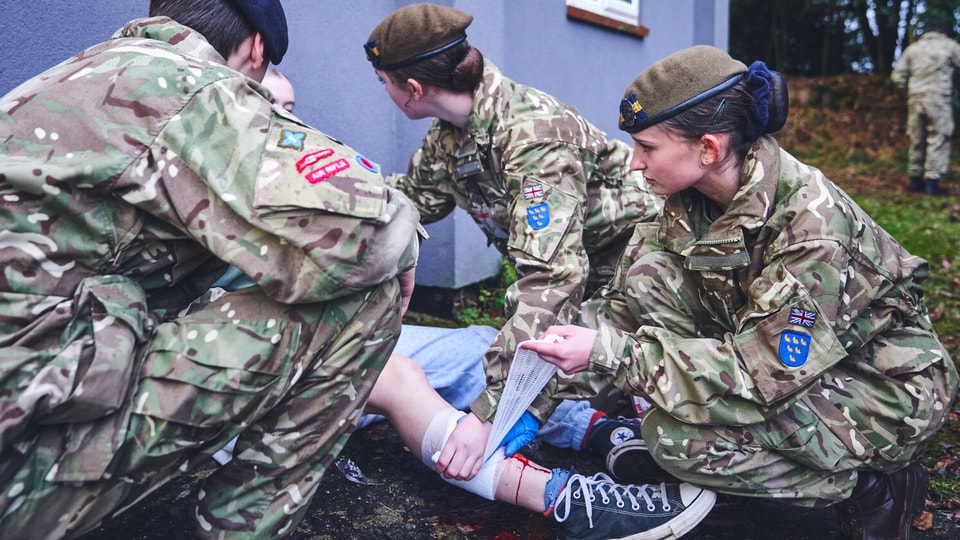
Cadets begin by learning how to recognise an emergency, assess the situation safely and provide basic first aid.
Training includes:
As cadets progress, they learn how to recognise and respond to a wider range of injuries and medical emergencies, including:
More experienced cadets can develop their knowledge of complex medical emergencies, including:
Practical exercises give cadets opportunities to apply their knowledge in realistic situations, helping them develop the confidence to respond appropriately when it matters most.
The Army Cadets offers a progressive first aid training pathway, giving cadets and adult volunteers opportunities to develop their skills and work towards recognised qualifications.
Who is it for? Cadets progressing through the Army Cadet Syllabus.
Cadets develop practical first aid knowledge through training at two star first aid
Training covers emergency response, treating injuries and managing medical situations, with opportunities to build on these skills as cadets progress.
Who is it for? Eligible senior cadets and adult volunteers.
This qualification develops the knowledge and practical skills needed to provide immediate first aid in an emergency.
Emergency First Aid at Work is an Ofqual-regulated qualification recognised by employers.
Who is it for? Senior cadets & Adult volunteers who require more comprehensive first aid training.
First Aid at Work provides broader workplace first aid knowledge, including managing injuries, illnesses, and emergency situations.
First Aid at Work is an Ofqual-regulated qualification recognised by employers.
Adult volunteers may also have opportunities to develop specialist skills through additional qualifications, including:
The courses and qualifications available depend on an individual’s role, responsibility and training requirements.
First aid is an important part of the Army Cadet experience, helping young people develop practical skills they can use throughout their lives.
From their first lessons to more advanced training, cadets gain hands-on experience through demonstrations, exercises and realistic emergency scenarios.
As they progress, they can work towards a youth first aid package and, where eligible, further recognised qualifications.
First aid training also encourages cadets to take responsibility, work as part of a team and develop leadership skills.
These skills are valuable beyond the Army Cadets, whether helping someone in an emergency, supporting their local community or preparing for future education and employment.
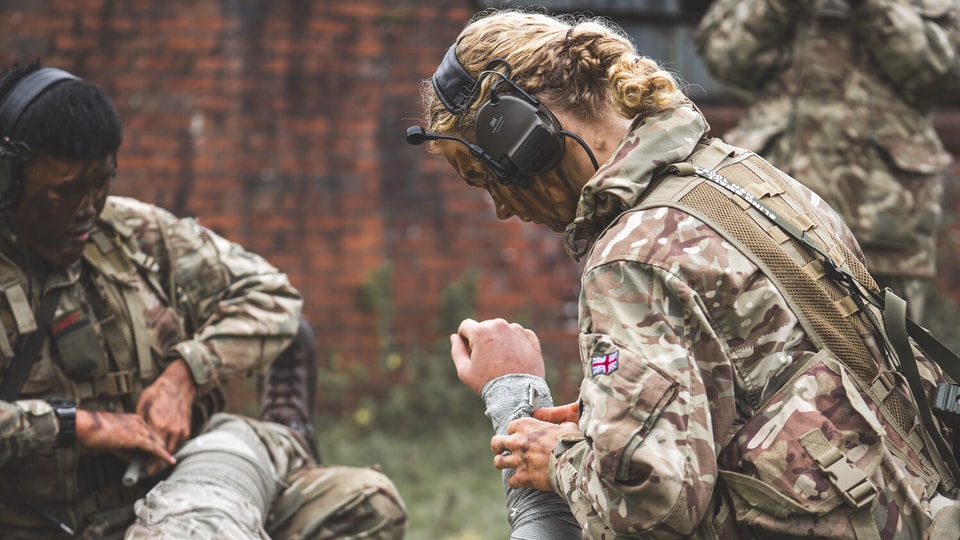
Adult volunteers receive first aid training to help ensure Army Cadet activities have appropriate first aid cover provision during Cadet activities.
Emergency First Aid at Work (EFAW) forms part of the induction training pathway. Further qualifications are available according to volunteer’s roles and responsibilities.
Adult volunteers may progress to First Aid at Work (FAW), a three-day qualification, delivered at County, Battalion or Sector level, by our own recognised volunteers’ trainers.
Immediate Response Emergency Care and Education and Training award L3
These courses are delivered at national level; adult volunteers can undertake advanced first aid and pre-hospital care training through the IREC.
Adult Volunteers undertaking the first aid trainer pathway will complete the Level 3 Award in Education and Training, providing a recognised teaching qualification to support the delivery of regulated first aid courses.
Qualified volunteers can also take part in continuing professional development to maintain their knowledge and practical skills.
Interested in volunteering? Discover how you can develop new skills, gain qualifications and make a difference to young people by becoming an Army Cadet adult volunteer.
Looking for first aid training near you?
First aid is an important part of the Army Cadets training programme, helping young people across the UK develop practical skills and the confidence to help others in an emergency.
Find your nearest detachment by searching your postcode, town, or city.
Once you’ve found a local detachment, you can enquire about joining the Army Cadet and discover the first aid training opportunities available.
Cadets begin by learning the essential first aid skills and progress through the Army Cadet as their knowledge and experience develop. More advanced training and specialist courses may also be available at county, regional or national level.
Training availability and qualification opportunities may vary depending on your age, experience and stage of training.
Learning first aid is about more than understanding what to do. It’s about having the confidence to put those skills into practice.
Army Cadets regularly take part in practical first aid exercises and competitions that challenge them to respond to realistic emergencies.
Working individually and in teams, cadets must assess casualties, identify injuries, provide appropriate treatment and communicate effectively under pressure.
Competitions take place at local, county, regional and national levels, with opportunities for successful teams to progress to national Tri-Service competition alongside other cadet organisations.
These experiences help cadets strengthen their first aid knowledge while developing teamwork, leadership and problem-solving skills.
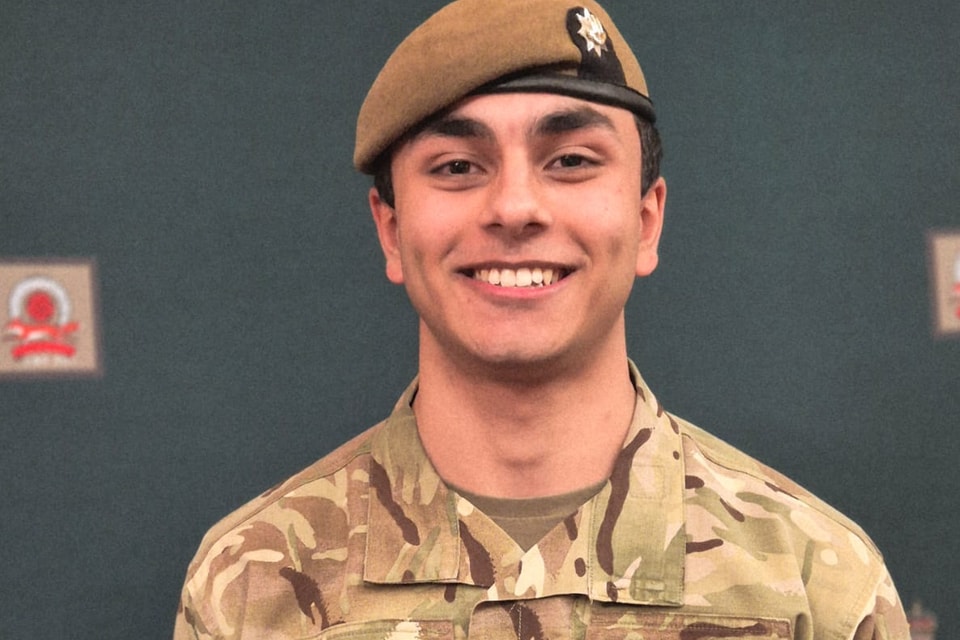
Here are some examples of our truly remarkable cadets and volunteers who have used their skills learnt in the Army Cadets to help others.


Army Cadets learn a range of essential first aid skills, including CPR, using an automated external defibrillator (AED), controlling severe bleeding, managing choking and responding to injuries and medical emergencies. Through practical lessons and realistic scenarios, cadets develop the knowledge and confidence to assess situations, provide appropriate first aid and seek help when needed. Training progresses through the Army Cadet syllabus, with opportunities to develop more advanced skills as cadets gain experience.
No. You don’t need any previous knowledge or experience to get started. Army Cadets learn the basics first and build their skills as they progress through the syllabus.
Yes. Cadets can work towards Emergency First Aid at Work and First Aid at Work qualifications as they progress through the syllabus. Adult volunteers may also access nationally recognised qualifications, including Emergency First Aid at Work.
Young people can start learning first aid when they join the Army Cadets from age 12. Training starts with essential first aid skills and progresses as cadets gain knowledge and experience. Some advanced courses and recognised qualifications have additional age or eligibility requirements.
First aid is part of the regular Army Cadet training programme. Costs will be covered by your County, Battalion, Sector or Contingent.
First aid training takes place through local Army Cadet detachments, county training centres or Army training facilities at national level.
First aid is essential for expeditions for the Duke of Edinburgh’s Award.
It may also be suitable for the Skills section of the Duke of Edinburgh’s Award, provided the activity meets the relevant requirements and is approved as part of your programme.
Discover more about completing your Duke of Edinburgh’s Award with the Army Cadets.
Adult volunteers undertake first aid training appropriate to their responsibilities, beginning with Emergency First Aid at Work. Additional opportunities include First Aid at Work, Immediate Response Emergency Care training and teaching qualifications.
Yes, Emergency First Aid at Work, First Aid at Work and Immediate Response Emergency Care are nationally recognised and regulated by Ofqual.
Whether you’re interested in learning CPR, developing emergency response skills, or working towards recognised qualifications, Army Cadets gives you the chance to learn practical first aid skills that could make a difference.
You’ll gain confidence, meet new people and develop skills that can stay with you for life.
Find your nearest Army Cadet detachment and discover where your first aid training journey could take you.
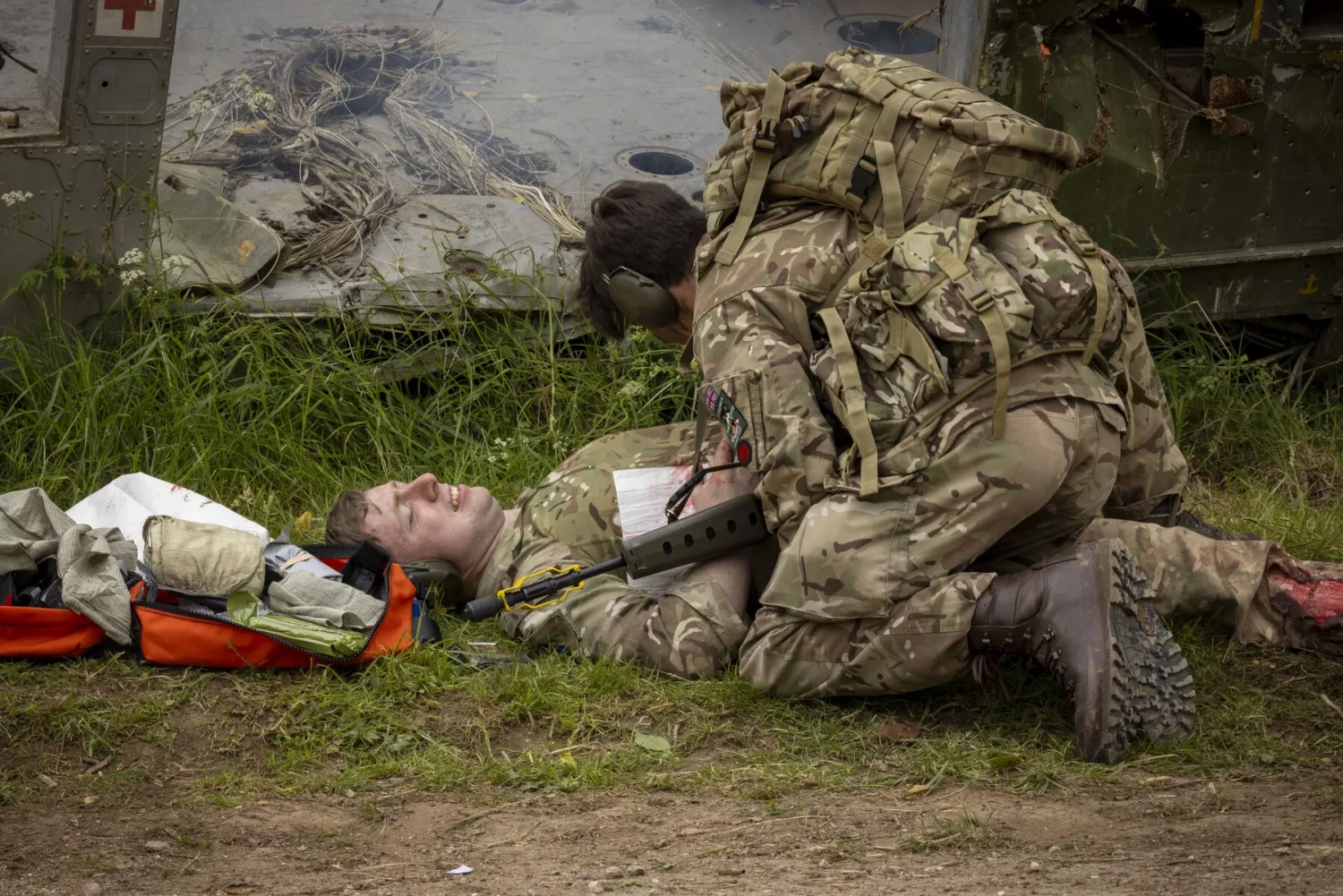
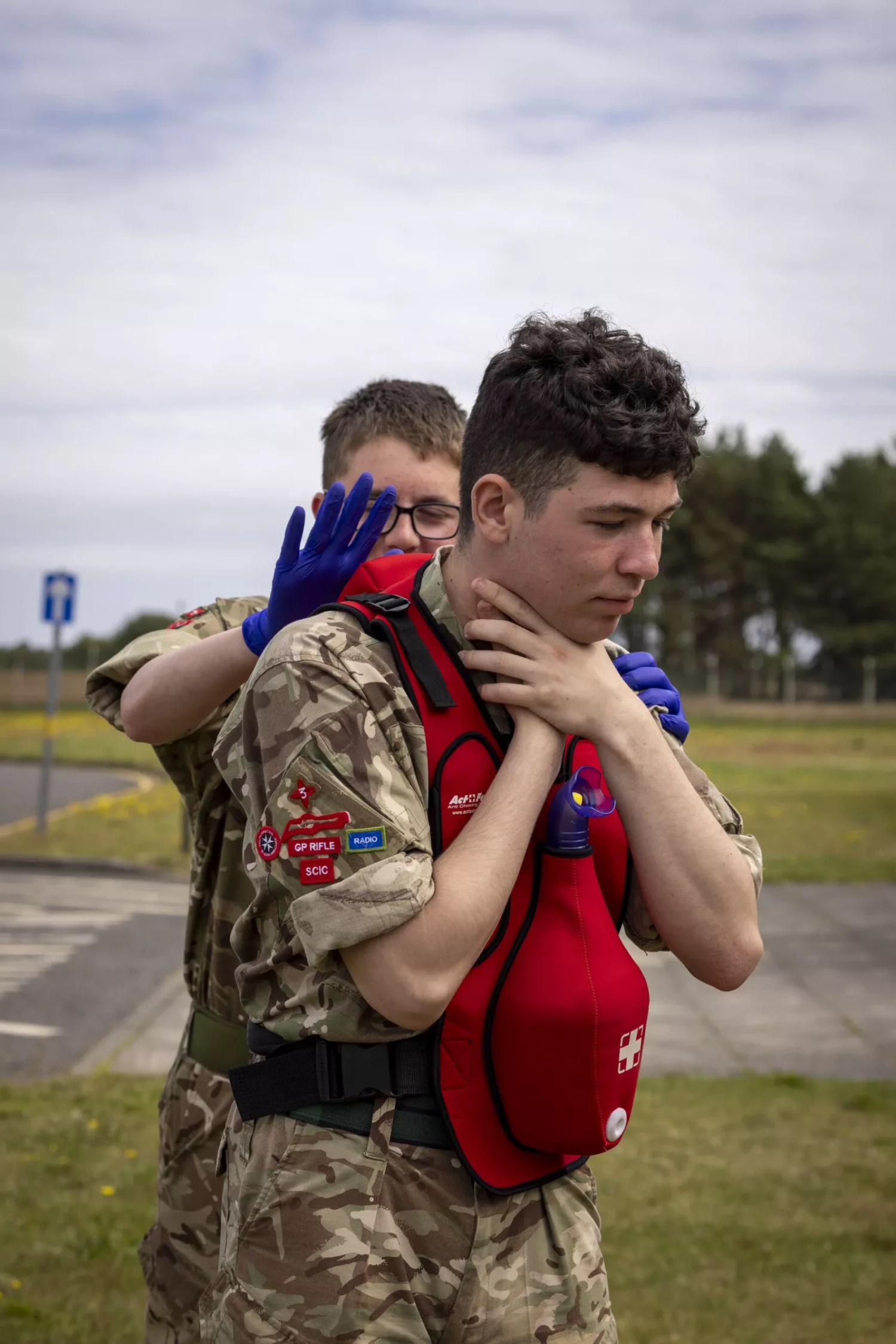
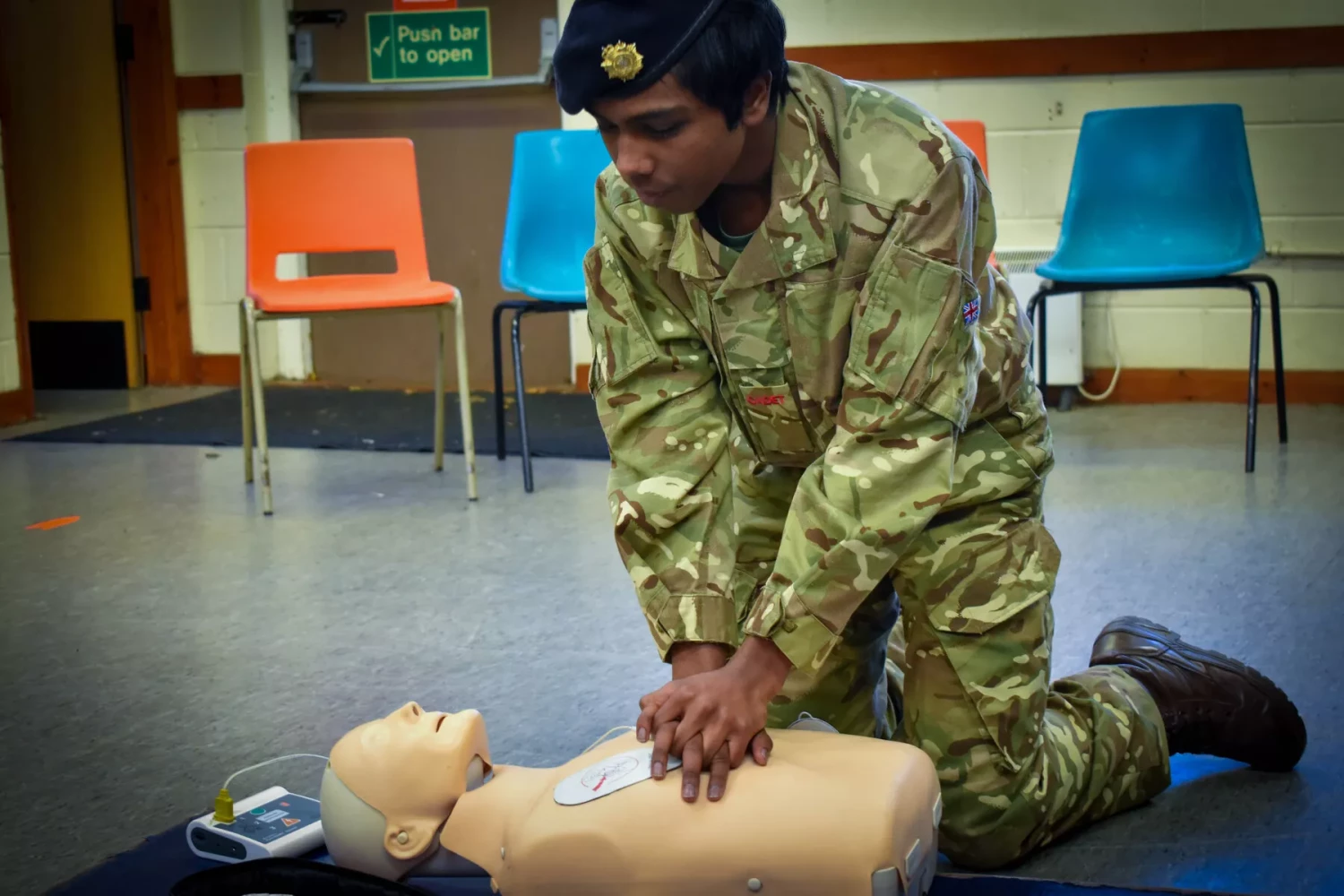
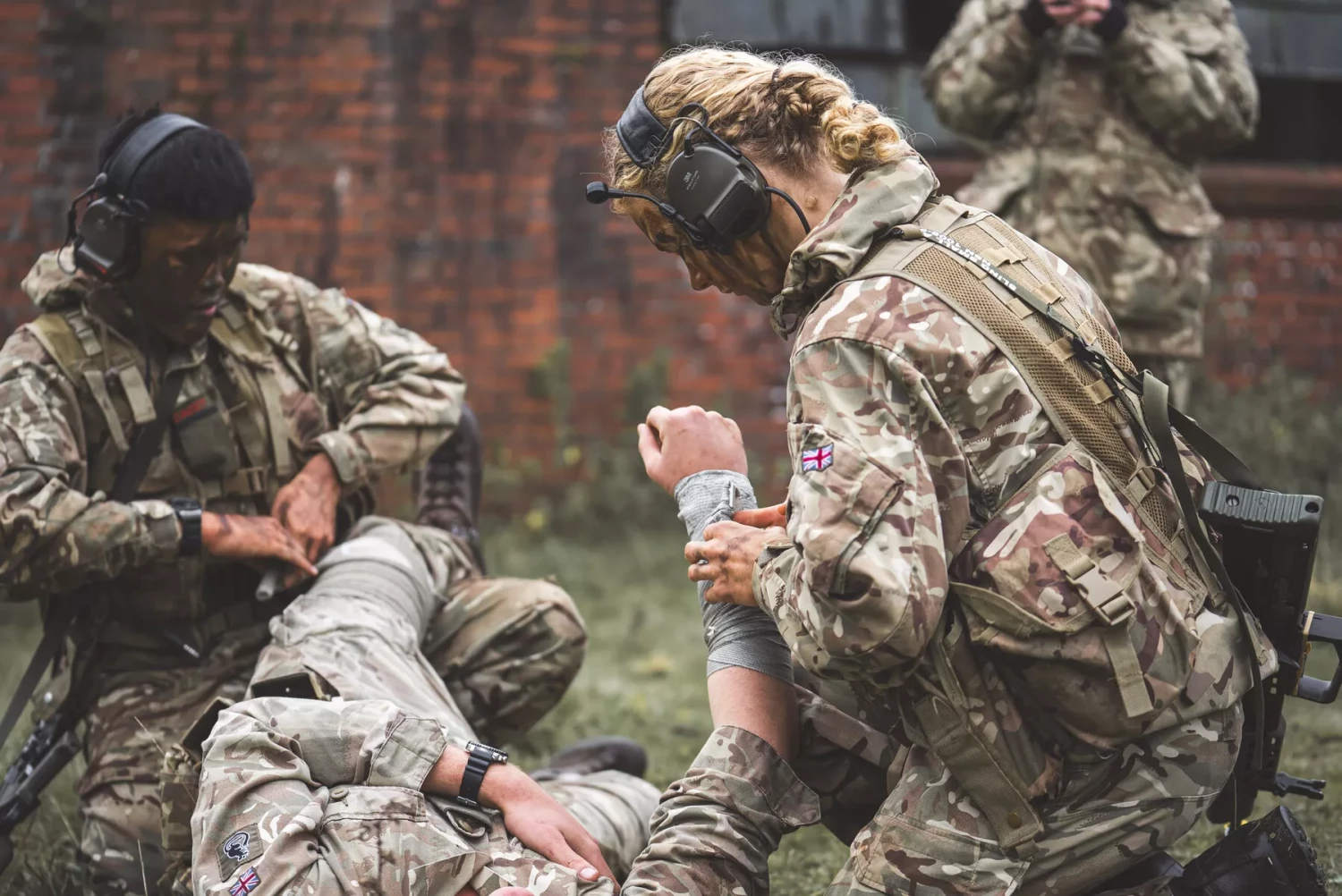
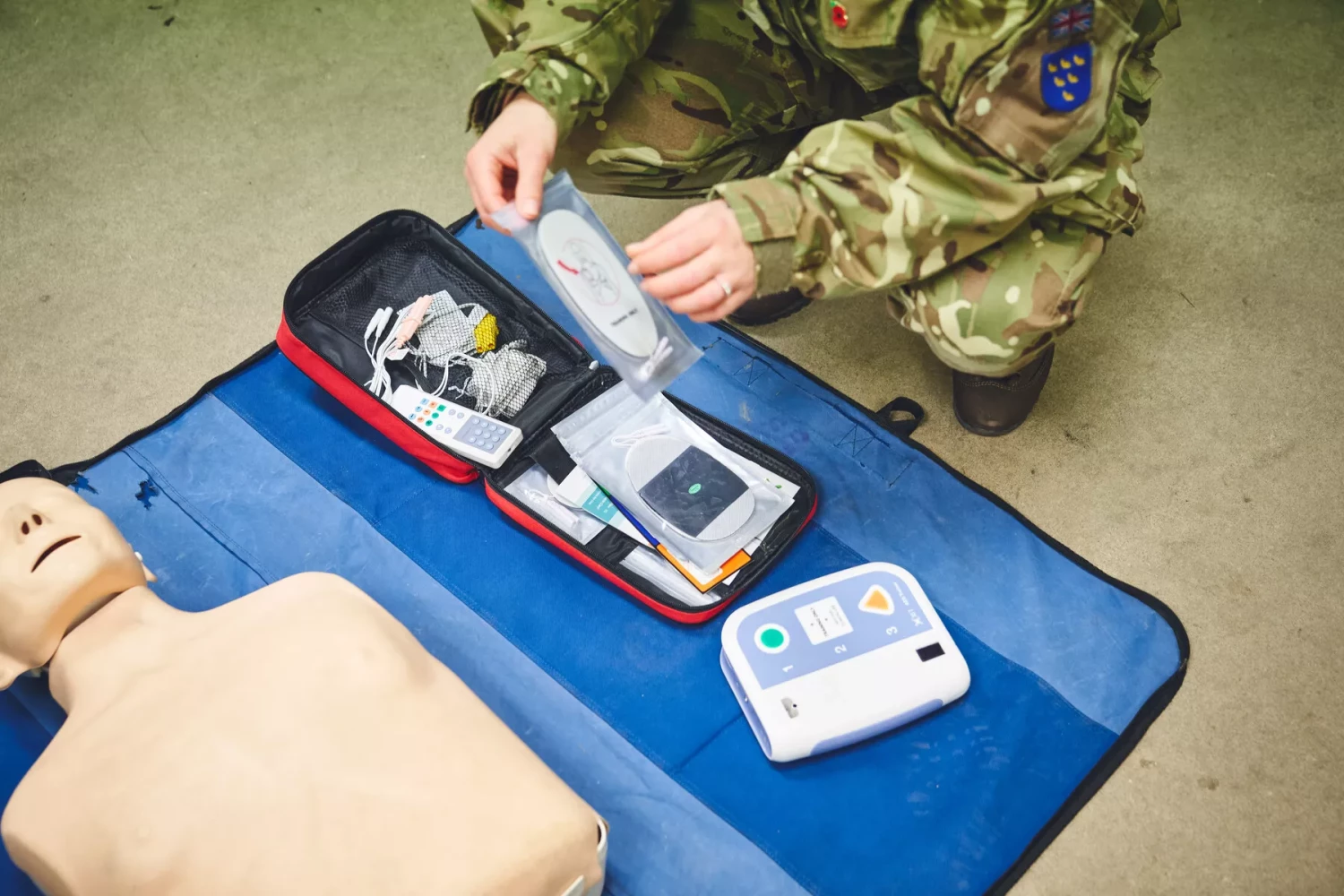
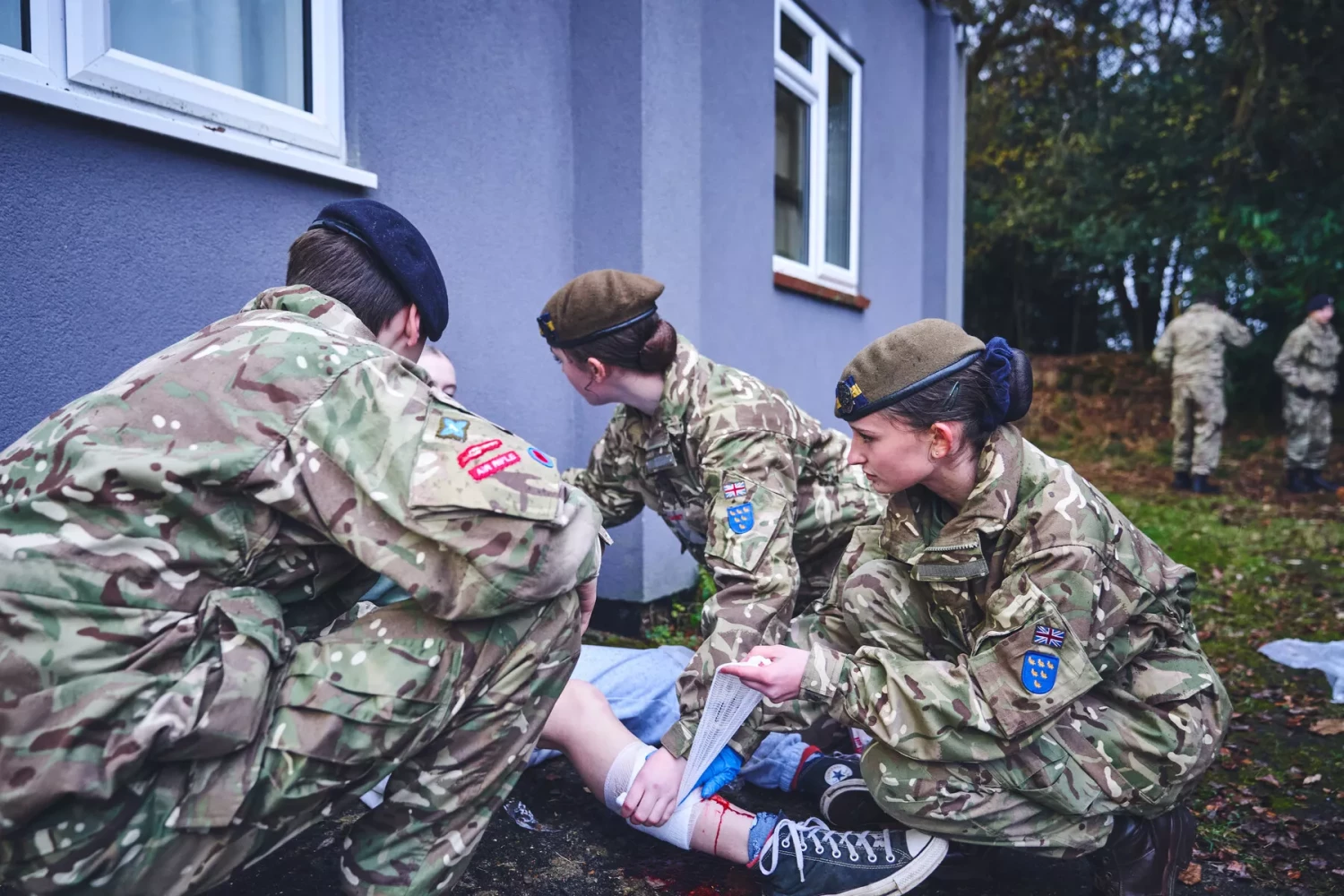
Discover first aid training in action, from cadets practising CPR and treating injuries to working together during realistic emergency scenarios and competitions.
CLICK ANY IMAGE BELOW TO VIEW LARGER


First aid is just one of the many skills you can develop through the Army Cadets.
The Army Cadet Syllabus also includes navigation, fieldcraft, communication, community engagement, leadership, music and keeping active.
These activities help cadets develop practical skills, confidence and teamwork through new experiences and challenges.