Life in the University Officers’ Training Corps
Off to uni? Try something new and take the fun, adventure and training of the Army Cadets to a whole new level by joining the University Officers’ Training Corps (UOTC).
UOTC: the low-down
What is UOTC?
It’s similar to a university club but operated by the British Army. A university society with a difference, it provides transferable skills, personal development and adventure.
The UOTC’s aim is to develop the confidence and leadership potential of members via four areas of training. The first is military training (it mirrors a portion of the Army Reserve Officer Commissioning Course operated by the Royal Military Academy Sandhurst (RMAS)). The second is adventurous training (AT), which includes pursuits such as hiking, skiing, canoeing, and mountain climbing. The third area is sports and fitness, and the fourth is leadership and community challenges.
UOTCs are sponsored and funded, and members are paid for the time they spend in the organisation. There’s no requirement to join the Army afterwards.
Is the UOTC mostly made up of former cadets?
About a quarter of UOTC members were previously in the Army Cadets, so it’s not a requirement – many people join through a friend or flyer.
Is it beneficial to have been an Army cadet?
If a person has been a cadet previously, their basic skills often show – from turnout and kit to weapons handling and leadership – which can enhance their confidence and the experience gained.
How do students join?
Mainly through the whole of the freshers’ fairs. Officer cadets’ tents and stands have stalls where freshers (students) can learn about the UOTC.
What are students paid?
You won’t get rich by being in the UOTC, but it helps to offset student living costs. Officer cadets are typically paid £50 each day they train, which rises to £60 in their third year. Students are also paid around £20.00 a session for attending the annual two-week summer camp, as well as being paid for travel and food.
What commitment is required?
Students don’t need to join for a year at a time. If they don’t like it they can leave at any point. Most people start with the commitment of a few hours per week during term time (from Monday to Thursday). The UOTC provides – and doesn’t ruin – the holidays as exam periods + studies come first.
What if you want to join the Army afterwards?
It’s a great stepping stone to life as an Army officer if you join, but that’s not in terms of selection (you won’t get in just because you’ve done UOTC). The UOTC trains future leaders with leadership tasks, and taking a Sandhurst weekend, knowing how to wear uniform and how to drill. It gives people a head start and a great deal of confidence.
Meet the officer cadet: Charlie Foster
OCdt Charlie Foster, 22, joined Northumbrian UOTC in 2020 while studying biology at Newcastle University.
Why did you join the UOTC?
I was in my school’s CCF for three years and became head of its Army section. I loved it – the camps, weapons training, drill and adventurous training, sport – all of it! Being in the CCF got me interested in joining the Army, and when a former student returned to my school to give us a talk on the UOTC, I knew I had to find out what a UOTC unit offers.
Which sports have you done in the UOTC?
I’ve been on two fantastic surf trips to Cornwall – I’ve never surfed before and now I’m a surf-fiend! I’ve also been able to work on long-distance trips (1.9 miles) for triathlons! UOTC has helped with my foundation training. UOTC isn’t affiliated with football, rugby, athletics or the other sports. You don’t have to be good at sport, as you can just play for fun too!
To introduce a new sport, you just get the approval and set up a proper committee, but the staff help you. Someone introduced bouldering, some triple jumpers once set it up – who had a great time!
How about adventurous training or similar activities?
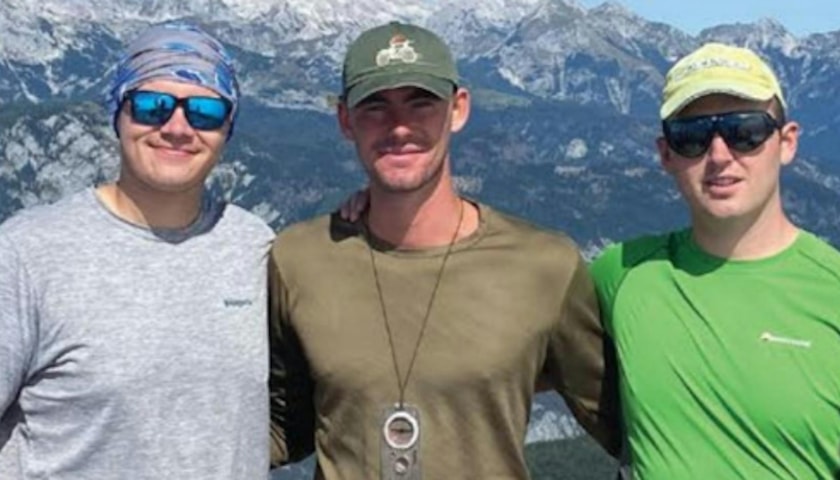
I spent a fantastic week mountaineering in Slovenia; we were on a Summer Mountaineering Foundation location. We also went on a Foundation qualification too. I’ve also been on a small winter deployment to Gibraltar, which included training in kit, up areas and tunnel warfare in the famous rock, as well as AT activities like sea kayaking and paddleboarding, and cultural tours.
The camp itself had solo parachute jumps, and although bad weather prevented me from getting my parachuting licence, I have got a parachute jump on my record! There are so many opportunities, and some include trekking weekends. We’ve also gone skiing in the Italian Alps and experienced an Austrian military ski operation, which teaches SOP prep/ orienteering for other activities, as well as offering a look at sport for those joining the Army.
What’s the social scene like?
Most officer cadets go to the Mess after training, where everyone mixes and relaxes in a relaxed environment. The trips and activities are severely subsidised and there are informal social events each week. There are other informal social settings that aren’t uniformed or tied to a Mess and at each UOTC unit, so you get to mix with people from other universities.
The annual regimental dinner is a grand occasion where students get to bond and be in formal dress uniform. There’s a good mix of other formal or fancy-dress events throughout the year, and the highlight is the black-tie summer ball.
How has your UOTC experience affected your career choice?
I’ve now pursued a career as an Army officer. The experience I had from UOTC meant I had a good understanding of what I needed to pass the assessment centre.
Any tips for cadets thinking of joining the UOTC?
The UOTC is for everyone. It’s a diverse group of people, so you’re bound to make friends. It’s helpful to go through it with friends – it’s fun knowing someone who knows how to join and everything to gain.