Famous Battles in British History
تاریخ میں مشہور برطانوی لڑائیوں کے بارے میں پڑھیں۔ اگینکورٹ، ہیسٹنگز اور اسٹامفورڈ برج کی جنگ سے دو فتوحات اور ایک شکست کی کہانیاں یہ ہیں۔.
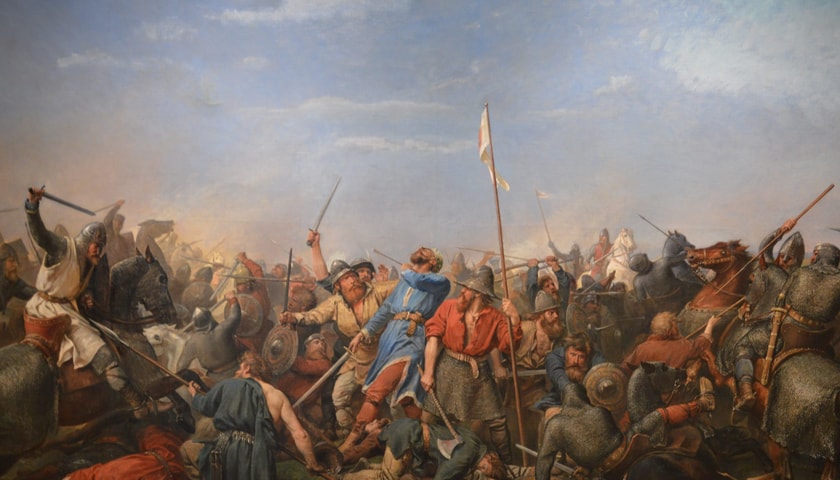
Recreation of Vikings Fighting at Stamford Bridge
Of all the famous battles that have happened throughout history, Britain has had more than its fair share.
سب سے مشہور برطانوی لڑائیوں میں یہ ہیں:
- اسٹامفورڈ برج کی لڑائی، جہاں ہیرالڈ دوم نے چار دنوں میں تقریباً دو سو میل کا فاصلہ طے کرنے کے بعد ایک نارس فوج کو شکست دی۔.
- ہیسٹنگز کی جنگ جس نے انگلینڈ میں نارمن کی حکمرانی قائم کی۔.
- اگینکورٹ کی جنگ، جہاں بادشاہ ہنری پنجم نے ایک اعلیٰ فرانسیسی فوج کو شکست دی۔.
آپ نے ان میں سے ایک یا سبھی کے بارے میں سنا ہو گا، لیکن اگر نہیں، تو ان مشہور برطانوی لڑائیوں کے بارے میں مزید جاننے کے لیے پڑھیں۔.
اسٹیمفورڈ برج کی لڑائی (25 ستمبر 1066)
Edward the Confessor’s death in January 1066 was the catalyst for a power struggle in England. The Norwegian king, Harald Hardrada, had his own claim to the English throne, supported by Tostig Godwinson, the brother of King Harold II. With Edward gone, Harald launched an invasion.
His army is often numbered at 10,000 men, but many historians estimate 7,000 to 9,000 is more realistic. While he found early success in his campaign throughout the north of the country, this would not last once news reached King Harold.
Harold II, rightly fearing a Norman invasion to establish their claim to the throne, maintained his army in the south and so was unprepared for an attack from the north. This was supported by feints (a tactical move designed to mislead or deceive an opponent) made along the south coast in early September. Harold was right to believe an attack was imminent, but he was wrong about the location.
Upon hearing the news of Harald’s invasion, Harold gathered his army and rode to Yorkshire at such a speed that his army was able to cover 185 miles in only four days. The Norwegian forces were taken by surprise, completely unaware that Harold’s forces were in the area. Crucially, the Vikings had left their heavy chainmail hauberks on their ships due to the heat, leaving them vulnerable.
The battle couldn’t start until Harold’s army crossed the choke point of Stamford Bridge. According to the Anglo-Saxon Chronicle, a single Norseman blocked the way until he was finally killed by an English soldier attacking from under the bridge.
Once across the bridge, the English attacked the Norse shield wall. Over the course of the battle, the English began to breach the wall and outflank their enemy. Norwegian reinforcements arrived later in the battle but were ineffective against the army defending its homeland. Harald and Tostig were both killed in battle, and a truce was agreed upon between Harold II and the invaders’ sons.
The Battle of Stamford Bridge signalled the end of the Viking age, but at the other end of the country, the Norman age was about to begin. Although Harold retained the field this day, his fear of Norman invasion from the south was about to be realised, and so Harold rode back south, gathering forces along the way, for what was to be his final battle.
ہیسٹنگز کی جنگ (14 اکتوبر 1066)
Perhaps one of the most famous battles in British history, the Battle of Hastings in the 11th century established Norman power in England through the defeat of Harold II. The Duke of Normandy (his title before he became known as William the Conqueror) claimed the right to rule thanks to deep Norman interests established during the reign of Edward the Confessor.
Harold II, Edward’s immediate successor, contested the Norman claim. Following his victory over the Norwegian invaders at the Battle of Stamford Bridge, only weeks earlier, Harold raced south to see off this new challenge to his throne.
Records and accounts vary, but William’s forces were probably at least 10,000 strong, with a mixture of infantry, cavalry and missile troops. He deployed these into three fighting groups with archers to the front and infantry at the rear. He held his mounted troops in reserve, which historians believe was probably so they could exploit openings in the English line.
Less is known about the defending English forces. Some fanciful Norman accounts record Harold’s army as being over a million strong, but the reality is more likely to have been around 10,000 infantry, according to modern historians.
Harold took advantage of the terrain in preparing his defence, making use of a hillside to position his soldiers, while marshy ground and woods guarded their flanks. To protect themselves and each other, the tightly packed English soldiers formed a shield wall. This, plus their height advantage over the French army, frustrated the Norman archers.
The English line held against the Norman infantry and cavalry, at least at first. A rumour soon spread amongst the invaders that William had died and they began to retreat. It was William himself who stopped the retreat by riding through his forces to show them he was still alive and then turned and led the counterattack against the pursuing English forces.
Later that day, William deliberately used this same tactic by sending in his cavalry and then withdrawing. This encouraged the English to give chase and thereby introduce breaks into their line, which William could exploit in the counterattack. It seems unlikely that this would have been a viable tactic if it were not for the speed and flexibility of the cavalry. Infantry troops attacking uphill and then retreating would surely have been overrun by the English pursuit.
While the record does not show this action to have been a decisive turn in the battle, it is an established military tactic still valid on the modern battlefield. Even Sun Tzu warned against this in The Art of War: “Do not pursue an enemy who simulates flight.”
The real victory in the battle came with the death of Harold himself. Famously remembered as having been shot in the eye with an arrow, the real cause of his death is still unknown. Although the Bayeux Tapestry does show a soldier with an arrow in his eye, he has not been positively identified as Harold.
Without Harold’s leadership, the English army began to flee. Only his royal guard, who formed a wall around Harold’s body, stayed to fight till the end. The Normans were ultimately victorious.
William’s victory over Harold shows the value of how courageous leadership, cunning tactics and the flexibility of combined arms can defeat an entrenched defensive position—and perhaps a little bit of luck.
The connection between the Battle of Stamford Bridge and the Battle of Hastings
Although these were two separate battles, they were only separated by a few weeks. They were both part of a larger defensive campaign undertaken by the English. The quick succession of battles against the Viking and the French armies was too much for English forces to overcome. The loss at Hastings and the impact of the Norman rule changed England forever with the introduction of French culture and the feudal system. Remnants of the feudal system can still be seen today, 1,000 years later, in areas like leasehold land ownership and titles used in the House of Lords.
اگینکورٹ کی جنگ (25 اکتوبر 1415)
Four hundred years later, English armies again fought the French. The Battle of Agincourt in October 1415 remains one of the most famous British battles and impressive victories of all time. William Shakespeare even used it as the backdrop for part of his play, Henry V.
سو سالہ جنگ (1337-1453) کے دوران بہت سے واقعات میں سے ایک، اگینکورٹ کا اہم بھڑکانے والا واقعہ ہنری پنجم کا اپنے پردادا ایڈورڈ III کے ذریعے ایکویٹائن پر دعویٰ تھا۔ زمین پر گفت و شنید کے لیے کھلا، ہنری نے 1.6 ملین کراؤن کی قیمت کے لیے اپنا دعویٰ ترک کرنے اور چارلس VI کی بیٹی کیتھرین سے شادی کی پیشکش کی۔ جس میں مزید 2 ملین کراؤن کا جہیز بھی شامل تھا۔ ہنری نے فرانسیسی جوابی پیشکش سے انکار کر دیا، جس نے اپنی شرائط کو توہین سمجھتے ہوئے جہیز کو صرف 600,000 کراؤن تک کم کر دیا۔ آخر کار، عظیم کونسل کی پشت پناہی کے ساتھ، ہنری جنگ میں گیا۔.
When Henry’s army reached Agincourt on 24 October 1415, they had marched 260 miles in under three weeks and found themselves greatly outnumbered. The French, anticipating the arrival of more troops, attempted negotiations to delay the battle. Henry declined and ordered preparations for the battle.
انگریزی فوج کی تعداد اب 8,500 کے لگ بھگ تھی جن میں سے 7,000 طویل کمان تھے۔ ہنری نے اپنی افواج کو میزائل دستوں کے ساتھ قطاروں میں لمبی لائنوں میں ترتیب دیا اور مرکز میں نائٹس اور مردوں کے ساتھ ہتھیار ڈالے۔ انگریزی کی جدید حکمت عملیوں میں تیر اندازوں کے سامنے تیز داؤ کا استعمال شامل تھا تاکہ حملہ آور شورویروں کو روکا جا سکے اور انہیں مرکز میں گھسایا جا سکے۔.
فرانسیسی فوج کے حجم کے بارے میں اندازے مختلف ہیں، لیکن زیادہ تر اکاؤنٹس اس بات پر متفق ہیں کہ اس میں کم از کم 15,000 جنگجو تھے۔ اس میں دو گھڑسوار دستے شامل تھے، ایک انگریزی مرکز کو توڑنے کے لیے اور ایک انگریزوں کے پیچھے کو ہراساں کرنے کے لیے۔ فرانسیسی لارڈز، عزت اور قیمتی تاوان کی تلاش میں، فرنٹ لائن میں جگہوں کا مطالبہ کیا، اور انہیں حاصل کر لیا۔.
اگر جنگ کھلے میدان میں ہوئی ہوتی تو کہانی بہت مختلف ہو سکتی تھی۔ فرانسیسی گھڑسوار فوج میدان جنگ میں زیادہ آزادانہ نقل و حرکت کرنے کے قابل ہوتی۔ جیسا کہ یہ تھا، خطہ، موسم، اور حکمت عملی انگریزوں کے حق میں تھی۔.
The initial French charge was so disorganised that some of the Knights did not even take part as they weren’t ready. English archers were able to shoot at this charge from both flanks and be well-protected by their defensive fortifications. The French horses, almost entirely unarmoured, took the brunt of these missiles. The injured animals panicked and fled through the French soldiers, causing more disruption. Then came the French assault on foot by Knights far better protected from the longbows thanks to their high-quality plate armour. They reached the English line but were exhausted by their march through the muddy conditions, and they struggled to fight in their heavy armour.
اگرچہ اب تک تیروں سے باہر، انگریز تیر انداز صرف ہلکے بکتر بند تھے اور کیچڑ والے حالات کا مقابلہ کرنے کے قابل تھے۔ وہ تلواروں اور اوزاروں کے ساتھ فرانسیسی شورویروں پر گرے، ان پر غالب آ گئے، اور فرانسیسی حملے کو توڑ دیا۔ نتیجتاً، ہنری پنجم کی فتح کا دعویٰ کرنے سے پہلے صرف وقت کی بات تھی۔.
Agincourt shows how better tactics and positioning, as well as some fortunate rain, can help an outnumbered and tired force to defeat a numerically superior opponent, which should, in theory, have carried the day.
آرمی کیڈٹس کے ساتھ مزید آگے بڑھیں۔
How different would these English battles have been if the armies knew what we know today? Modern communication and information systems, فیلڈ کرافٹ and even first aid courses would completely change ancient battlefields. No matter your ambition, the آرمی کیڈٹس کا نصاب can help you prepare for any challenge. Find your nearest detachment today.