How to Find the North Star – Navigating by the Stars, Explained
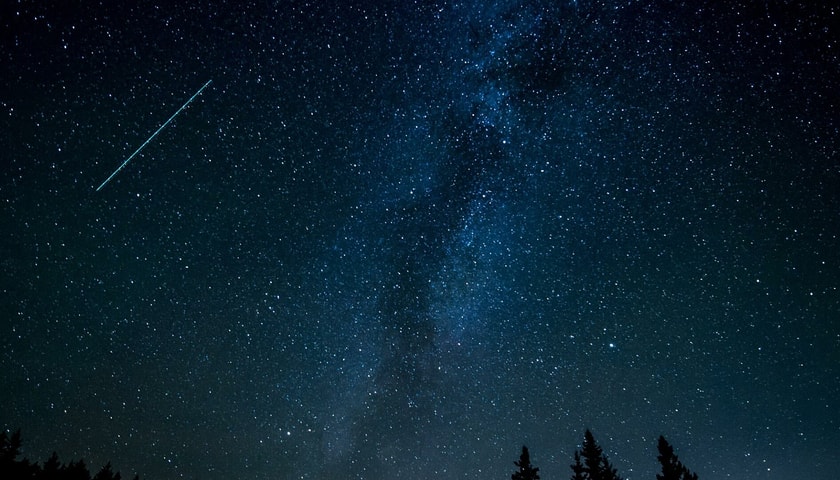
While we tend to rely on mobile phones and GPS today, knowing how to find north used to be a skill that could save your life. For thousands of years, sailors and travellers looked to the stars to guide them safely from place to place. Although you’re far less likely to be adrift on the high seas or lost on a windswept moor than, say, a seventeenth-century merchant, learning how to navigate by the stars is still a brilliant, fun, and useful life skill. What’s more, it only takes a few minutes!
The Army Cadets has contacted a team of માર્ગદર્શન experts to lend us their best snippets of advice, meaning you’ll soon be able to find your way using the stars – no matter how hopelessly lost you’ve gotten on your way to Aldi. We’ll cover how to find the North Star, what the North Star actually is, and plenty more. Prepare for some facts that are (cue theremin) out of this world.
What is the North Star, exactly?
The North Star is a star named Polaris. It is not, as people often assume, the brightest star in the sky. In fact, to the untrained eye, Polaris is just any old star. It’s special, however, because it sits almost perfectly at due north, no matter where you are in the Northern Hemisphere, which is the top section of the planet Earth.
The North Star remains almost perfectly still in the sky, while all the other stars around it rotate and move as the evening progresses, just as the moon rises and the sun sets. In short, if you can find Polaris in the night sky, you’ve found north.
Why doesn’t the North Star move?
To explain this properly, we’ll conduct an experiment.
Take an ant and stand it on a beachball, around where the equator would be. Now, rotate the beachball (slowly now – we don’t want the ant flying off). If the ant stares outward from this vantage point, it will see various parts of the room move into its field of view – a window, a door, a bookshelf, and finally back to the window it started on. This is the same thing that happens to us when we look up at night and stars appear to move across the sky. The stars don’t move – we do.
Now, repeat this experiment, only this time draw a tiny dot on the ceiling, directly above the beach ball, and kindly ask the ant to watch said dot while you rotate the beach ball once more. Afterwards, the (slightly dizzy) ant will report that the dot never moved, even while everything else in the room entered and exited its field of vision.
The North Star works in the same way. Because it’s perfectly in line with Earth’s North Pole, it appears in the same point in the sky at any point in the planet’s rotation. As you go nearer or further from the North Pole, Polaris will appear higher or lower in the sky, but always in the direction of north. If you were to stand at the North Pole, the North Star would be directly overhead.
Has Polaris always been the North Star?
Nope. The North Star is more of a title than a specific star, much as a king is simply the person who is wearing the crown for the time being. Polaris is just wearing the crown for the time being – in a few thousand years, it will change.
Here’s how it works. Imagine a spinning top, and how it wobbles slightly as it spins. Imagine that, shining out from the upper side of the spinning top, is a laser pointer. Would the laser pointer’s beam stay on one fixed spot on the ceiling, or would it move around as the top wobbles? If you guessed the latter option, give yourself a pat on the back and a congratulatory hair ruffle.
Earth wobbles in the same way as a spinning top, only much slower. As Earth turns on its axis, it wobbles, very slightly, over tens of thousands of years. This means that the star placed at true north can change over very long stretches of time. It takes around 26,000 years for each wobble to complete, and over the course of this time, the point above Earth’s north axis may be occupied by various other stars – or none at all. Don’t worry too much if this is confusing, however – Polaris will remain the North Star for, oh, at least another 12,000 years or so.
How to find the North Star
Finally, the moment you’ve been giddily waiting for: how to find Polaris.
Now, trying to locate one star amid the endless silvery depths of the universe is a bit like trying to find a needle in a haystack the size of Jupiter – so to begin, we need an easily recognisable point of reference. We need a constellation.
The Big Dipper is a constellation consisting of seven bright stars. It looks, as the name suggests, like a big spoon. Three stars make up the handle, and four stars make up the bowl. It’s a well-known constellation, recognised in various forms by cultures all around the world. It is also, handily, in the general proximity of the North Star.
To find Polaris and true north, you must first locate the Big Dipper in the night sky. Once you’ve searched the heavens and located the giant spoon, look for the four stars that make up the spoon’s bowl, which is really more of a square, given that it consists of four stars. Of this square, find the wall that is furthest away from the handle. It’s composed of two stars, named Dubhe and Merak.
These are ‘pointer stars’ – follow the line they make together away from the Big Dipper’s bowl, and you’ll find Polaris. You’ll know when you’ve spotted it; it’s the only bright-ish star in the area.
Another way to find the North Star
If, for some reason, you can’t locate the Big Dipper, you can also use the constellation Cassiopeia to find Polaris. To find Cassiopeia, look on the opposite side of Polaris to the Big Dipper. It’s a giant W shape, but a lazy sort of W – imagine a W that’s feeling a bit under the weather and has slackened a little.
No part of this constellation points to Polaris directly, but if you imagine the W as being upright, as you’d write it on a page, the North Star is two or three W widths above it.
Northward bound
And that’s it! Once you’ve memorised how to find the North Star, you’ll never be lost again. You may find yourself in a situation one day where your star knowledge comes in supremely handy, or you may not – but at the very least, you can look clever in front of your companions next time you’re out camping.
Unless, of course, it’s cloudy, in which case… good luck!
Header image by Neale LaSalle થી પેક્સેલ્સ
North Star, Big Dipper and Cassiopeia image by United States Army, Public domain, via Wikimedia Commons