Key Skills: How to Build a Fire Pit and Light a Campfire
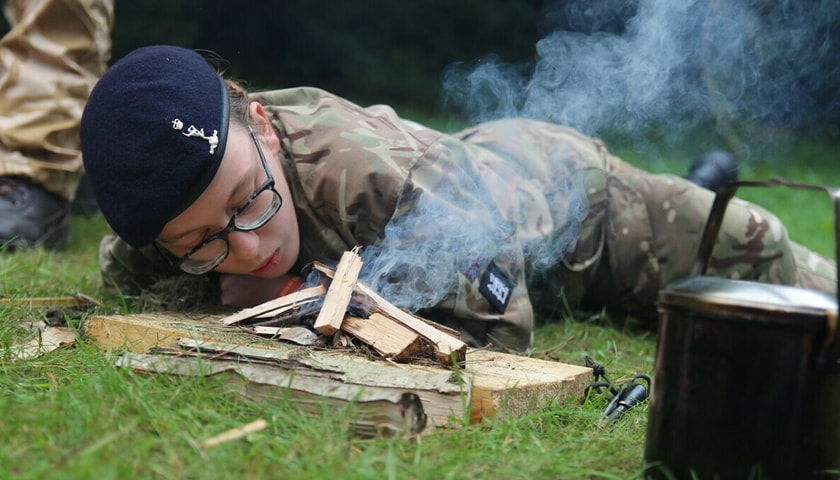
Learning how to build a fire pit and how to make a campfire is a rite of passage for all young adventurers. They’re life skills every person should have, and they’re simple and easy to learn. Once you’re able to build your own roaring fire, you’ll not only be better equipped to handle situations like heading out on Expedition with the Army Cadets, you’ll also be a hero at the next family camping trip.
Below, we’ll lay out everything you need to know about building a fire pit and starting a campfire, as well as how to keep your fire burning for as long as you need and how to put it out safely and leave the camping area with minimal mess. Alright, let’s dive in!
How to Build a Fire Pit
- Before you begin throwing soil about, check the rules of the area you’re in. Some campsites prohibit campfires, as do many national parks. Better to ask in advance rather than digging for an hour only to be informed you’ve accidentally exhumed an ancient graveyard.
- Clear the wider area of twigs, dead leaves, and anything remotely flammable – for obvious reasons.
- With a spade, dig a circular hole around a foot deep and three to four feet across.
- Line the lip of your brand-new fire pit with rocks, ideally around fist size or bigger. These rocks serve many purposes at once: they hold heat, block wind, safely mark the fire zone, and keep the campsite safe from blowing embers. You can also use them to prop up tools (or marshmallows on sticks) and dry off any damp socks and boots.
How to Make a Campfire
The key to a good fire is preparation. Knowing which types of wood to use will help you with this.
- Live wood (green wood) won’t burn.
- Dead standing trees are often habitats for many species of insects, animals, and birds – so don’t go pulling these down.
The three types of wood you should be collecting can be divided into tinder, kindling, and fuel. These are as follows.
- Tinder: broken twigs, fallen leaves, dead pine needles, dry grass
- Kindling: small sticks (up to forearm length)
- Fuel: larger pieces of wood (longer and thicker than your forearm)
Important tip: Stack your ‘fuel’ wood well away from the firepit!

Once you’ve gathered your wood, it’s time to build the campfire.
- Pile up your tinder in a mound in the centre of fire pit.
- Next, add kindling. There are several ways of doing this depending on which kind of fire you want.
- For a standard campfire, you can either crisscross your kindling over your tinder in an X shape, or you can stack your pieces of kindling at right angles around your tinder in a square.
- For a cooking fire, place your kindling in a pyramid over the tinder. Alternatively, place a large log on one side of the tinder and lean your kindling against it, so it is propped up over the tinder; this can be helpful if wind is an issue.
- To light the a fire pit just light a match and use it to ignite the tinder, then drop the match onto the fire to dispose of it.
- Add more tinder to encourage the fire to grow. Blow on the base of the fire to supply it with extra oxygen and help it along.
- As the fire begins to rise, add extra kindling, and eventually, when the kindling is burning easily, add some of your larger ‘fuel’ wood.
Key Safety Tips:
- Don’t add all your ‘fuel’ wood at once, and don’t let the fire grow too big. If it gets too large, you can lose control of it. If the fire is doing its job – that is, warming you up, providing light, and cooking any food items you might have – it doesn’t need to be any bigger.
- Keep flammables well away. Aerosol cans and pressurised containers are very flammable and will explode if they accidentally roll into the fire. This can send burning wood flying in all directions and cause all sorts of damage to both your belongings, the forest, and yourself.
- Burning plastic gives off extremely toxic, carcinogenic fumes. Don’t burn your plastic litter – put it in a back and take it home with you to be recycled.
- Don’t leave your campfire unattended. Any number of accidents could occur if you leave your fire burning and leave the area.

How to Put Out a Campfire
- If you know you’ll soon be leaving, stop adding wood to your fire at least an hour in advance. This gives it time to burn itself out, and for all the wood already on there to burn to ash.
- When it’s time to leave, pour water on the fire and drown any glowing embers. You’ll hear a lot of hissing and see a lot of steam when you first start pouring on your water – this is the water boiling and evaporating due to the heat of the fire. Keep pouring until there is no more hissing; this indicates the heat has dropped right down.
- If you don’t have any water available, you can shovel sand or soil (you should have plenty to hand after digging your fire pit) onto the embers. This will prevent any further oxygen getting to the embers and reigniting them.
- Before you leave, perform one last check for any glowing embers. Pat them out with a shovel to be extra safe. And remember: if your campfire is still too hot to touch, it’s too hot to leave it!
And there you have it. All the advice you need on how to build a firepit, and how to make a campfire that’ll keep you warm all night long.
Happy camping!
