Cadet’s First Aid Skills Help Seriously Injured Man
First Aid Skills Put into Action
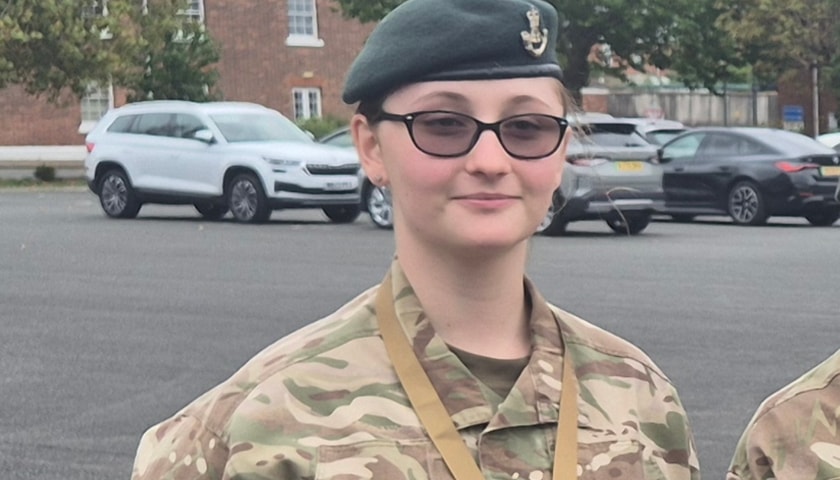
16-year-old Cadet Corporal Sophie Synakova from Feachd Chaideataich Arm Dorset put her first aid skills into action when she came across a seriously injured man after a mobility scooter accident in Crewkerne.
Cadet Corporal Synakova was walking into town with her older sister when she noticed a crowd gathered around a man who had fallen from his mobility scooter. The casualty, Peter, had become trapped beneath the overturned scooter and sustained multiple head injuries.
Recognising the seriousness of the situation, Cadet Corporal Synakova stepped forward to help, drawing on first aid training she received through the Army Cadets.
“My sister and I were walking into town and noticed a crowd of people. We then saw the man and noticed his cap was wet with blood, so I ran to put pressure on it straightaway. There was quite a lot of blood,” Cadet Corporal Synakova explained.
Staying Calm in an Emergency
After checking the area was safe, Cadet Corporal Synakova introduced herself as a first aider and began reassuring the injured man while applying direct pressure to his wounds to help control the bleeding.
Realising that Peter had hearing difficulties, she adapted her communication to ensure he understood what was happening and remained reassured throughout the incident.
Meanwhile, Cadet Corporal Synakova’s older sister contacted a nearby health centre and helped manage traffic and onlookers.
When a doctor and two nurses arrived at the scene, Cadet Corporal Synakova provided information about the casualty and continued assisting with his treatment. Alongside other bystanders, she helped lift the mobility scooter from Peter’s trapped leg before he was moved into a sitting position.
Peter was subsequently taken to hospital by ambulance for further treatment.
Cadet Corporal Synakova later discovered that Peter had been taking blood-thinning medication, making the prompt response to his injuries particularly important.
Reflecting on the experience, she said:
“All I did was give him a better chance. That’s what the first-aid training we get does; it gives the best chance of survival.”
Army Cadets Training Builds Confidence
Cadet Corporal Synakova credited her Army Cadets training with giving her the knowledge and confidence to respond effectively in a real-life emergency.
First aid is a key part of the Clàr-obrach Cadail an Airm, equipping young people with practical skills that can make a difference in an emergency.
“When it comes to the Army Cadets, they teach us what we need to know,” Cadet Corporal Synakova said.
“We do lots of activities and it helps to know ciad-chobhair to keep everyone safe.”
From adventurous training to everyday situations, the skills cadets develop can help them recognise emergencies, respond confidently and support others when it matters most.
Cadet Corporal Synakova’s actions demonstrated how the knowledge gained through Army Cadets can make a meaningful difference beyond the parade square.
Inspiring a Future Career in Medicine
Cadet Corporal Synakova’s involvement with the Army Cadets began when she followed in her older sister’s footsteps. Her father also became an adult volunteer to support their cadet journey.
Although Cadet Corporal Synakova initially considered a career in the Armed Forces, her first aid training and experience have inspired her to pursue a different path.
“At first I was interested in joining the Armed Forces but since doing first aid I now want to go into medicine, in neuroscience,” she explained.
“I just want to help people. I enjoy helping people and making them feel better.”
Cadet Corporal Synakova’s story highlights how Army Cadets helps young people develop confidence, resilience and practical life skills while discovering new interests and career aspirations.
Learn Life-Saving Skills with the Army Cadets
From CPR and treating injuries to responding confidently in an emergency, first aid is just one of the valuable skills young people can develop through the Army Cadets.
Discover more about First Aid in the Army Cadets and how you can learn skills that could one day save a life.