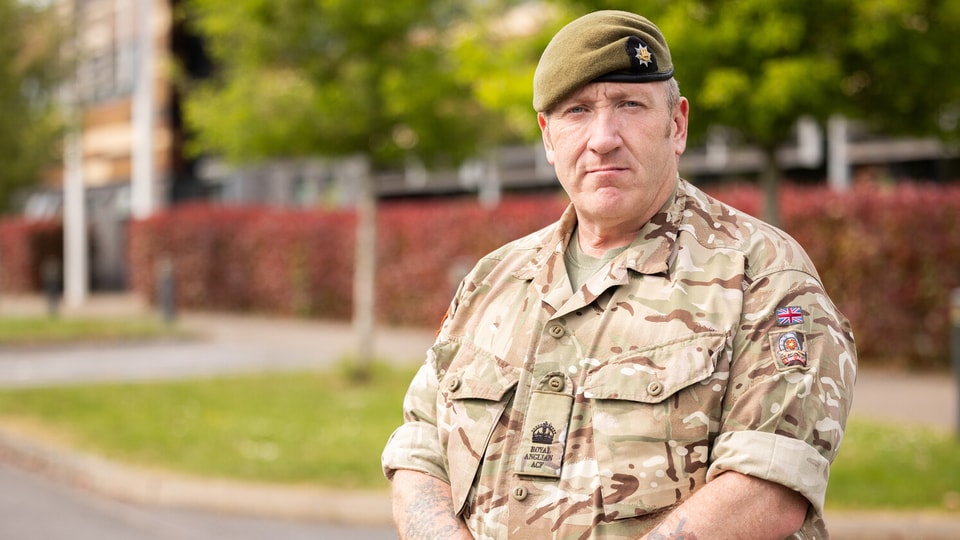
From Army Service to Army Cadets: WO2 Neil Skivington’s Story

Leaving the Armed Forces can be a significant life change. For many veterans, the transition from a structured military career to civilian life brings new opportunities, but also new challenges. For WO2 Neil Skivington, Company Sergeant Major of D Company in Leicestershire, Northamptonshire and Rutland (LNR) Army Cadet Force (ACF), volunteering with the Army Cadets provided the camaraderie, purpose and community he was looking for after leaving the Army.
WO2 Skivington joined the British Army in August 1988 and served for 25 years as a Combat Engineer. During his military career, he completed carpenter and joiner training at Chatham, became an Engineer Resources Corporal and deployed on operations in Iraq, Afghanistan, Northern Ireland, Sierra Leone and Bosnia. He left the Army in September 2013, but his commitment to supporting others continued through the Army Cadets.
Adjusting to Life After the Army
Like many service leavers, WO2 Skivington found the initial transition to civilian life challenging.
“During the initial period of the transition from Army life, it was very strange,” he explained. “I’d gone from literally being told what was happening every day to some days not knowing what was going to happen.”
The loss of routine and structure took some adjustment, but WO2 Skivington soon found a way to fill that gap. Having been an Army Cadet himself in Northumbria Army Cadet Force as a young person, he already understood the value of the organisation and the positive impact adult volunteers can have on young lives.
When he left the Army and moved to an area where he knew few people, volunteering with the Army Cadets seemed like the perfect opportunity.
“I knew I’d be settling in an area that I’m not from. It was an opportunity to make friends and keep some of that camaraderie because I knew there were ex-service people involved.”
For WO2 Skivington, the prospect of volunteering offered more than just a hobby. It provided a way to build friendships, stay connected to a military-minded community and maintain the camaraderie he had enjoyed throughout his Army career.
Finding Friendship and Purpose
One of WO2 Skivington’s initial concerns was the time commitment involved in volunteering. However, he quickly discovered that volunteering could fit around work and family life while still offering a rewarding experience.
His military skills transferred well into the cadet environment. Training areas such as дриль і польові апарати remained familiar, while experienced cadet volunteers helped him adapt his instructional style to suit young people.
“I’ve been very lucky that in LNR they’ve got a lot of adults who’ve only ever done cadets. They can help rein in the craziness of the regular Army and bring it back to how we teach young people.”
For WO2 Skivington, volunteering is not about recreating his military career. Instead, it is about helping young people develop confidence, resilience and life skills.
“The sense of purpose is very different from military service. It’s just trying to make a positive impact on the cadets’ lives.”
His experience on operations also allows him to bring real-world examples and practical knowledge into his instruction. However, he believes one of the most important things he brings to the role is creating an environment where cadets feel comfortable, supported and able to enjoy themselves.
Making a Difference That Lasts
While there have been many memorable moments during his time as a volunteer, one experience stands out above all others.
A former cadet approached WO2 Skivington as an adult and told him that the support they had received through the Army Cadets had changed their life.
“They freely admitted that they would have probably taken their own life without the involvement that we’d had in their life.”
The conversation left a lasting impression and highlighted the positive influence that adult volunteers can have on young people during some of the most formative years of their lives.
“I don’t think a lot of adults realise the positive impact that we do have on these kids. It was one of those moments where you sit back and think, clearly I’m doing something right.”
Moments like these remind volunteers why they give up their time and demonstrate the powerful role that positive adult role models can play in helping young people overcome challenges and build confidence.
A Message to Other Veterans
Looking back, WO2 Skivington believes that joining the Army Cadets played an important role in helping him adapt to civilian life. The friendships, teamwork and sense of belonging helped replace some of what he missed after leaving the Armed Forces.
Without volunteering, he believes life could have become a repetitive cycle of work and routine. Instead, he found a community where he could continue making a difference.
“The adjustments I made after leaving the forces were very much helped by the cadet force. The camaraderie is quite similar and it is nice to see people.”
Although volunteering can be demanding at times, WO2 Skivington says the rewards far outweigh the effort.
“You get back shattered, but it’s been a good weekend and my mind’s at peace.”
For veterans considering volunteering with the Army Cadets, his advice is simple:
“I’d definitely say give it a go. You’ve got to try it. There are a lot of brilliant adults in the cadets who have served and haven’t served. Give it a whirl. You’ve got nothing to lose. It is fun, you can have a laugh and you can make a difference.”
For WO2 Skivington, volunteering has provided far more than a hobby. It has offered friendship, purpose and the opportunity to help shape the next generation, proving that service to others can continue long after military service ends.
Watch WO2 Neil Skivington’s testimonial below

Interested in finding out more?
Register your interest with the Army Cadets today and bring your service to the next generation.