Exercise Canoe Cadet Turns 40!

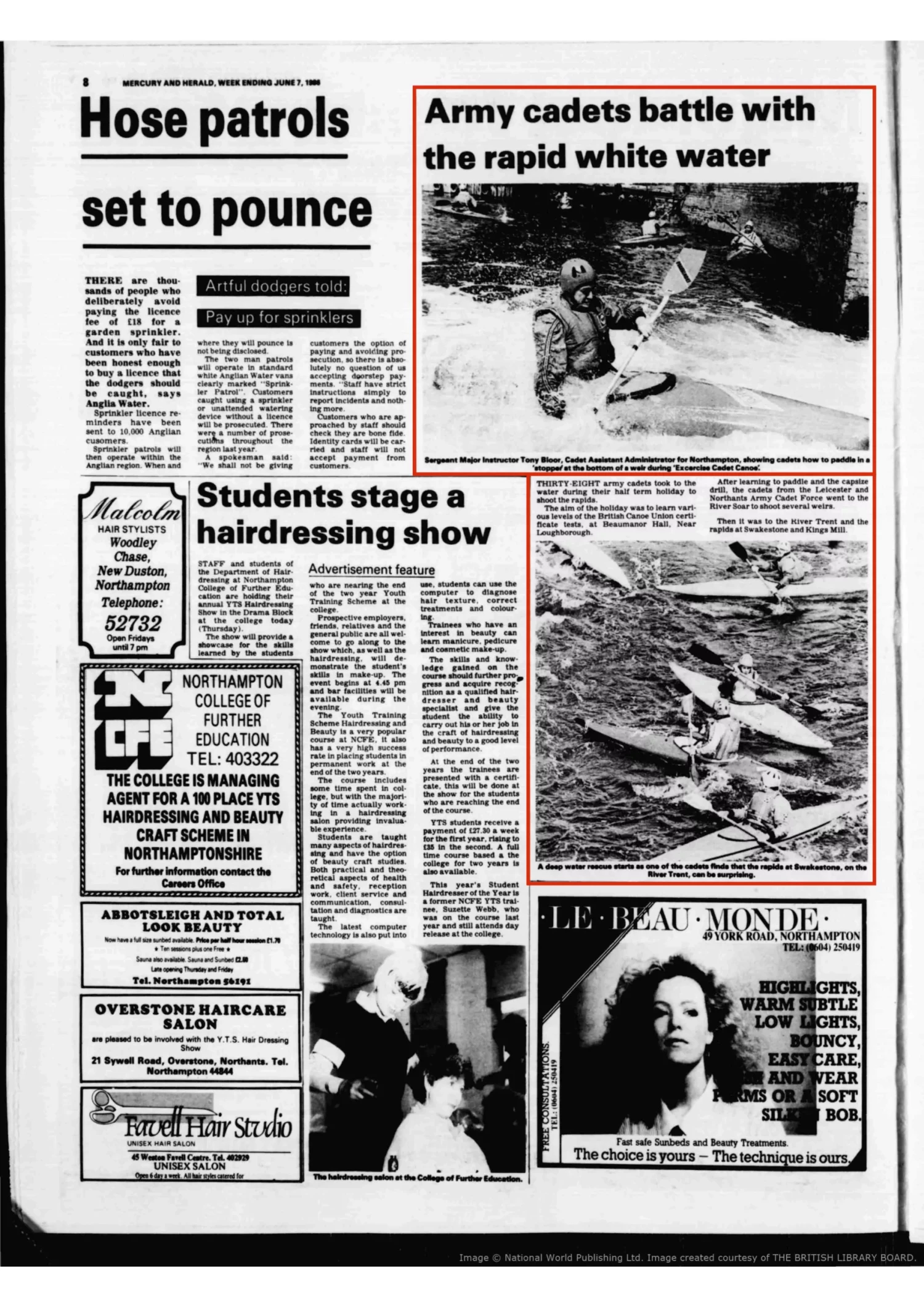
From their first strokes learning to paddle and complete capsize drills, cadets quickly progressed onto real waterways. After training on the River Soar—including shooting weirs—they advanced to more challenging environments on the River Trent, tackling the rapids at Swarkestone and Kings Mill.
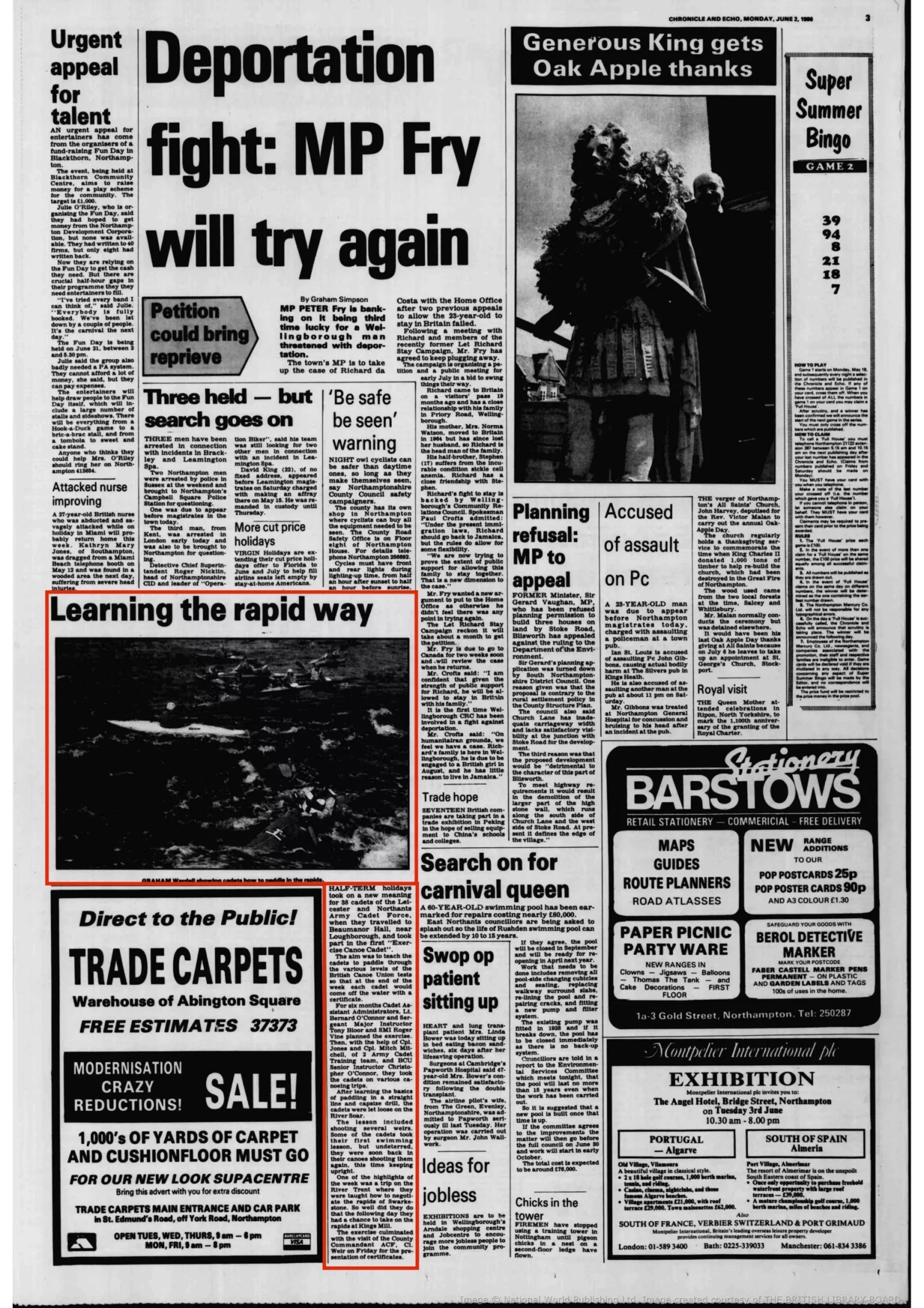
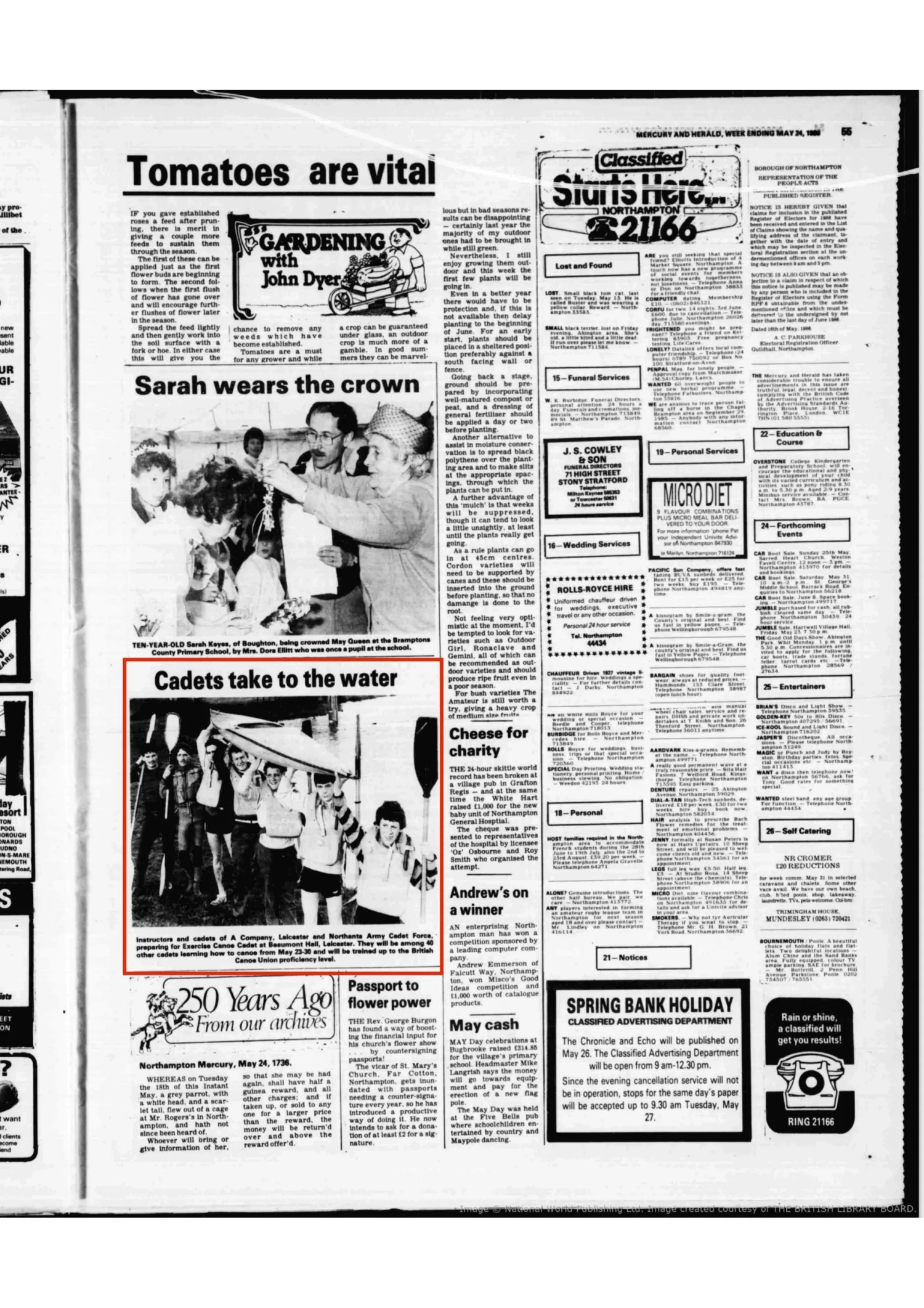
A contemporary newspaper report from June 1986 captured the intensity and excitement of the training:
“Thirty-eight army cadets took to the water during their half term holiday to shoot the rapids… After learning to paddle and the capsize drill, the cadets… went to the River Soar to shoot several weirs. Then it was to the River Trent and the rapids at Swarkestone and Kings Mill.”
Another report highlighted both the scale and ambition of the programme, noting that cadets were being trained up to BCU proficiency level during the week-long exercise.
Photographs from the time show SMI Tony Bloor instructing cadets directly on the water, demonstrating techniques in challenging conditions such as the “stopper at the bottom of a weir”—a vivid illustration of the hands-on training delivered from the very beginning.
The inaugural exercise concluded with a visit from the County Commandant, Col. Weir, who presented certificates to cadets in recognition of their achievements.

A Legacy Built Over 40 Years
Since that first exercise in 1986, Canoe Cadet has run every year—with the exception of 2020—making 2026 its 40th iteration.
A central figure in its legacy is Tony Bloor MBE, whose involvement continued through to the mid-2010s. His impact on adventure training across the ACF is recognised annually through the Tony Bloor MBE Award, presented to the cadet who demonstrates excellence across all aspects of the week, including paddle sport, administration, teamwork, leadership and ACF values.
A recent image (Image 8891) showing Tony Bloor visiting the exercise in Northampton in 2024 highlights the lasting connection between the founding generation and today’s cadets.

Canoe Cadet 2026: Continuing the Tradition
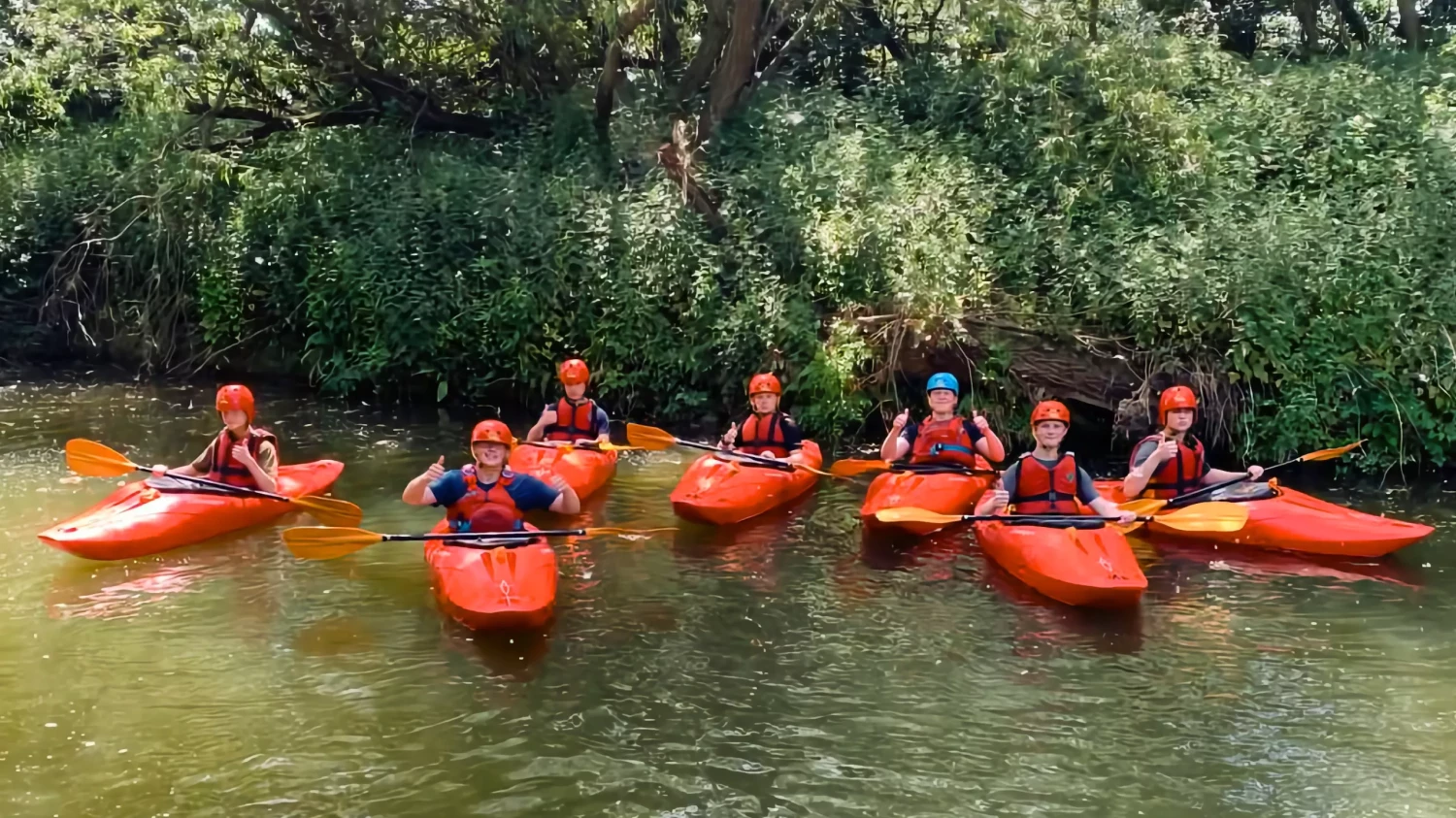
Held over the UK Spring Bank Holiday week, this year’s exercise saw 49 cadets take part in Canoe Cadet, alongside approximately 70 cadets participating in the Multi Activity Package (MAP).
The 2026 Canoe Cadet cohort achieved:
- 24 × 4-Star Adventure Training (AT) passes
- 14 × 3-Star AT passes
- 68 × 1-Star AT passes
- 1 × 3-Star Navigation pass
- 98 National Governing Body (NGB) Paddle Sport qualifications
- 3 Gold Duke of Edinburgh’s Award Residential completions
MAP participants also recorded significant results:
- 62 × 2-Star AT passes
- 8 × 3-Star CIS passes
- 8 × 4-Star CIS passes
A fantastic achievement by all involved.

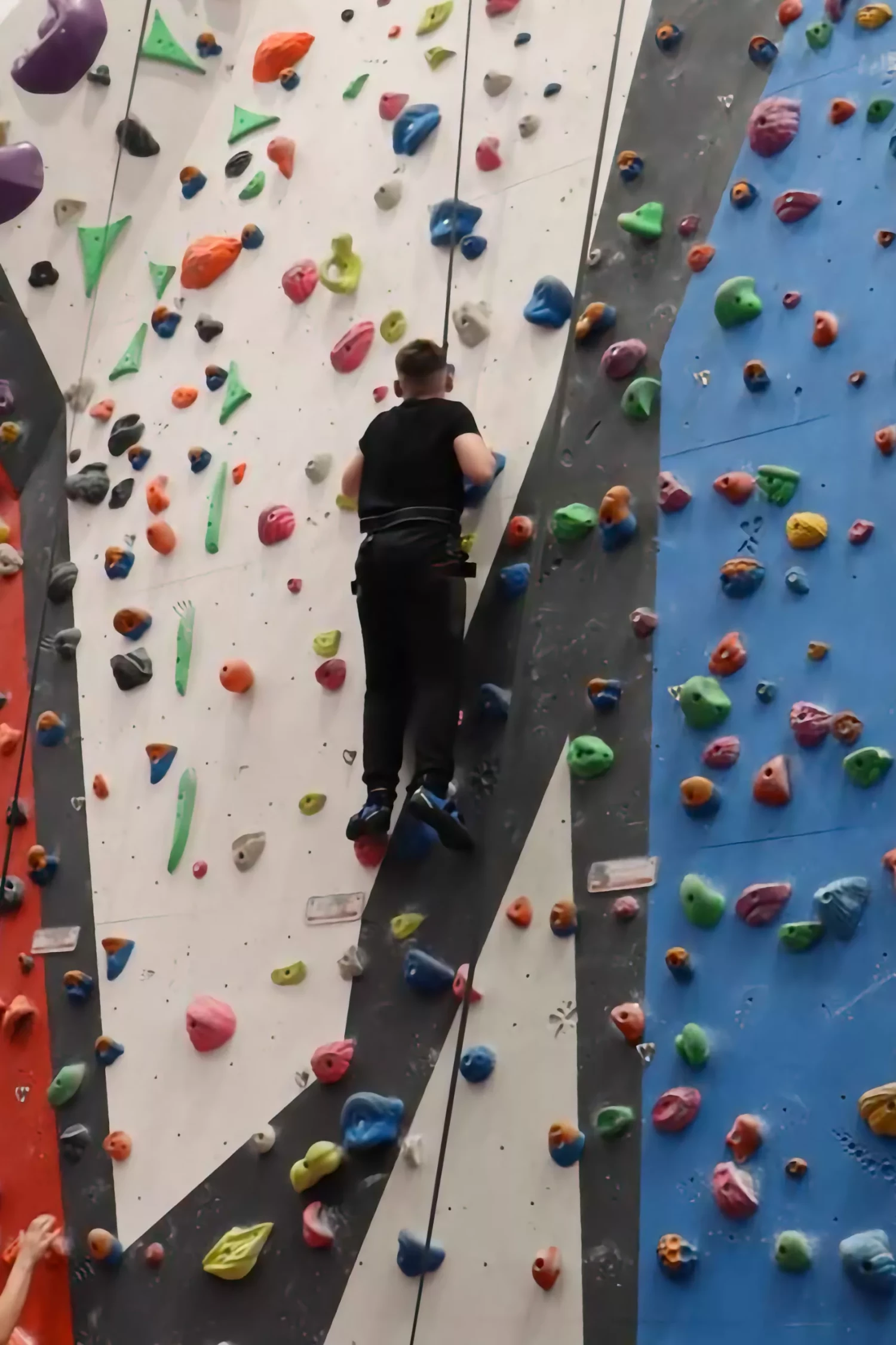
In addition to paddle sports, MAP cadets undertook a diverse programme including climbing, cycling, archery, Corps of Drums training, and Communications Information Systems (CIS) courses.
Developing Instructors and Leaders
Over four decades, Exercise Canoe Cadet has not only shaped cadets but also developed a strong pipeline of qualified instructors and leaders.
Among those who have progressed through the programme are:
- WO2 Neil Machin, County Adventure Training Officer
- WO2 Graham Smith, E Company Area Sergeant Major
- Major Maria Walding, County Training Officer (Designate)
- Captain Liz Wainwright, D Company Staff Officer
- SSgt David Sansom, E Company
They represent just a small proportion of the many individuals who have contributed to—and benefited from—the exercise over the years.

Adventure Training That Lasts a Lifetime
Exercise Canoe Cadet has become a cornerstone of the LNR ACF training calendar. For generations of cadets, it has provided a gateway into adventure training, building confidence, resilience and teamwork in a challenging but supportive environment.
The principles seen in the original 1986 exercise—progressive training, real-world challenge, and strong leadership—remain just as relevant today.
Opportunities for further development continue through Cadet Centre for Adventure Training (CCAT) courses and Area Training Officers for those wishing to advance their qualifications.
BRÙTH AIR ÌOMHAIGH SAM BITH GU H-ÌOSAL GUS FHAICINN NAS MOTHA
A’ coimhead air adhart
Forty years on from Beaumanor Hall, the spirit of Canoe Cadet remains unchanged: giving cadets the opportunity to push themselves, learn new skills, and achieve more than they thought possible.
As it enters its fifth decade, Exercise Canoe Cadet stands as one of LNR ACF’s most enduring successes—one that continues to shape the future of cadets year after year.
Feeling the spirit of adventure?
Find your local detachment and get involved