The Battle of the Somme
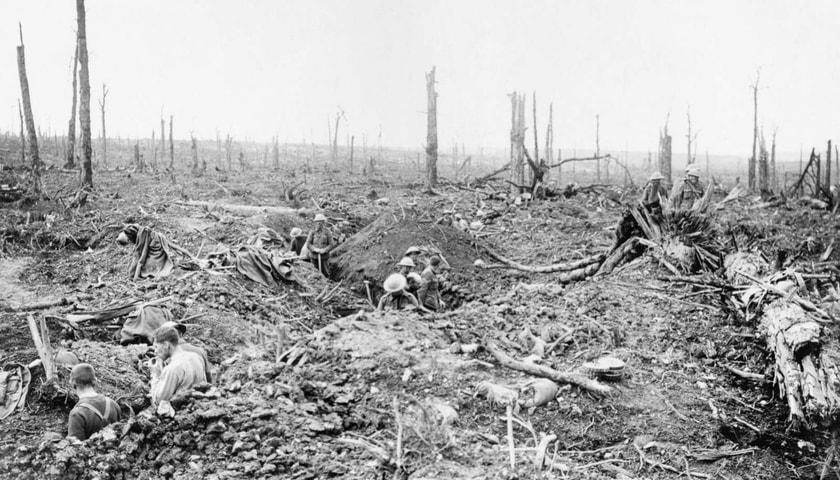
When was the Battle of the Somme?
The Battle of the Somme, fought from 1 July to 18 November, 1916, was one of the largest and bloodiest battles of World War I. A joint Anglo-French offensive against the German Empire on the Western Front, it resulted in over one million casualties, making it one of the deadliest conflicts in human history and showing the world what horrors industrial-scale warfare could inflict.
While it failed to produce a decisive breakthrough, the battle was a critical turning point, forcing the development of new tactics and technologies and inflicting irreplaceable losses on the German Army.
Background to the Battle of the Somme
The Great War, later to be called the First World War, began in 1914 when the assassination of Archduke Franz Ferdinand saw multiple mutual defence treaties enacted throughout Europe, throwing the continent into war.
This was to be a war unlike any other. Technology and industrial production had reached new heights, and the battlefields of Europe were to become the crucibles where war would reach its brutal peak.
The Battle of the Somme was planned by Allied commanders for two primary reasons:
- The first was to provide relief to the French troops fighting at the Battle of Verdun, which had begun in February 1916. The Allied plan was to launch a major attack elsewhere, which would force the Germans to divert troops and resources, easing the pressure on Verdun.
- The second was to break the stalemate of trench warfare, which defined the war in 1915. This had turned military advances into stalemates, and thousands of lives were being spent for no significant advantage. To achieve a breakthrough, Allied command, particularly British General Sir Douglas Haig, hoped to smash through the lines with a massive, coordinated assault.
When was the Battle of the Somme?
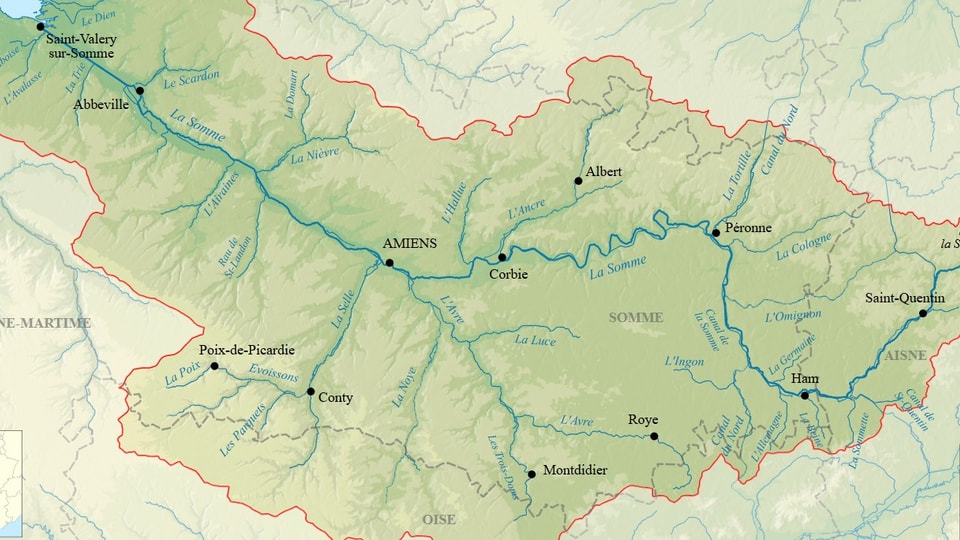
The Battle of the Somme took place in northern France, with the front stretching up to 25 miles along the upper reaches of the River Somme in the Picardy region. Most of the fighting took place north of the river between the towns of Albert and Bapaume.
The First Day
The offensive began at 7:30 a.m. on 1 July, 1916, following a week-long artillery bombardment that was intended to destroy German barbed wire and trenches. The Allied generals expected little resistance from German survivors, so, carrying heavy loads of around 30kg, British troops were in some cases ordered to advance slowly.
This tactic was designed to maintain unit cohesion during the advance, and in fairness, it was not universally applied to the advance. Some units advanced more rapidly and saw more success, but the image of thousands of soldiers slow-walking to their death has become an enduring image of the legacy of the Somme.
Eventually, the British shelling stopped and the German troops emerged. When they saw lines of soldiers advancing, yet hindered by the muddy terrain, barbed wire, and their heavy loads, they simply opened fire.
The week-long bombardment which preceded the advance had seen mixed success along the front lines. This was partly a result of the ineffectiveness of shrapnel shells, which were designed to kill soldiers in the open, being used against fortified targets. However, in some parts of the line, the shelling worked as intended, and the French advance saw more success.
The result was catastrophic. The British Army suffered over 55,000 casualties in a single day, with almost 20,000 of those killed.
That was day one of the Somme. Slaughter on this scale would never be repeated during the war, but this battle was only the beginning. 140 days remained.
The battle settles down
The next two weeks became known as the Battle of Albert. French and British forces were able to defeat the German Army elsewhere in the course of the battle, but the first day would never be forgotten.
Timeline of the Battle of the Somme
- 1 July: The first day
- 1-13 July: Battle of Albert
- 14-17 July: Battle of Bazentin Ridge
- 19-20 July: Battle of Fromelles
- 14 July – 15 September: – Battle of Delville Wood
- 23 July – 7 August: Battle of Pozières
- 3-6 September: Battle of Guillemont
- 9 September – Battle of Ginchy
- 15-22 September: Battle of Flers–Courcelette
- 25-28 September: Battle of Morval
- 26-28 September: Battle of Thiepval Ridge
- 1 October – 11 November: Battle of Le Transloy and Battle of the Ancre Heights
- 13-18 November: Battle of the Ancre
A War of Attrition
The failed breakthrough turned the Somme into another war of attrition – exactly the type of battle the commanders were trying to avoid. Over the next 141 days, both sides traded hundreds of thousands of lives for minimal territorial gains.
The Somme’s stalemate forced the commanders to innovate, and these innovations have shaped warfare ever since.
Tank Warfare
The Somme saw tanks used in battle for the first time. Early models, like the British Army Mark I, the world’s first tank to see combat during the Battle of Flers-Courcelette on 15 September 1916. (The French were still developing their lighter tank, the Renault FT, but this was not deployed until the following year.) The British tanks were unable to give Allied forces a decisive victory in 1916. The Mark I was still unreliable and few in number, but they were heavily armoured and able to cross trenches with an ease no other vehicle could match. Their legacy today is the Challenger 2 Main Battle Tank.
Air Superiority
Air-to-air combat would come to define key battles during WWII, but in 1916, air power was still an emerging technology, so it was limited to reconnaissance, observation, and bombing missions.
Creeping Barrage
The Allies refined the “creeping barrage” tactic, where artillery fire was timed to move forward just ahead of the advancing infantry. This was intended to provide a curtain of cover, forcing the enemy to take shelter while soldiers advanced.
By the time the Battle of the Somme had come to an end in November 1916, Allied forces had advanced only 10 kilometres. Between all the forces involved, over one million soldiers had become casualties of the hellish conditions of mud, guns, artillery, disease, and barbed wire. Those who survived had been forced to watch and fight over the unburied dead.
The offensive was finally called off in mid-November, but not because of any clear victory for either side. Instead, the arrival of winter and the sheer exhaustion of the survivors made further fighting impossible.
Legacy and Impact of the Somme
The outcome of the Battle of the Somme is complex and debated to this day.
- The battle can be considered a tactical failure, as no breakthrough was achieved. However, it cannot be denied that it succeeded in its primary strategic goal of relieving Verdun. It’s important to remember that some battles are fought for wider strategic goals rather than to simply defeat the enemy in front of you.
- While the Allies suffered horrendous losses, the German Army was also severely reduced in strength. It lost vast numbers of its best-trained officers and soldiers, losses it could not replace. The battle’s toll directly contributed to Germany’s strategic withdrawal to the fortified Hindenburg Line in 1917.
- For the British, the Somme was a brutal lesson. The army of inexperienced volunteers from 1916 was forged into a hardened, professional force that, by 1918, had learned to coordinate tanks, artillery, and infantry to achieve victory.
- Symbol of Futility: In popular memory, the Somme remains the ultimate symbol of the futile, industrial-scale slaughter of World War I.
War is always a terrible option, and each battle is a tragedy, but sometimes they are tragic and terrible and necessary. We can hope that soldiers never have to fight such a war again, while honouring those who did.
انطلق إلى أبعد من ذلك مع طلاب الجيش
The Army Cadets is your chance to go further. Our syllabus offers a unique opportunity for adventure and personal growth. Develop your مهارات القيادة وتعلم قوة التفويض وقيمة إلهام الآخرين من خلال العمل الجماعي. تحدى نفسك واخرج من منطقة راحتك. Find your nearest detachment today!