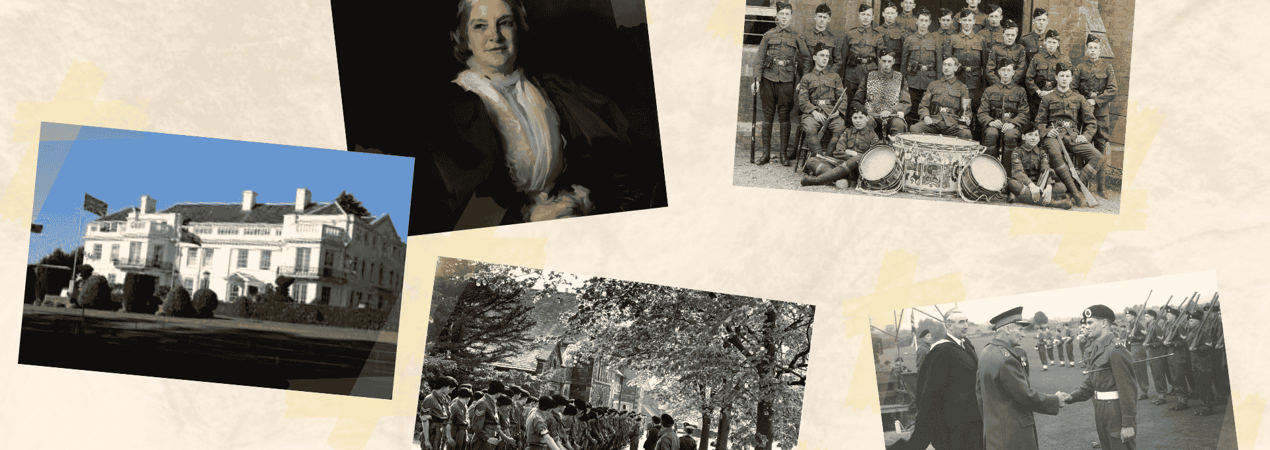
Forerunners of cadet forces in schools first appeared when a number of schools formed units for the defence of the UK in response to the threat of invasion by France. The threat receded but units remained and, over time, more schools formed units which evolved into the Junior Officers’ Training Corps, administered by the War Office.
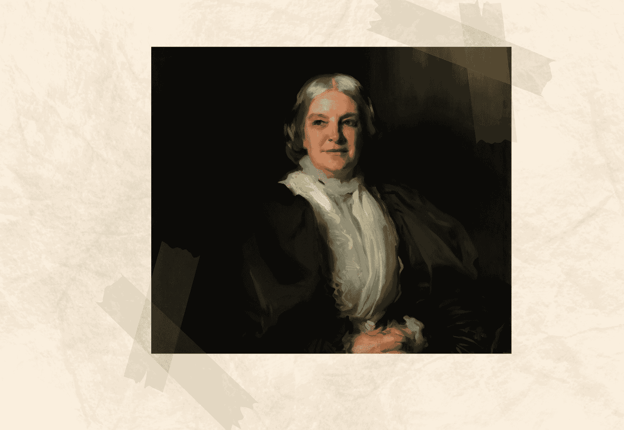
Social activist Octavia Hill established one of the first independent cadet units in Southwark, London. Other social reformers helped establish more of the independent cadet groups – separate from the corps attached to public schools and universities. They saw it as a way of rescuing working boys from poor living conditions.
A selection of cadets were positioned on The Mall for Queen Victoria’s Diamond Jubilee celebrations.
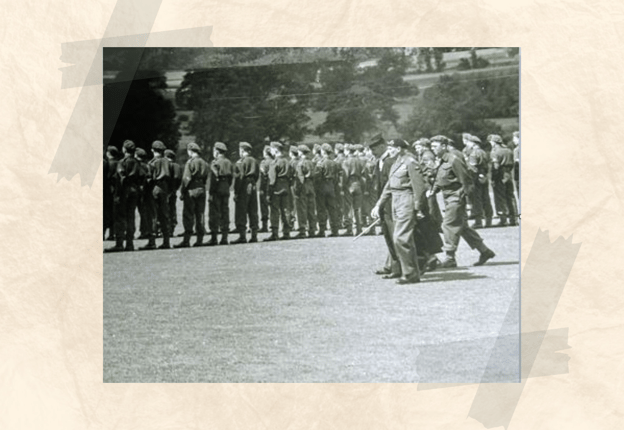
Secretary of State for War Richard Burton Haldane joined the Volunteer Force with the Yeomanry to form the Territorial Force. The newly formed Territorial Force absorbed the cadets into its organisation.
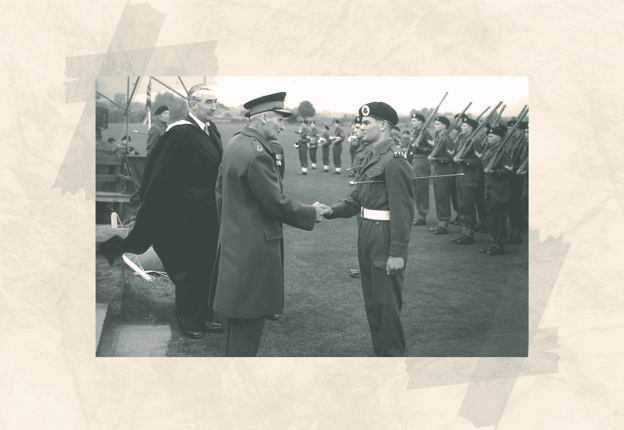
The shortened term Cadet Force began to be used.
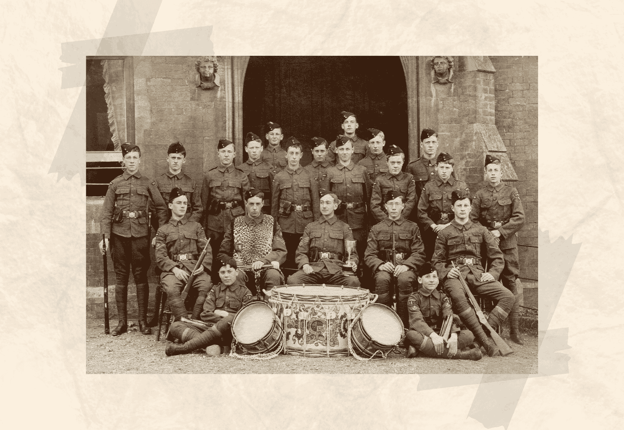
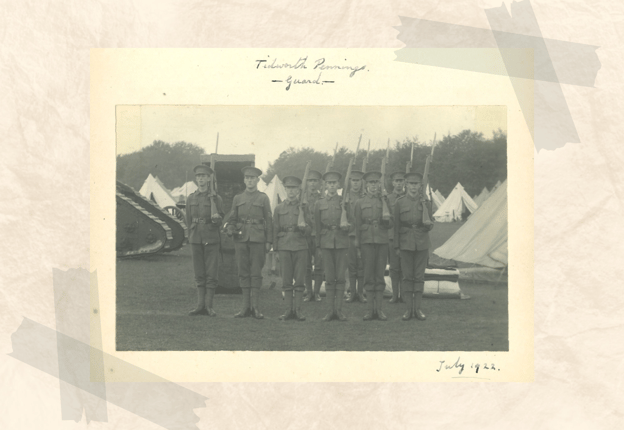
The outbreak of the First World War saw a period of expansion for the Cadet Force. Cadets were trained to meet the demands on the home front.
After the First World War, the government ceased funding the Cadet Force and many branches closed. However, Field Marshal Lord Allenby and others campaigned for financial and organisational support and the British National Cadet Association (BNCA) was formed.
During the Second World War, cadets worked with the Home Guard and Reserve units acting as temporary instructors and supporting manoeuvres and drills. The War Office retook control of the funding and organisation of the Cadet Force, with the BNCA still in control of leisure activities such as sport and competition shooting, as well as the welfare of cadets.
The BNCA was renamed the Army Cadet Force Association (ACFA).
Cadet units in schools combined into one organisation named the Combined Cadet Force (CCF). Contingents had one or more service sections. There were 247 schools that joined and His Majesty King George VI became its Captain General (pictured right, inspecting the Signal Platoon of Portsmouth Grammar School CCF at Bourley Camp, Aldershot, in 1948).
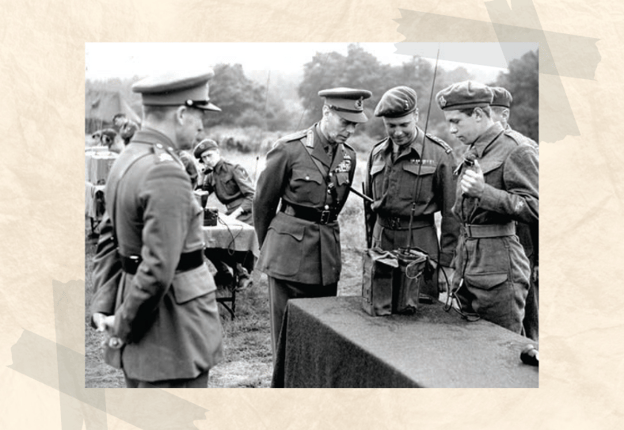
The Combined Cadet Force Association (CCFA) was established to represent all the schools with CCF units.
Her Majesty Queen Elizabeth II became the Captain General of the CCF, and HRH Prince Philip, Duke of Edinburgh, was made Colonel-in-Chief of the ACF.
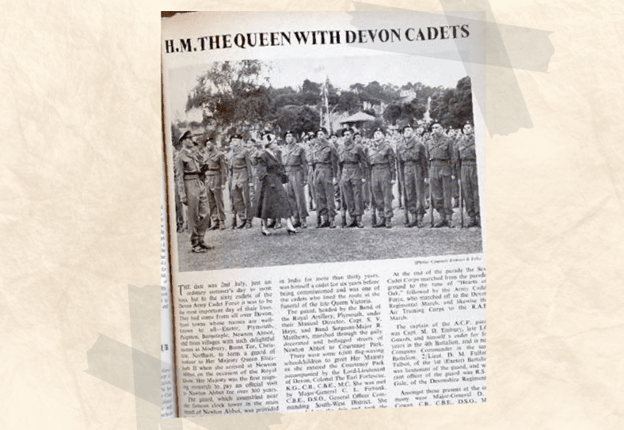
Army Cadets were among the first participants to take part in the pilot scheme for The Duke of Edinburgh’s Award.
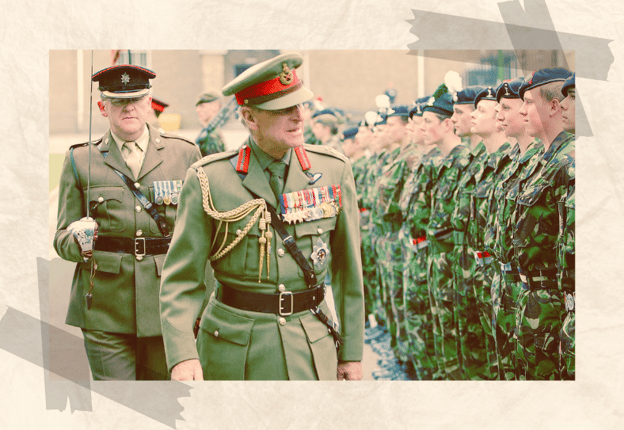
The national Cadet Training Centre, Frimley Park, opened in Surrey, increasing opportunities for cadets and adult volunteers. This is now known as the home of the Army Cadets.

Cadets celebrated their centenary with a variety of activities including the Royal Parade of the Cadet Forces at Buckingham Palace on 22 July. The chief event was the presentation of the banner to the ACF by HRH The Duke of Edinburgh at a ceremony at the Tower of London. During the year, this banner was passed from unit to unit and county to county across the UK.
After several pilot schemes, girls joined the Army Cadet Force.
HRH The Duke of Edinburgh presented a personal banner to the ACF at Royal Military Academy Sandhurst. The banners he presented in 1960 and 1982 are laid up in St Peter’s Church, Frimley and the banner presented in 2005 is at CTC Frimley Park.
HRH The Duke of Edinburgh’s last official engagement with the ACF as its Colonel-in-Chief was a visit to the Cadet Training Centre, Frimley Park on 17 October to mark the 50th anniversary of its foundation.
To celebrate their 150th anniversary, cadets and volunteers from all cadet forces marched down The Mall on 6 July for a Royal Review. The then Prince of Wales took the salute outside Clarence House, which was followed by a Royal Garden Party in Buckingham Palace.
The government launched the Cadet Expansion Programme (CEP) to strengthen cadet forces in schools. The aim was to form new cadet units in English state-funded secondary schools, focusing on schools in areas of high deprivation. It was a joint programme between the Ministry of Defence and the Department for Education.
Army Cadet Force Association was rebranded as ACCT UK. Their support continues to enable all young people to access the life-changing development programmes offered by the Army Cadets.
To remain contemporary, relevant and progressive, the Army Cadets syllabus (first introduced in 1976 and updated in 1990) was refreshed. This progressive syllabus includes testing in drill and turnout, military knowledge, skill at arms, navigation, fieldcraft, first aid, expedition training and shooting.
Since the start of the CEP in 2012, a total of 362 schools have been approved to establish a cadet unit. This has completely changed the shape of the CCF: now contingents in state schools outnumber those in independent schools.
Be part of our history
Join the Army Cadets to embark on an exciting adventure, develop valuable skills, and build lifelong friendships for young people between 12 to 18.